
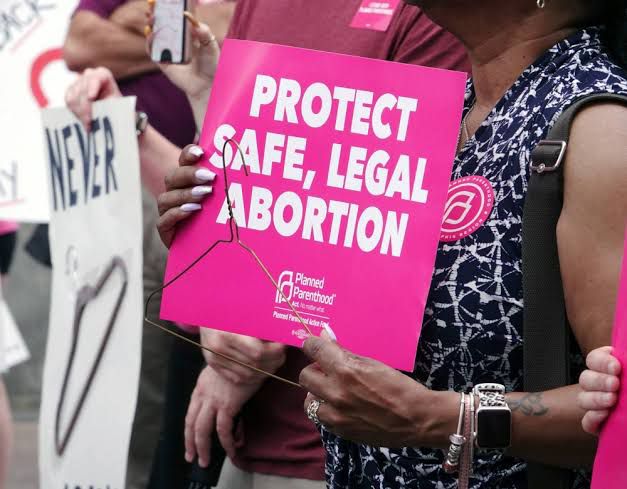
Author: Afiya Adhem Nawaz Khan, PES University
Introduction
To speak of abortion in law is to speak of power, dignity, and the simple idea that your body is your own. Roe v. Wade (1973), for half a century, stood as a potent legal symbol of bodily autonomy in the United States. It affirmed not just a right to terminate a pregnancy, but more deeply, the principle that the state cannot decide on a person’s body for purposes not their own. Yet abortion has never really been a “narrow legal” matter. Behind the legal arguments and Supreme Court verdicts lies a battleground over who gets to decide and over the boundaries of law, morality, and freedom.
The case of Roe V Wade ignited a storm of philosophical and political conflict: When does life begin? Can privacy override public morality? Whose voices and which bodies count in democracy? While critics cast Roe as a judicial overreach, for millions it represented a hard-earned shield against centuries of patriarchal control and reproductive injustice. Its recent overturning pours all these questions back into public life, exposing how fragile rights are when not grounded in true equality and justice.
Add: It is important to acknowledge that not all people who can become pregnant identify as women. Therefore, to be inclusive, this discussion will refer to “pregnant people” or “people with the capacity for pregnancy”
Abstract
This paper talks about the landmark case of Roe v. Wade and its enduring significance for bodily autonomy, gender justice, and reproductive rights. Framing abortion not merely as a legal issue, but as a profound ethical and political question. The paper explores the moral imperatives underlying pro-choice arguments, emphasizing bodily autonomy, the rejection of patriarchal control, and the necessity of intersectional awareness in reproductive justice. The paper challenges the “life begins at conception” argument, which is a central tenet of the anti-abortion stance. The discussion also critiques the state’s role in prohibiting abortion, arguing that such policies constitute “state-forced pregnancy” and violate a person’s bodily autonomy.
Legal Jargons
Abortion
While the medical definition of abortion is simply a procedure to terminate a pregnancy, the general definition adds a layer of intentionality by using the word “deliberate.” This distinction in language can significantly influence how the act is perceived. The choice of words, such as “deliberate,” highlights the ethical and moral implications that a purely medical definition might not capture.
Sentience
A neurological concept, referring to the basic capacity for conscious awareness and the ability to feel sensations and emotions, such as pleasure or pain. It the ability to respond to stimuli, with no thought no interpretation.
Fetal viability
It’s defined as the ability of a foetus to survive outside the womb, often with the support of advanced medical care. This ability is primarily determined by factors such as gestational age, birth weight, and the maturity of vital organs, especially the lungs.
Discussion
‘Life begins at conception” is a cornerstone of the pro-life or anti-abortion argument. This argument supports that a human being who has a right to life, is created at the moment an egg is fertilized by a sperm. The resulting zygote, a single cell with a unique genetic code, is considered a distinct human organism from its inception.
This perspective holds that because this newly formed life possesses all the necessary genetic information to develop into a mature human, it should be granted the same moral and legal protections as any other human being. Therefore, any act that intentionally ends this life, such as abortion, is considered morally and ethically wrong. Prominent commentators like Charlie Kirk and Ben Shapiro have staked much of their public personas on audibly opposing the right to abortion. They frame their arguments as principled, often cloaked in the rhetoric of moral certitude and so-called “family values.” Yet, when one strips away the bluster, it becomes clear that their crusade is not simply anti-abortion, but pro-state control over pregnant bodies. At its core, their stance validates a patriarchal tradition, one where certain men claim a right to dictate what others may or may not do with their bodies, disregarding the autonomy and lived realities of women and other people who can become pregnant. Hiding behind a veneer of righteousness, they elevate ideology over empathy, and dogma over common sense, fighting not for “life,” but for power over the most intimate, personal decisions a person can face. The tragedy is not just in their arguments, but in their fundamental refusal to recognize the basic human dignity and self-determination that true justice requires.
People like Ben Shapiro, Charlie Kirk, and their followers oppose abortion primarily because they believe sincerely that human life begins at conception and that the unborn have an inherent right to life. This conviction frames abortion as the intentional ending of a human life, which they equate to murder in both moral and, sometimes, legal terms. They assert that every human life, no matter how early in development, is valuable and deserves legal protection. For them, this is often an absolute principle, overriding considerations of bodily autonomy or individual circumstance. They see abortion not as a victimless choice, but as “violently ending somebody else’s life”.
Every person has the fundamental right to decide what happens to their own body. The right to choose whether to continue or terminate a pregnancy is a deeply personal matter that should be left to the individual, free from government intervention. If one holds the belief that life begins at conception a logical extension of this argument would be a re-evaluation of practices that result in the loss of fertilized embryos. For example, some fertility clinic procedures, such as the disposal of unused embryos, could be seen as morally problematic. This perspective would hold that any destruction of a human embryo, regardless of the stage, is the termination of a human life and should be subject to the same protections.
Another perspective distinguishes between a foetus’s capacity for life and its viability and sentience. A foetus does not typically develop the capacity for sentience until around 24 weeks. Prior to this, it is an organism without consciousness. Furthermore, a foetus is not considered viable, or able to survive outside the womb, until approximately 38 weeks. The argument suggests that if a foetus cannot survive on its own, its moral status should be viewed differently.
Additionally, some frame the relationship between a foetus and its parent as one of a parasite, arguing that the foetus is entirely dependent on the parent for survival. From this viewpoint, if the parent’s well-being and autonomy are being compromised by this dependency, then the parent’s right to decide whether to continue the pregnancy should be paramount. The argument posits that forcing a parent to carry a pregnancy to term against their will, especially when the foetus cannot survive on its own, is a violation of their bodily autonomy. (Wreen, M. “Abortion: the extreme liberal position.”)
It’s important to remember that people seek abortions for a multitude of reasons, far beyond cases where pregnancy endangers the life of the person carrying it. Forcing someone to continue a pregnancy resulting from rape raises profound moral and ethical concerns, compounding the trauma of the initial violence. Child pregnancies belong to a similar category, they pose severe risks and lifelong consequences. There are also countless situations where the pregnancy is accidental, or the individual simply isn’t in a position economically, emotionally, or physically to support a child. Ultimately, it is the person experiencing the unwanted pregnancy who bears the greatest burden and suffering. This reality makes clear that the debate isn’t just about the foetus, but about the lived threat to the autonomy, wellbeing, and future of real people. In the end, the right of a person to control their own body and life must outweigh the preferences or moral convictions of others.
The paper is deliberately titled “State-Forced Pregnancy” because it is the state, not the individual, that is dictating how someone should exercise their fundamental right to bodily autonomy. If anti-abortion advocates and the government truly care so deeply about the foetus, then that concern should extend beyond birth they ought to provide economic support, ensure access to essential resources, and guarantee stable employment for the pregnant person, so that they are actually able to raise the child in security and dignity. If the state and society are unwilling or unable to offer such support, then forcing someone to undergo pregnancy anyway- subjecting them to permanent physical changes, potential economic hardship, and pain and risks of childbirth. It exposes a basic hypocrisy- the demand for birth without a commitment to the life and wellbeing that follows.
Case Laws
Roe V Wade
In 1973, the landmark U.S. Supreme Court case, Roe v. Wade, established a constitutional right for women to have an abortion. The Court’s decision created a trimester framework to balance a woman’s right to privacy with the state’s interest in protecting maternal health and potential life. During the first trimester, states were prohibited from interfering with a woman’s access to abortion. In the second trimester, states could regulate abortion access, but only to the extent that such regulations were necessary to protect the mother’s health. By the third trimester, when the foetus was considered viable, states were granted the authority to restrict or even ban abortion, as they could demonstrate a compelling interest in protecting the potential life of the foetus. (MEDOFF, 2002, pg-481)
Dobbs v. Jackson Women’s Health Organization:
In this case, the Supreme Court overturned the decision of Roe v. Wade, which means that abortions are now illegal. It was a step backwards for America. By overturning both Roe v. Wade (1973) and Planned Parenthood v. Casey (1992), it stripped away the federal constitutional protection for abortion. (“Dobbs v. Jackson Women’s Health Organization”)
Conclusion
The story of Roe v. Wade is not simply about one Supreme Court decision it is a reflection of a broader, ongoing struggle over who holds power over bodies, lives, and futures. While Roe marked a crucial legal affirmation of bodily autonomy and privacy, its reliance on a narrow constitutional right left it vulnerable to reversal, as tragically seen in Dobbs v. Jackson Women’s Health Organization. The rollback of federal abortion protections exposes a harsh truth: without a grounded commitment to genuine equality and social justice, legal rights alone cannot guarantee freedom.
Abortion is far more than a clinical or political issue; it is a profound moral question about dignity, autonomy, and respect for individual complexity. Those who oppose abortion often claim to protect life but frequently ignore the life—economic, emotional, physical—of the pregnant person. True justice demands that the state not dictate pregnancy but instead honour and support the full humanity of those who must live it.
In advocating for reproductive rights, we are advocating for the right to live with autonomy, safety, and dignity. We must recognize that bodily autonomy is a fundamental human right that cannot be compromised or left at the mercy of shifting political winds.
FAQs
How do abortion restrictions reinforce patriarchal norms in society?
Abortion restrictions serve to entrench patriarchal power by asserting state or societal control over individuals’ reproductive choices, often prioritizing traditional, male-dominated authority structures over personal autonomy. This control perpetuates the belief that women’s primary role is that of mothers, subordinating their choices, bodies, and futures to the interests of others or those in power
What is the significance of making abortion as an issue of bodily autonomy rather than morality?
It shifts the focus from abstract debates about when life begins to tangible questions about freedom, control, and respect for individuals’ sovereignty over their own bodies, emphasizing empathy and human dignity over ideological positions.
What does the reversal of Roe v. Wade mean for reproductive rights and justice going forward?
The reversal of Roe V Wade is a step back, it signals that legal victories rooted only in privacy can be precarious. The fight must move toward securing protections based on substantive equality, alongside expanding social support to ensure real autonomy not just formal legal rights.
What ethical responsibility do we have to respect and uphold bodily autonomy in broader social and legal contexts?
Respecting bodily autonomy is fundamental to human dignity and freedom. Just as an individual has the unquestionable right to refuse donating blood, even when doing so could save another’s life, people must have absolute control over their own bodies. Upholding this principle means challenging and resisting any laws or social norms that seek to impose control over individuals’ bodies, especially those affecting marginalized and vulnerable groups.
References
“Dobbs v. Jackson Women’s Health Organization.” Wikipedia, https://en.wikipedia.org/wiki/Dobbs_v._Jackson_Women%27s_Health_Organization#:~:text=Jackson%20Women’s%20Health%20Organization%2C%20597,Women’s%20Health%20Organization%2C%20et%20al.
MEDOFF, MARSHALL H. “The Determinants and Impact of State Abortion Restrictions.” The American Journal of Economics and Sociology, vol. 61, no. 2, (2002)
Wreen, M. “Abortion: the extreme liberal position.” The Journal of medicine and philosophy vol. 12,3 (1987)

