
Author: Krishna soni
College: SAGE university bhopal
ABSTRACT
The phenomenon of “suicide by cop” – where a person in mental health crisis
deliberately provokes law enforcement into using lethal force — raises urgent
constitutional questions in India.
One way some people facing deep distress act out is by forcing officers to respond
with deadly force – a troubling situation now spotlighting legal boundaries in India.
When does entering someone’s home without permission become legally acceptable
to stop what might come next? Looking at Article 21, which protects life, alongside
Article 22, dealing with arrest rules, helps shape the answer. The new BNSS law
from 2023 contributes to an outcome here too, setting updated protocols for how
investigations unfold. So does the Mental Healthcare Act passed in 2017, aiming to
shield those struggling internally. Past rulings from the country’s top court add
weight, showing moments when intervention crossed lines or stayed within them.
What emerges must weigh safety against dignity, respecting solitude while
recognizing risk.
TO THE POINT
Suicide by cop” mention to a crisis in which a person — often suffering from extreme
or harsh mental illness or suicidal ideation — deliberately wants officers to shoot
them during a clash, usually because they are struggling mentally or thinking about
ending their life. This situation shows up more often in how India handles public
safety now, even if it is not clearly defined in legal terms there. The highest court
says that living with respect and having control over one’s private space falls under
basic rights protected by Article 21. Walking into someone’s house without
permission goes against those protections unless certain urgent conditions apply.
Still, the government must act to preserve human life when risks appear real. A
balance forms between intrusion and care. One law from 2017 says people trying to
take their lives should get help, not blame. Still, finding balance is hard – stepping in
fast enough to matter, yet not too far that it feels forced.
USE OF LEGAL JARGON
When deciding if entering without a warrant fits within the Constitution, judges apply
the doctrine of proportionality under Article 21 – this means the government must
show its action serves a real goal. A clear link should exist between what was done
and that objective. Not only that, but there has to be no less intrusive way left
untried. Also weighed is whether rights on both sides get due respect. Some legal
backing comes from the BNSS. Under Section 48, officers may enter if they
genuinely believe someone inside needs arrest. Section 185 allows searches without
court approval when waiting would ruin the chance to find evidence. Even though
nothing directly states it, courts in India have accepted emergencies as a quiet
loophole around needing warrants. Privacy, recognized as a basic right in the 2017
Supreme Court ruling involving Justice K.S. Puttaswamy, means any intrusion must
stand up to scrutiny – measured by necessity, scaled down in reach, balanced
against impact.
THE PROOF
Every year, more than a hundred thousand suicides are logged by NCRB figures
across India, showing how deeply mental health struggles tie into policing. Instead of
calming tense moments involving psychological distress, officers often and many times apply
physical control – courts at the highest level have pointed out they simply do not get
proper preparation for such scenarios. Provides advice and instruction on when and
how force should be used during emotional breakdowns remains missing in law – a
gap flagged clearly by India’s own Law Commission.Judges see it all the time—
someone in the grip of psychosis ends up in jail, not a hospital. You can almost hear
their frustration. They watch people needing medical help dragged off in handcuffs.
Things fall apart fast when leaders face zero consequences – particularly if a person
reaches out for support in the only manner they understand. Encountering and
crossing paths with law enforcement can shift everything sideways without warning.
The sad truth is, this plays out far more frequently than most care to acknowledge.
CASE LAWS
● Gian Kaur v. State of Punjab, AIR 1996 SC 946,upheld the constitutionality
of Sections 306 and 309 of the Indian Penal Code, decree that the right to life
does not include the right to die. Consequently, the court dismissed Gian
Kaur’s appeal and held her answerable or liable for aiding and abetting suicide
● Common Cause v. Union of India, (2018) 5 SCC 1 A landmark decision
emerged when the Supreme Court of India declared dignity in death a basic
right under Article 21 This judgment redefined how personal autonomy sits
within constitutional protection, not through bold claims but quiet necessity .
● Justice K.S. Puttaswamy v. Union of India, (2017) 10 SCC 1 Everyone on
the court agreed. A group of nine judges found that privacy belongs to every
person by nature. This right ties directly to life and freedom as written in
Article 21. Their decision placed it firmly inside India’s Constitution.
● People’s Union for Civil Liberties v. Union of India, (1997) 3 SCC 433 In a
decision about a false police shooting in Manipur, the Supreme Court
responded to a legal plea. Not lawful – such state-ordered deaths must stop,
the judges stated clearly. Money will go to relatives affected, since justice
demands repair when power oversteps. Rule-bound order leaves no room for
silent executions. Courts guard against unchecked force. Lives lost without
trial cannot be brushed aside. Payment follows where authority fails its duty.
No escape from accountability, even during unrest. Officials may not act
above the system meant to bind them all.
● Extra Judicial Execution Victim Families Association vs. Union of
India,(2016) 14 SSC 536 The apex court in India looked into claims about
1,528 staged gunfights in Manipur. Not knowing what really happened cuts
deep into basic rights protected by Article 21. When soldiers respond with
overwhelming power, it does not vanish just because laws like AFSPA are in
place. Truth matters most – especially when lives hang in balance
● D.K. Basu v. State of West Bengal, AIR 1997 SC 610 A ruling by the
Supreme Court affirmed basic human rights for those taken into custody. This
moment made clear that mistreat for physical or emotional harm while detained cuts deep into what living freely means. When authorities harm someone in jail it shakes a core promise found in Article 21. Procedures must now be followed, no exceptions.
Safeguards are required – each one shaped to stop suffering behind locked
doors. Such violence undermines liberty itself, the judges said plainly.
CONCLUSION
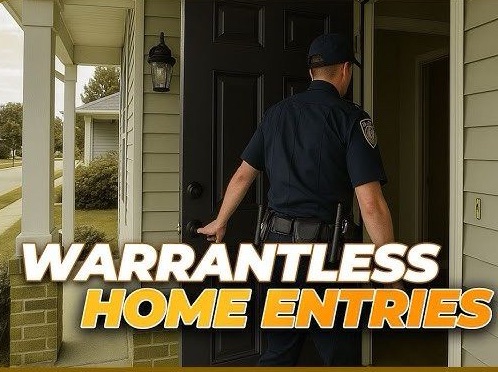
Breaking into a home without a warrant to stop someone trying to provoke police
violence touches fragile ground under India’s laws. Though no written rule directly
allows help in crisis moments like these, the right to life under Article 21, together
with court-recognised urgent circumstances, opens space for measured actions. Looking at it differently, India’s 2017 mental health law treats people in emotional crisis not as dangers but as patients deserving care. Still today, problems linger – clear directions are missing on when authorities may enter a home during such crises. Officers lack detailed guidance on actions they’re permitted to take. There is also confusion about responsibility if outcomes turn bad. Without these details fixed, efforts to help rest on shaky ground, even when aiming to preserve worth and respect. Right now, changing how police are trained could make a real difference. Officers need tools to calm tense moments before they spiral. Without that shift, promises about fair treatment under the law stay hollow. Dignity in protection means nothing if methods remain unchanged.
FAQS
Q1.Does Indian law acknowledge “suicide by cop”?
Even without a clear label, judges worked around it using the Mental Healthcare Act
of 2017. Run into deaths fall under scrutiny thanks to rulings tied to Article 21.
Legal responsibility of officers emerges in light of these judgments. Life protection
rights shape much of the discussion. Judicial thinking weaves through each aspect
quietly
Q2. Can police enter a home without a warrant to prevent imminent self-harm?
Should danger seem close and clear, Section 48 of the BNSS allows access – courts
often back this when risk feels real. Still, force cannot go too far; what follows has to
match the threat, no more. Each move rests on Article 21’s bar: least push needed,
always. Balance shapes outcome, not urgency alone.
Q3. What does the Mental Healthcare Act, 2017 require of police in suicide
emergencies?
A person attempting suicide is seen by legal standards as facing extreme emotional
pain. What matters here isn’t judgment but recognizing deep suffering behind the
act. The system treats such moments as cries shaped by anguish, not choices made
lightly. Moments like these shift focus from blame to understanding inner turmoil.
Law responds not with punishment but with a presumption of overwhelming crisis .
Help should follow, because support is due under these state. Officers on duty
have to respond like it’s a health crisis – never as if wrongdoing happened.
REFERENCE
Constitution of India – Article 21 and 22
Bharatiya Nagarik Suraksha sanhita, Section 48, 103, and 185.
Mental Healthcare Act, 2017, Section 100 and 115


