
Reaffirming Privacy as the Heart of Constitutional Liberty
Author: S. Sai Sharmila, Nyaya Vidya Parishad Law College, Visakhapatnam
The decision in K.S. Puttaswamy v. Union of India (2017) is one of the most significant constitutional judgments delivered by the Supreme Court of India. A unanimous nine-judge Constitution Bench declared the Right to Privacy as a fundamental right protected under Part III of the Constitution. The judgment emerged from challenges to the Aadhaar Scheme and addressed a longstanding constitutional question concerning whether privacy constituted an enforceable fundamental right. By overruling earlier precedents such as M.P. Sharma v. Satish Chandra and Kharak Singh v. State of Uttar Pradesh, the Court established privacy as an intrinsic component of dignity, liberty, autonomy, and individual choice. The judgment not only transformed Indian constitutional jurisprudence but also laid the groundwork for data protection, informational privacy, and digital rights in the modern era. This article analyses the facts, constitutional provisions, legal principles, judicial reasoning, and continuing significance of the landmark decision.
The Indian Constitution is a living document designed to safeguard individual freedoms against arbitrary state action. While the Constitution expressly guarantees several fundamental rights, it does not explicitly mention the Right to Privacy. For decades, Indian courts grappled with the question of whether privacy could be implied from the guarantees of life, liberty, and dignity contained in Part III of the Constitution.
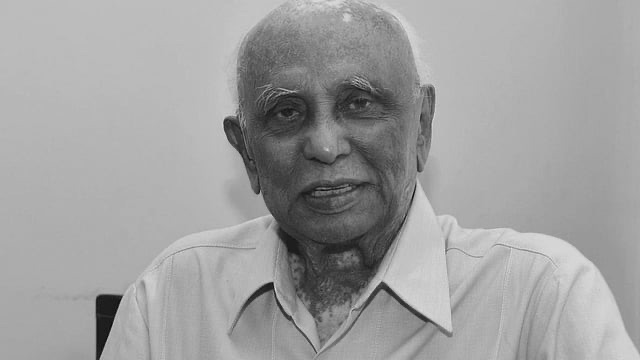
The controversy attained constitutional significance with the introduction of the Aadhaar Scheme, which required citizens to provide biometric and demographic information to the State. Concerns regarding mass collection and storage of personal data raised questions about surveillance, informational control, and personal autonomy. In this backdrop, Justice K.S. Puttaswamy, a retired judge of the Karnataka High Court, challenged the constitutional validity of Aadhaar.
During the proceedings, the Union Government argued that privacy was not a constitutionally protected fundamental right in light of the earlier decisions of the Supreme Court in M.P. Sharma v. Satish Chandra (1954) and Kharak Singh v. State of Uttar Pradesh (1964). Since several later judgments had recognised privacy despite these precedents, the issue was referred to a nine-judge Constitution Bench.
On 24 August 2017, the Supreme Court unanimously held that privacy is a fundamental right flowing from Articles 14, 19, and 21 of the Constitution. The judgment fundamentally reshaped Indian constitutional law and expanded the understanding of liberty and dignity in a digital society.
The Aadhaar Project was initiated by the Unique Identification Authority of India (UIDAI) with the objective of assigning a unique twelve-digit identification number to residents of India. The scheme required the collection of biometric data, including fingerprints and iris scans, along with demographic information.
Justice K.S. Puttaswamy challenged the Aadhaar programme, contending that the compulsory collection and storage of personal information violated citizens’ privacy rights. Several similar petitions were subsequently tagged together before the Supreme Court.
A three-judge bench noticed that previous decisions of the Supreme Court were inconsistent regarding the existence of a constitutional right to privacy. Consequently, the matter was referred to a larger bench and ultimately placed before a nine-judge Constitution Bench to determine whether privacy constituted a fundamental right under the Constitution of India.
Relevant Constitutional Provisions :
● Article 14 – Equality Before Law
Article 14 guarantees equality before law and equal protection of laws. The Court observed that arbitrary state intrusion into private life would violate the constitutional guarantee of fairness and equality.
● Article 19 – Fundamental Freedoms
The freedoms guaranteed under Article 19, including freedom of speech and expression, movement, association, and profession, are closely connected with privacy. The exercise of these freedoms becomes meaningless if individuals are constantly subjected to surveillance and monitoring.
● Article 21 – Right to Life and Personal Liberty
Article 21 provides that no person shall be deprived of life or personal liberty except according to procedure established by law. The Court interpreted the term “personal liberty” broadly and held that privacy is an inseparable component of human dignity, autonomy, and self-determination.
● Preamble to the Constitution
The Court relied upon the constitutional values of liberty, dignity, and justice embodied in the Preamble. Privacy was recognised as essential for preserving individual personality and democratic freedoms.
1. Whether the Right to Privacy is a fundamental right under Part III of the Constitution of India.
2. Whether the decisions in M.P. Sharma v. Satish Chandra and Kharak Singh v. State of Uttar Pradesh correctly held that privacy is not constitutionally protected.
3. Whether privacy can be derived from Articles 14, 19, and 21 despite the absence of an express constitutional provision.
Arguments Advanced by the Parties :
Arguments of the Respondents (Union of India) –
The Union Government contended that:
● The Constitution does not expressly recognise privacy as a fundamental right.
● The Constituent Assembly intentionally omitted privacy from the list of guaranteed rights.
● The decisions in M.P. Sharma and Kharak Singh conclusively established that privacy is not a fundamental right.
● Welfare schemes such as Aadhaar required collection of personal information for effective governance and delivery of public benefits.
Arguments of the Petitioners –
The Petitioners argued that:
● Privacy is a natural and inalienable right inherent in every human being.
● Earlier judgments denying privacy were based on outdated constitutional interpretations.
● The decisions in R.C. Cooper v. Union of India and Maneka Gandhi v. Union of India had already rejected the compartmentalised approach to fundamental rights adopted in A.K. Gopalan.
● Privacy is integral to dignity, liberty, bodily integrity, and decisional autonomy.
● International human rights instruments recognise privacy as a basic human right.
The judgment is founded on the principle that dignity constitutes the core value of the Constitution. Privacy protects the ability of individuals to make personal choices free from unwarranted state interference.
● Autonomy and Self-Determination –
The Court recognised that privacy enables individuals to exercise control over personal decisions relating to family, marriage, reproduction, sexual orientation, and lifestyle choices.
● Transformative Constitutionalism –
The judgment adopted a transformative interpretation of the Constitution, recognising that constitutional rights must evolve with societal and technological developments.
The Court emphasised that constitutional rights cannot be restricted merely because certain choices are unpopular with the majority. Constitutional morality must prevail over social morality.
Judicial Reasoning and Proof :
The Court unanimously held that privacy is a constitutionally protected fundamental right.
Justice D.Y. Chandrachud observed that privacy is not merely a derivative right but an independent constitutional guarantee flowing from the guarantee of life and personal liberty.
The Court rejected the narrow interpretation adopted in M.P. Sharma and Kharak Singh. It held that those decisions were rendered before the development of modern constitutional jurisprudence and therefore could not be treated as binding precedents.
The Bench recognised three broad dimensions of privacy:
Protects the physical integrity of individuals against compulsory medical procedures, surveillance, or intrusion.
Protects personal data from unauthorised collection, storage, and dissemination.
Protects individual choices relating to marriage, reproduction, sexual orientation, faith, and lifestyle.
The Court held that privacy is not an absolute right. Any restriction upon privacy must satisfy the following four-fold test:
1. Legality – There must be a valid law authorising the restriction.
2. Legitimate State Aim – The restriction must pursue a legitimate governmental objective.
3. Proportionality – The means adopted must be proportionate to the objective sought to be achieved.
4. Procedural Safeguards – Adequate safeguards must exist to prevent abuse.
This proportionality framework has become the standard test for evaluating privacy-related claims in India.
a. M.P. Sharma v. Satish Chandra (1954)
An eight-judge bench held that the Constitution did not expressly recognise a right to privacy. This decision was overruled in Puttaswamy to the extent it denied constitutional protection to privacy.
b. Kharak Singh v. State of Uttar Pradesh (1964)
A six-judge bench rejected the existence of a fundamental right to privacy while striking down police surveillance measures. The decision was partially overruled.
c. A.K. Gopalan v. State of Madras (1950)
Adopted a compartmentalised approach to fundamental rights. This approach was later abandoned.
d. R.C. Cooper v. Union of India (1970)
Recognised the interconnected nature of fundamental rights and weakened the reasoning adopted in A.K. Gopalan. However, it played a crucial conceptual stepping stone by rejecting the “mutually exclusive” theory of fundamental rights, enabling privacy to be read into Articles 14, 19, and 21 later.
e. Maneka Gandhi v. Union of India (1978)
Expanded Article 21 and held that any restriction on liberty must be just, fair, and reasonable. The Puttaswamy judgment heavily relied upon this precedent.
f. Navtej Singh Johar v. Union of India (2018)
Relied on Puttaswamy to decriminalise consensual same-sex relations and protect sexual autonomy.
g. Joseph Shine v. Union of India (2018)
Applied privacy and dignity principles to strike down the offence of adultery.
The Puttaswamy judgment transformed Indian constitutional jurisprudence in several ways:
● Recognised privacy as a fundamental right.
● Strengthened protection against state surveillance.
● Established informational privacy as a constitutional guarantee.
● Provided the constitutional foundation for data protection legislation.
● Reinforced dignity, autonomy, and individual choice.
● Influenced subsequent landmark judgments concerning LGBTQ+ rights, reproductive rights, and personal liberty.
● Adapted constitutional protections to the realities of the digital age.
The judgment ultimately led to greater emphasis on data governance and culminated in legislative efforts to regulate the collection and processing of personal data in India.
The judgment in K.S. Puttaswamy v. Union of India represents a defining moment in the evolution of Indian constitutional law. By recognising privacy as a fundamental right, the Supreme Court reaffirmed that liberty, dignity, and autonomy constitute the bedrock of a democratic society. The decision moved beyond a narrow textual interpretation of the Constitution and embraced a transformative vision that places the individual at the centre of constitutional protection.
The ruling not only resolved decades of uncertainty regarding privacy but also established a robust framework for evaluating state action in an increasingly digital world. Through its emphasis on dignity, informational control, bodily integrity, and personal choice, the judgment has become the constitutional foundation for modern rights jurisprudence in India. Its enduring legacy lies in its recognition that privacy is not merely a privilege but an indispensable condition for the meaningful exercise of freedom and human dignity.
Frequently Asked Questions (FAQ) :
1. Why is the Puttaswamy judgment considered a landmark decision?
It is the first judgment by a nine-judge Constitution Bench that unequivocally recognised privacy as a fundamental right under the Constitution.
2. Which constitutional provision protects privacy?
Privacy is primarily protected under Article 21 but also derives support from Articles 14 and 19.
3. Did the Court hold privacy to be an absolute right?
No. Privacy can be restricted if the restriction satisfies the tests of legality, legitimate aim, proportionality, and procedural safeguards.
4. Which earlier judgments were overruled?
The Court overruled M.P. Sharma v. Satish Chandra and Kharak Singh v. State of Uttar Pradesh to the extent that they denied the existence of a constitutional right to privacy.
5. What is informational privacy?
Informational privacy refers to an individual’s right to control the collection, storage, use, and dissemination of personal data.
1. K.S. Puttaswamy (Retd.) v. Union of India, (2017) 10 SCC 1.
2. M.P. Sharma v. Satish Chandra, AIR 1954 SC 300.
3. Kharak Singh v. State of Uttar Pradesh, AIR 1963 SC 1295.
4. A.K. Gopalan v. State of Madras, AIR 1950 SC 27.
5. R.C. Cooper v. Union of India, (1970) 1 SCC 248.
6. Maneka Gandhi v. Union of India, (1978) 1 SCC 248.
7. Menaka Guruswamy, “Justice K.S. Puttaswamy (Retd.) and Anr v. Union of India and Ors”, American Journal of International Law (2018).

