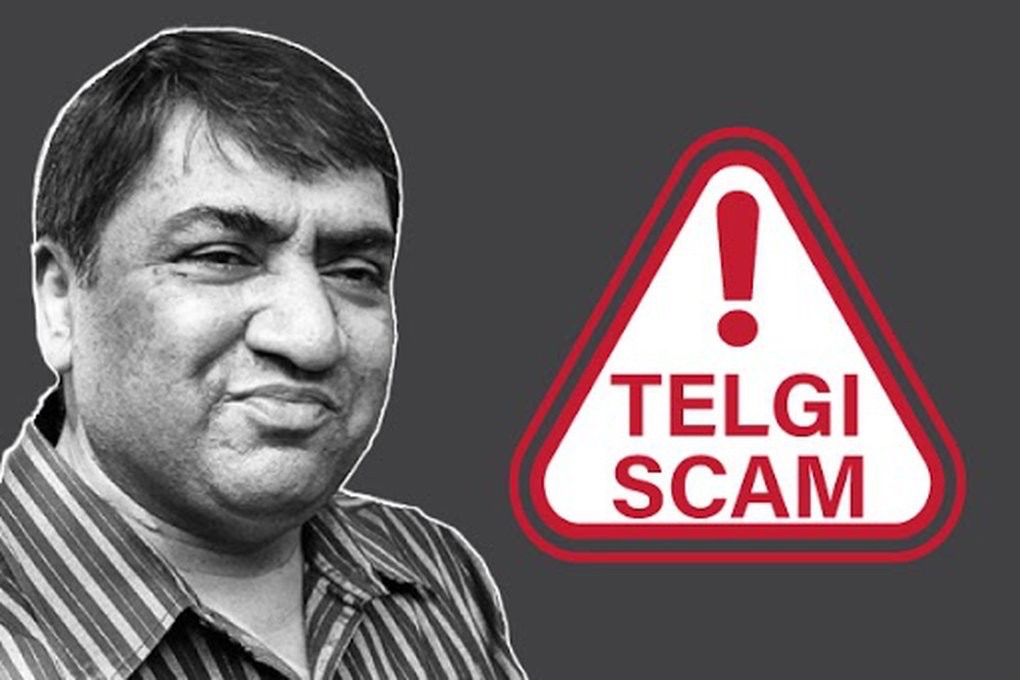
An Analysis of India’s Largest Counterfeiting Conspiracy and Its Legal Ramifications
Case: State of Maharashtra v. Abdul Karim Telgi & Ors.
Acts Invoked: IPC 1860 — Sections 420, 465, 467, 468, 471; MCOCA 1999; PMLA 2002
Jurisdiction: Multiple States: Maharashtra, Karnataka, Rajasthan, Delhi, and others
Estimated Fraud Value: Rs. 20,000 Crore (approx.)
Key Accused: Abdul Karim Telgi (Principal Offender)
Year of Arrest: 2001 (Karnataka); Convicted 2006–2007
Author: Yash Yogitta Joshi
College: Lokmanya Tilak Law College, Pune
LinkedIn Link : https://acesse.one/linkedin-yash-yogitta-joshi
Abstract
The Telgi Stamp Paper Scam is one of the most audacious financial frauds in post-independence India. Abdul Karim Telgi, an erstwhile fruit seller from Khanapur, Karnataka, orchestrated a nationwide counterfeiting syndicate that produced and circulated fake stamp papers worth an estimated Rs. 20,000 crore over more than a decade. The scam penetrated the very arteries of state machinery, implicating police officials, government servants, and bureaucrats. This article examines the factual matrix of the case, the legal framework under which prosecutions were launched, the evidentiary architecture, and the precedential significance of the judgments rendered by Indian courts. The affair exposed systemic vulnerabilities in the management of non-judicial stamp papers and precipitated legislative and administrative reforms in stamp paper procurement across the country.
To the Point
Abdul Karim Telgi obtained counterfeit stamp papers by fraudulently procuring a printing licence from the Security Printing Press, Nashik. Using this licence, he set up sophisticated printing units in multiple states and manufactured duplicate stamp papers, stamp duty labels, and franking impressions that were visually indistinguishable from genuine government-issued instruments. These forged instruments were sold through a network of sub-agents, stamp vendors, and complicit bank officials across Maharashtra, Karnataka, Andhra Pradesh, Rajasthan, and Delhi.
The Special Investigation Team (SIT) constituted by the Supreme Court of India and the subsequent investigation by the Central Bureau of Investigation (CBI) revealed that Telgi’s network extended to senior officers of the police force, state bureaucracy, and politicians. The criminal enterprise operated from approximately 1993 to 2001, before Telgi’s arrest by the Karnataka Police in Ajmer, Rajasthan.
The scam caused enormous losses to state exchequers, financial institutions, and private citizens who had used these fake stamps in property registrations, insurance policies, share transfer deeds, and loan documentation. The fraudulent instruments, having been used in legally binding transactions, created a web of compromised legal documents whose authenticity became irrevocably suspect.
Use of Legal Jargon
1. Forgery (Section 463, IPC)
‘Forgery’ under the Indian Penal Code, 1860, means making a false document or false electronic record with the intent to cause damage or injury, or to support any claim or title, or to commit fraud, or that fraud may be committed. Telgi’s enterprise constituted textbook forgery — the manufacture of stamps bearing the authentic seal of the Government of India with intent to deceive.
2. Counterfeiting of Government Stamps (Sections 255–263A, IPC)
Chapter XII of the IPC creates a distinct category of offences relating to coin and government stamps. Section 255 prescribes life imprisonment for counterfeiting government stamps. Section 258 penalises the sale of counterfeit stamps, and Section 263A punishes the possession of instruments used for counterfeiting stamps. These provisions formed the backbone of the prosecution’s case.
3. Cheating and Dishonest Inducement (Section 420, IPC)
The offence of cheating requires a deceptive act inducing the victim to deliver property or to alter or destroy a document. The buyers of fake stamp papers, including banks, property purchasers, and insurers, were dishonestly induced to believe that the instruments were genuine, thereby suffering financial loss.
4. Using Forged Document as Genuine (Section 471, IPC)
Every individual or institution that utilised Telgi’s counterfeit stamps in legal instruments committed the offence under Section 471, even if unwittingly. The prosecution distinguished between scienter (guilty knowledge) and strict liability under this section.
5. Organised Crime (Maharashtra Control of Organised Crime Act, 1999 — MCOCA)
MCOCA was invoked to prosecute the syndicated nature of the operation. Under Section 2(1)(d) of MCOCA, an ‘organised crime syndicate’ means a group of two or more persons who, acting alone or collectively, indulge in activities of organised crime. The chargesheet alleged that Telgi headed a continuing unlawful enterprise with a hierarchical command structure — the very definition of an organised crime syndicate.
6. Money Laundering (Prevention of Money Laundering Act, 2002 — PMLA)
The proceeds of the stamp scam constituted ‘proceeds of crime’ under Section 2(1)(u) of PMLA. Telgi’s assets, including properties in multiple states and foreign exchange holdings, were subject to provisional attachment under Section 5 of PMLA, with the Enforcement Directorate conducting parallel proceedings.
7. Conspiracy (Section 120-B, IPC)
Criminal conspiracy was established by demonstrating an agreement between Telgi and co-accused — including police officers, government licencing authorities, and stamp vendors — to carry out the illegal enterprise. The doctrine of constructive liability meant that each conspirator was equally liable for acts committed in furtherance of the common design.
The Proof
The evidentiary foundation of the prosecution rested on several categories of evidence:
Documentary Evidence
• Seizure of printing presses, dies, plates, and raw materials capable of reproducing government stamp impressions — establishing the physical infrastructure of the counterfeit operation.
• Forensic examination by the Forensic Science Laboratory (FSL), which confirmed that seized stamps bore the official design of genuine instruments but lacked security features present in stamps printed by India Security Press, Nashik.
• Recovery of cash, account books, hawala transaction records, and register entries showing the scale of distribution.
Witness Testimony
• Approver testimony by several co-accused who turned hostile witnesses for the prosecution, corroborating the hierarchical structure of the syndicate under Section 133 read with Section 114 of the Indian Evidence Act, 1872.
• Statements of stamp vendors, bank employees, and property registrars who had unknowingly used the forged documents.
Electronic and Scientific Evidence
• Call detail records (CDRs) establishing communication between Telgi and senior police officials, lending credence to allegations of systemic collusion.
• Reports of handwriting and fingerprint experts confirming Telgi’s authorship of key communications.
Judicial Confession
Telgi made a detailed confession before a magistrate under Section 164 of the Code of Criminal Procedure, 1973, naming several police officers as beneficiaries of the racket. While retracting portions of the confession at trial, the magistrate’s recording of the confession, corroborated by independent evidence, was admitted by the court.
Case Laws
1. State of Maharashtra v. Abdul Karim Telgi & Ors. (2006–2007)
The Special Court constituted under MCOCA convicted Telgi and 11 others on charges including organised crime, forgery, cheating, and counterfeiting of stamps. Telgi was sentenced to 30 years’ rigorous imprisonment with a fine of Rs. 202 crore — one of the heaviest sentences in Indian criminal history at the time. The court held that the continuous nature of the criminal enterprise, its pan-India reach, and the complicity of public servants warranted the highest end of sentencing discretion.
2. Zahira Habibulla H. Sheikh v. State of Gujarat, (2004) 4 SCC 158
Although decided in a different factual context, the Supreme Court’s observations on the right to fair investigation and the duty of the state to conduct an impartial probe directly influenced the SIT’s mandate in the Telgi case. The court articulated that witness intimidation and procedural sabotage by powerful accused persons must be countered by independent investigative mechanisms.
3. State of Punjab v. Baldev Singh, (1999) 6 SCC 172
The Supreme Court’s discussion on the reliability of confessional statements and the limited admissibility of retracted confessions was applied by the Special Court in evaluating Telgi’s Section 164 CrPC confession. The court held that a retracted confession, if materially corroborated, retains evidentiary value.
4. Yakub Abdul Razak Memon v. State of Maharashtra, (2013) 13 SCC 1
The principles of sentencing proportionality and the treatment of organised crime were drawn upon. The Supreme Court emphasised that in cases involving syndicates with systemic reach and state penetration, deterrent punishment serves a constitutional function beyond mere retribution.
5. Enforcement Directorate v. Abdul Karim Telgi (PMLA Proceedings)
The Adjudicating Authority under PMLA confirmed the provisional attachment of properties valued at over Rs. 1,500 crore belonging to Telgi and his associates. This marked one of the earliest large-scale applications of money laundering law to a forgery-based criminal enterprise in India.
Conclusion
The Telgi Stamp Paper Scam occupies a singular place in India’s criminal jurisprudence. It demonstrated, unambiguously, that organised crime is not confined to narcotics or extortion — it can penetrate the most mundane instruments of state, such as stamp paper, and corrode public trust in the legal framework governing property, finance, and commerce.
The convictions secured under MCOCA and IPC, the parallel PMLA proceedings, and the SIT’s exposures of police complicity collectively represent a watershed in India’s approach to financial crimes. The case compelled the Government of India to overhaul the stamp paper distribution system, culminating in the abolition of the traditional vendor-based model and the shift towards e-stamping through the Stock Holding Corporation of India Limited (SHCIL) under the mandate of the Central Record Keeping Agency (CRA).
From a doctrinal standpoint, the Telgi case crystallised important principles: that forgery of government instruments is an aggravated offence deserving punishments at the higher sentencing range; that the doctrine of common intention under Section 34 IPC and criminal conspiracy under Section 120-B IPC are indispensable tools in prosecuting syndicated fraud; and that the proceeds of crime must be vigorously traced and attached to deny criminals the fruits of their wrongdoing. It remains a cautionary tale about institutional complicity and a landmark in India’s anti-organised crime jurisprudence.
Frequently Asked Questions (FAQs)
Q1. What was the Telgi Stamp Paper Scam?
The Telgi Stamp Paper Scam was a nationwide counterfeiting operation in which Abdul Karim Telgi and his associates produced and distributed fake government stamp papers, duty labels, and franking impressions over approximately a decade (1993–2001). The estimated value of the fraudulent instruments exceeded Rs. 20,000 crore.
Q2. How did Telgi obtain access to printing equipment?
Telgi fraudulently obtained a printing licence from the Security Printing Press, Nashik, by submitting forged documents and bribing officials. He used this licence to procure genuine printing machinery before setting up clandestine presses in multiple states.
Q3. Which laws were applied in prosecuting the accused?
The prosecution invoked Sections 255, 258, 263A, 420, 463, 465, 467, 468, 471, and 120-B of the Indian Penal Code, 1860; the Maharashtra Control of Organised Crime Act, 1999; and the Prevention of Money Laundering Act, 2002.
Q4. What sentence did Telgi receive?
Telgi was convicted by the Special Court (MCOCA) and sentenced to 30 years’ rigorous imprisonment along with a monetary fine of approximately Rs. 202 crore. He died in custody in October 2023, having suffered prolonged illness.
Q5. What reforms followed the scam?
The scam accelerated the transition to e-stamping in India. The Central Government mandated the use of the e-stamping system through SHCIL to eliminate the vendor-based distribution model, reducing the scope for counterfeiting. Several state governments also introduced biometric authentication and real-time stamp verification.
Q6. Were any police officials convicted?
The SIT investigations established links between Telgi and senior police officials in Karnataka and Maharashtra. Several officers faced departmental action, suspension, and criminal proceedings. However, the convictions of police personnel were delayed due to prolonged litigation and procedural challenges.