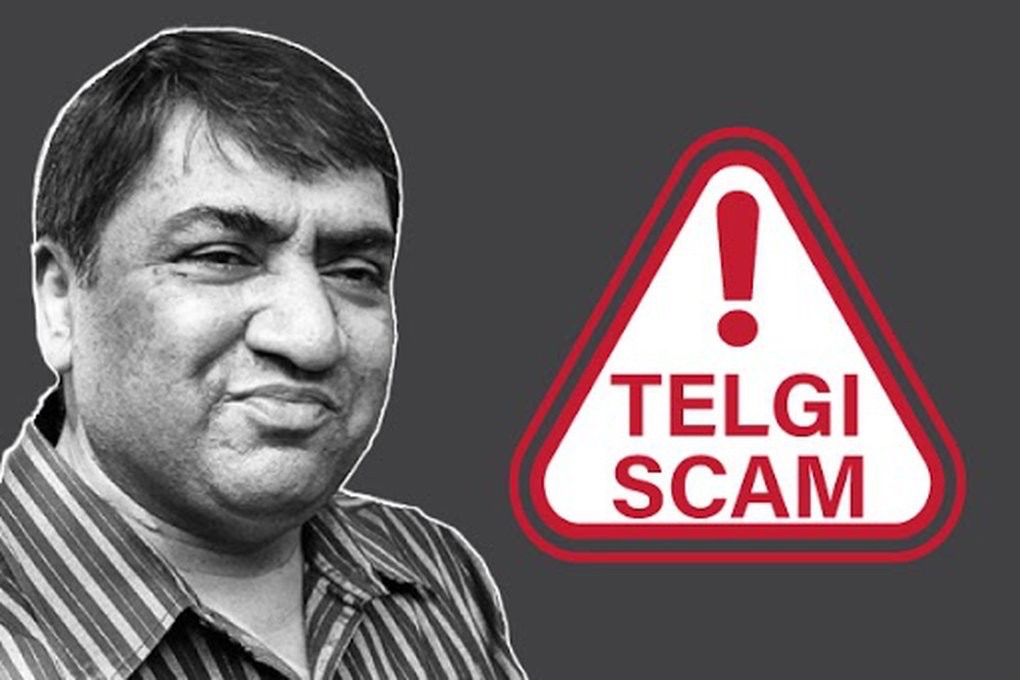
IN-DEPTH ANALYSIS OF THE BIGGEST FINANCIAL FRAUD IN INDIA.
Author: Manan Jhamb, Chandigarh University.
LinkedIn Profile: https://www.linkedin.com/in/manan-jhamb-441716288/
TO THE POINT
The Abdul Karim Telgi Stamp Paper Scam (1993 2003) is one of the most notorious frauds which happened in the post independent India. Abdul Karim Telgi, a fruit-vendering turned criminal genius, had plotted the mass forgery and sale of fake stamp papers in various states in India, and caused an estimated loss of about Rs. 30,000 crores (estimates go up to Rs. 20,000–30,000 crore) upon the national exchequer. The plan included forgery of stamp documents – which are legal documents essential in any property transaction, affidavits, loan documents, and the plethora of statutory compliances, which made millions of legal documents invalid, and put a systemic strain on the revenue administration and judicial processes in India.
The criminal activities of Telgi did not take place in a vacuum. The fraud was a revelational case not only of financial fraud but institutional corruption due to its roots in deep-seated nexus between the accused and the law enforcement agencies, political functionaries and administrative officials.
USE OF LEGAL JARGON
The prosecution packaged the charges and courts interacted with various concepts of substantive law:
Mens rea & Actus reus: By acquiring genuine stamp printing presses and engaging in mass production of fake stamp papers (actus reus), which Telgi had to fulfill the two elements of criminal responsibility, mens rea and actus reus.
•Forgery and Counterfeiting (Sections 463, 464, 465, 467, 468, 471 IPC): The creation and utilization of the counterfeit stamp papers was squarely covered under the definition of forgery of valuable security in Section 467 IPC (which is punishable by life imprisonment) and/or the use of counterfeit documents as genuine in Section 471 IPC.
•Criminal Conspiracy (Section 120-A, 120-B IPC): The network of distributors, officials, and operatives amounted to an illegal pact of engaging in cognizable offences, factors that lead to vicarious criminal responsibility.
Prevention of Corruption Act, 1988 (PCA): Several police officers and government servants were prosecuted using Sections 7, 11, 13(1)(d) of the PCA in receiving gratification and misusing their official accounts to protect the activities of Telgi.
•Organised Crime (Maharashtra Control of OrganizedCrime Act, 1999 — MCOCA): Telgi was one of the first defendants to be charged under MCOCA, which sets the definition of an organised crime syndicate and a severe bail limitation and intensified punishment.
Special Court (TADA/MCOCA) Proceedings: Since the offence had been organised and widespread, under MCOCA, Special Courts were created, bypassing general procedural protections to make confession tapes made by senior police officers admissible evidence.
Concurrent Jurisdiction: Multiple states began independent prosecutions- Maharashtra, Karnataka, Kerala, Andhra Pradesh, and others- with complex issues of territorial jurisdiction, and inter-state coordination under the Code of Criminal Procedure, 1973 (CrPC).
•Attachment of Property: Authorities used money laundering laws by seeking to provide under the Prevention of Money Laundering Act, 2002 (PMLA) that reflected on attachment and seizure of money proceeds of a crime.
THE PROOF
The prosecution has constructed a huge evidentiary edifice upon several jurisdictions:
Documentary Evidence
•Stamp papers of counterfeited stamping, with forged security symbol, forged watermarks and counterfeited serial numbers, which are totally imperceptible to the naked eye like the real instruments that have been issued in India by the India Security Press, Nashik.
• Documents of procurement, printing equipments and chemical proceedings found in hidden printing presses used by Telgi and his partners.
•Transaction records, hawala books, cash books that indicate the financial transfers and commission plan within the distribution chain.
Electronic & Scientific Evidence
Forensics The Central forensic choice laboratory (CFSL) conducted a forensic investigation that the seized papers were counterfeit with inks, paper and print pattern significantly matching Telgi’s facilities.
•Call Detail Records (CDRs) and intercepted messages in the context of approved telephonic eavesdropping provided a coordinating linkage among Telgi, distributors and officials compromised.
Testimonial & Confessional Evidence
In 2003, Telgi took a polygraph (narco-analysis) test in Bangalore at the Bowring Hospital, where he allegedly listed senior police officers, politicians and bureaucrats as beneficiaries. Although the admissibility of narco-analysis is still a legal issue (Selvi v. State of Karnataka, 2010), the revelations provoked additional research.
•First hand evidence that was supplied by approver evidence of co-accused distributors and operatives that became Crown witnesses under Section 306 CrPC of the manner in which the scam operated.
Financial Investigation
Special Investigation Teams (SITs) constituted by the Supreme Court tracked down disproportionate wealth, offshore dealings, and outlay of money to police officers and political agents who mediated their way into crores of money.
ABSTRACT
The Telgi Stamp Paper Scam is an exceptional marriage between financial fraud, institutional greed and administrative ineffectiveness. Since his early years in Karnataka, Abdul Karim Telgi was able to capitalize on fraudulently acquired licenses issued by the India Security Press and built a pan-India distribution system that involved vendors and sub-agents, real estates agents, and notaries. In operation since the early 90s, but arrested in November 2001, the syndicate headed by Telgi used to sell fake stamp papers mostly of denominations exceeding the range of Rs. 10 to Rs. 500, aiding in fraudulent property titles, fake loan agreements, and fraudulent affidavits across the state.
This fraud was exposed when a keen-eyed police officer in Pune realized that there were irregularities in stamp papers during normal checks. Afterwards raids throughout Mumbai, Bangalore and Hyderabad, and other urban areas revealed printing presses, caches of counterfeits and distribution networks. After becoming aware of the scale of the fraud and that of police conspiracy, the Supreme Court of India, through self-motivated assumption, ordered the formation of numerous SITs and kept an eye over proceedings.
Telgi was convicted and sentenced to 13 years rigorous imprisonment with a fine of Rs in 2006 by a Special MCOCA Court in Mumbai. 202 crore – one of the highest monetary fines in a criminal case in India at the time. The case eventually revealed the weaknesses inherent in the stamp paper distribution system as part of a greater Indian society, allowing the government to shift to e-stamping in the framework of Stock Holding Corporation of India Ltd. (SHCIL) as a preemptive action. Telgi passed on in prison on October 23, 2023, following years of ill health.
CASE LAWS
1. State of Maharashtra v. Abdul Karim Telgi & Ors. (MCOCA Special Court, Mumbai, 2006)
The Special Court convicted Telgi under Sections 467, 468, 471, 120-B IPC and Sections 3(1)(i), 3(2) and 3(4) of MCOCA, 1999. The court found that the volume, structure, and hierarchical nature of the criminal enterprise was an organised crime syndicate by Section 2(1)(e) of MCOCA. The fine of Rs. 202 crore was ordered as ill-gotten proceeds.
2. Smt. Selvi & Ors. v. State of Karnataka, AIR 2010 SC 1974
The Constitution Bench of the Supreme Court found that involuntary narco-analysis, polygraph and brain-mapping tests contravened Article 20(3) (right against self-incrimination) as well as Article 21 (right to life and personal liberty) of the Constitution of India. This ruling had the direct effect on the admissibility of Telgi narco-analysis revelations as they could be available to provide leads upon further investigation, but not as direct evidence.
3. P.V. Anvar v. P.K. Basheer, (2014) 10 SCC 473
Such electronic records could only be admitted as a secondary evidence by the Supreme Court under the provisions of Section 65-B of Indian Evidence Act, 1872 only after providing a certificate by a responsible authority. The CDR was subject to this principle and the intercepted call evidence was used in the Telgi prosecution.
4. Shreya Singhal v. Union of India, (2015), 5 SCC 1 (similar principle)
Despite being an IT law case, its coverage of the concept of surveillance and interception according to Section 69 of the IT Act provided guidance to the legal framework of the lawfulness of the telephone interception which was employed to make the case against Telgi and the police officers.
5. K. Veeraswami v. Union of India, (1991) 3 SCC 655
The case has set precedence in regards to prosecuting sitting and retired judges and even top officials with the Prevention of Corruption Act, reestablishing the idea that no governmental official is above the law, the same principle used in the case concerning police officers and the prosecution of Telgi.
CONCLUSION
The Abdul Karim Telgi Stamp Paper Scam is a seminal point in the history of legal and administration in India. It showed how one ambitious fraudster, the holder of systemic knowledge and institutional corrupt make-overs, could corrupt an instrument as fundamental as stamp papers in scale, and compromise property titles, legal instruments and even financial exchange on a grand scale. The case highlights four important lessons to the Indian legal and governance system:
•Enabling procrastination: The fraud lasted more than a decade through bureaucratic indifference and wilful negligence. Strong internal audit system in stamp paper distribution systems is a must.
Technology as Protection: The move to e-stamping using SHCIL shows that with digitisation and real-time authentication, there can never be a place where a physical fake can be created.
•Complexity among Prosecutors: The kind of complexity created by having FIRs in different states and the overlap of MCOCA Courts with their respective jurisdiction, posed procedural complexity. A well-organized prosecution system of white-collar crimes would be beneficial to India.
•Evidentiary Reform: The limit of the Selvi judgment regarding narco-analysis indicates weaknesses in the Indian investigative tool-box; development of forensic science capacity is a priority.
The case of Telgi under the MCOCA still stands as one of the most notable uses of the organised crime law in Indian legal history and the scam itself remains a benchmark when discussing financial crime academically, in policy, and prosecutorial circles.
FREQUENTLY ASKED QUESTIONS (FAQs)
Q1. What is a stamp paper and why is it of importance on legal matters?
A stamp paper is a pre printed piece of paper of certain adaptations that are issued by the government and on which legally binding documents are executed i.e. sale deeds, lease contracts, affidavits, and loan contracts etc. Documents signed on stamped papers that are either insufficently stamped or have counterfeit stamp papers are inadmissible in evidence and non-transferable under law in accordance with the Indian Stamp Act, 1899.
Q2. The question is how did Telgi acquire real printing equipment?
Allegedly, Telgi bought corrupt licences and access to security printing technology by bribing officials of the India Security Press, Nashik – the government plant licensed to print authentic stamp papers – and established independent printing plants reproducing the same technology.
Q3. So what was MCOCA and why was it used here?
The Maharashtra Control of Organised Crime Act, 1999 (MCOCA) is specifically a law addressing syndicates who partake in perpetuation of illegal acts. Since Telgi orchestrated his business through several years of pan-India network of operatives, financiers, and corrupt officials, it qualified as an organised crime syndicate under the statutory definition, and MCOCA was the right prosecution tool.
Q4. What is the situation with e-stamping in India?
The Government of India required e-stamping on the basis of Stock Holding Corporation of India Ltd. (SHCIL) after the Telgi scam. Included in this system, the stamp duty is paid electronically and a special certificate with a secure QR code is created, which practically eliminates the possibility of forgery. E-stamping has been adopted in urban areas by most states.
Q5. Was the case with Telgi a senior officials conviction?
Yes. Some of the police officers in Maharashtra and other states were charged and found guilty of the scam in court. Nevertheless, they could not prosecute high ranking political leaders without any notable outcome as far as there were no convincing facts that could be taken as a standard of beyond doubt, despite the revelations witnessed during the narco-analyses.
Q6. How much money did you lose as a result of this scam?
Only official estimates calculate the loss to the national exchequer as about Rs. Between 20,000 to 30,000 crore, some of the SIT reports reported even more when considering the ripple effect on property transactions, lending-out of loans and stamp duty collection in the impacted states.
REFERENCES
•Indian Penal Code, 1860 — Sections 120-A, 120-B, 463, 464, 465, 467, 468, 471
•Prevention of Corruption Act, 1988 — Sections 7, 11, 13
• must be Maharashtra Control of Organised Crime Act, 1999.
•Indian Stamp Act, 1899
•Code of Criminal Procedure, 1973 — Sections 306, 173
•Indian Evidence Act, 1872 — Section 65-B
•Selvi v. State of Karnataka, AIR 2010 SC 1974
•P.V. Anvar v. P.K. Basheer, (2014) 10 SCC 473
•K. Veeraswami v. Union of India, (1991) 3 SCC 655
Again, the Hindu Archives and Indian Express investigative reports (20012006) can be providing such information.
•SIT Report on Telgi Scam (Maharashtra Government, 2003)
SHCIL e- Stamping Policy Framework (Ministry of Finance, 2008):