
Author: Vedashree B. Rajput, Government Law College, Mumbai
To the Point
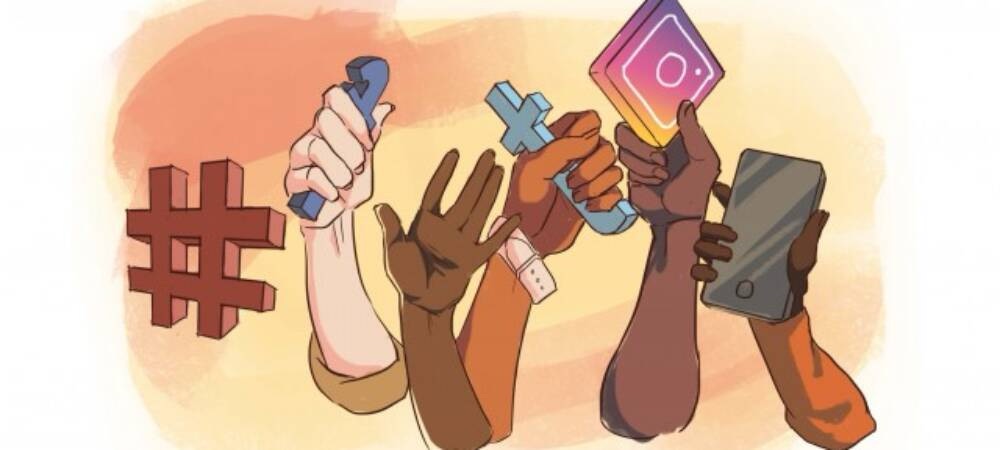
Social Media today isn’t just something that people use; it’s a political actor, one that organises, mobilises, and, increasingly, governs.
In the past two years alone, social media platforms have organised protests that brought a government that had ruled Bangladesh for fifteen years, triggered a popular uprising in Nepal when authorities tried to shut them down, made an informal online poll on one of these apps even helped decide who became Nepal’s next interim Prime Minister and in India, an offhand insult from a sitting judge turned into the country’s fastest-growing political movement, the Cockroach Janta Party.
Every time this has happened, governments have reacted the same way: block the account, ban the app, or shut down the internet entirely. And in every case, the same legal question arises, at what point does a ‘government using words like “national security” or “public order” to restrict what people post online’ stop being a fair use of its power, and start becoming an unconstitutional way to silence political disagreement?
This article looks at these four episodes to understand how social media is reshaping political power across South Asia. It then tests the picture against what Indian constitutional law actually says about the state’s authority to control it.
Use of Legal Jargon
A few terms appear throughout and are worth pinning down early.
Article 19(1)(a) – of the Constitution of India guarantees freedom of speech and expression as a fundamental right. The Supreme Court has held that this applies online too, the internet isn’t some separate zone where this right doesn’t reach.
Article 19(2) – Allows the State to impose “reasonable restrictions” on that right, but only on specific grounds: public order, decency, morality, security of the State, and a few others. The list is fixed. Governments don’t get to add to it.
Section 66A, IT Act, 2000 – Criminalised sending messages online that were “offensive” or “annoying.” The Supreme Court struck it down for being far too vague. It was so broadly worded that it could’ve been used to punish completely legal speech too.
Section 69A, IT Act, 2000 – Gives the Central Government power to block online content or accounts, but only on six specified grounds and only through a defined procedure. It survived constitutional scrutiny precisely because of those limits.
Doctrine of Proportionality – A four-part test courts use to check whether a restriction on a fundamental right is constitutionally valid. The restriction must have a legitimate aim, a rational connection to that aim, it has to be the least restrictive option available, and it can’t place an unfairly heavy burden on people. If it fails even one of these four checks, it’s struck down.
Writ Petition (Article 32) – The constitutional mechanism for approaching the Supreme Court directly when a fundamental right has been violated.
Chilling effect – what happens when a law is so vague or so broad that people stop saying things they’re completely allowed to say, not because anyone told them to stop, but because they’re scared of what might happen to them if they don’t.
The Proof
Bangladesh – Protest Organizing, July–August 2024
It started as student opposition to a job quota. Thirty percent of government positions were reserved for descendants of 1971 war veterans, and students were furious about it. Then videos of police being violent towards the protesters started spreading on Facebookand what had been one specific complaint blew up into a nationwide uprising.
Sheikh Hasina’s government tried to stop it. There was a ten-day internet blackout starting 18 July, another shutdown on 4–5 August, and Facebook, WhatsApp, and Telegram were blocked for almost two weeks. None of it worked. Hasina resigned and fled the country on 5 August 2024, ending fifteen years in power. People have since called it the world’s first successful Gen Z revolution. The shutdowns didn’t suppress the movement.
Nepal – A ban that Backfired, September 2025
The Nepali government banned 26 social media platforms, including Facebook, Instagram, and Discord, saying they had failed to register locally. Young Nepalis didn’t believe that for a second. The ban landed right in the middle of a viral corruption expose tied to politicians’ children, and most people saw it for what it looked like: an attempt to shut down inconvenient attention.
The ban didn’t quiet anything down. It sparked protests big enough to set the parliament on fire, kill over 50 people, and force Prime Minister K.P. Sharma Oli to resign within days. The restrictions meant to protect his government were exactly what ended up sinking it.
Nepal — A Prime Minister chosen on Discord, September 2025
With no functioning government left, a civic group called Hami Nepal set up a “Youth Against Corruption” server on Discord. It grew to over 1.5 lakh members. Over days of live debate and shortlisting candidates, an informal poll among roughly 7,500 participants landed on former Chief Justice Sushila Karki. She received about 50% of the vote. On 12 September 2025, she was sworn in as interim Prime Minister.
It wasn’t a real, legally binding election. But it was something genuinely new: an online chat server thathelped in deciding who led a nation. The general election that followed, on 5 March 2026, produced another social-media-made figure: rapper-turned-mayor Balendra Shah, who defeated the long-serving K.P. Oli.
India – Satire as political movement, May–June 2026
On 15 May 2026, Chief Justice of India Surya Kant called unemployed youth and certain activists”cockroaches” and “parasites of society.” The very next day, communications strategist Abhijeet Dipke launched a satirical political party named after the insult: the Cockroach Janta Party. Within a week, it had crossed 20 million Instagram followers, more than BJP and Congress combined and over 350,000 sign-ups.
On 21 May 2026, India’s Ministry of Electronics and Information Technology directed X to withhold theCJP’s account within India under Section 69A,acting on Intelligence Bureau inputs that flagged the account as a threat to the sovereignty and integrity of India.A backup account, “Cockroach is Back,” was taken down soon after gaining nearly 200,000 followers of its own. Dipke challenged the block before the Delhi High Court; on 29 May 2026, the Court declined to order interim restoration of the account, issued notice to the Centre and X, and listed the matter for further hearing in July 2026.
Abstract
This article examines social media’s growing capacity to shape, organise, and even constitute political power in South Asia, using four recent episodes from Bangladesh, Nepal, and India as case studies. The argument is this: as platforms shift from being places where people just talk about politics to actual tools for organizing it, capable of bringing down governments and even informally selecting leaders. The state’s reflex of blocking, banning, or shutting down access raises serious constitutional questions that courts can no longer treat as minor or beside the point.
Drawing on Indian Supreme Court rulings, particularly Shreya Singhal v. Union of India and also Anuradha Bhasin v. Union of India, this article maps out the legal limits on how far governments can go in restricting online political content, and then tests the ongoing blocking of the Cockroach Janta Party’s social media against that framework. The conclusion isn’t that the law is absent. Indian courts have built meaningful safeguards, mainly the proportionality test andprocedures requiring transparency in how these decisions are made. The problem is enforcement. Theinconsistent application of these safeguards leave considerable room for governments to use “national security” as a label for shutting down dissent that’s justinconvenient for them and not actually dangerous.
Case Laws
1. Shreya Singhal v. Union of India, (2015) 5 SCC 1
This is the foundational case. The Supreme Court struck down Section 66A of the IT Act which had criminalised sending messages online that were “grossly offensive” or “annoying”, saying it wasunconstitutionally vague and capable of producing a chilling effect on protected speech under Article 19(1)(a). The law was so broadly written it could’ve been used to punish almost anything.
But the Court didn’t invalidate all of the government’s power over online content. It simultaneously upheld Section 69A’s blocking power as constitutionally valid, because it works on narrowly defined grounds and follows a clear procedure with recorded reasons. That distinction matters a lot for the CJP block. The government can’t invoke a blocking ground as a label without substance behind it. It has to show that CJP’s content actually and genuinely falls within the sovereignty-and-integrity ground it cited under 69A, not merely that the account was gaining popularityamong a politically inconvenient audience. That’s exactly the question Dipke’s petition is now asking the Delhi High Court to answer.
2. Anuradha Bhasin v. Union of India, (2020) 3 SCC 637
This case came out due to the long communication shutdown in Jammu & Kashmir after Article 370 was abolished.The Court held that “internet access is constitutionally protected, as part of the freedom of speech under Article 19(1)(a) and the right to trade under Article 19(1)(g)”. Shutting down the internet indefinitely isn’t allowed. Any restriction must satisfy a four-part proportionality test: legitimate aim, rational connection, necessity, and a fair balance against the burden imposed on the people. Shutdown orders also have to be made public and reviewed regularly.
Tested against this framework, both Bangladesh’s nationwide internet shutdowns and Nepal’s blanket ban on 26 platforms would likely fail. Both were bluntmeasures. Neither government showed it had even considered less restrictive options; let alone that none were available.
3. S. Rangarajan v. P. Jagjivan Ram, (1989) 2 SCC 574
This case came up in the context of film censorship, and it set the bar for when speech can be restricted on public order grounds.The Court held that the link between the speech and the disorder must be like “a spark in a powder keg”, immediate, direct, not remote or speculative.
Applied to a satirical political movement, the question becomes sharp: is this mocking content actually likely to spark real public disorder, or is the government simply uncomfortable with how many people are listening?
Conclusion
Social media in South Asia isn’t just making political opinion louder anymore — it’s producing political outcomes. It organizes uprisings. It brings down governments. In Nepal, it has shaped who sits at the head of the government. The states affected by this shift have noticed, and their pattern of response across Bangladesh, Nepal, and India is strikingly consistent: when online disagreement grows too large or too inconvenient, the instinct is to block access rather than deal with the actual grievance behind it.
Indian constitutional law has built a fairly serious set of tools to check that instinct. Narrow and specificgrounds for blocking content under Section 69A, a mandatory proportionality from Bhasin, and transparency requirements from both Singhal and Bhasin. But having the rules on paper isn’t the same as actually following them. Internet shutdowns and blocking orders in India have continued rising even after Bhasin, often without the transparency the judgment specifically required.
The Cockroach Janta Party’s case, now pending before the Delhi High Court, will show whether these safeguards are really followed, or whether a ground like “sovereignty and integrity” can be used even when there’s no real danger behind it. This is exactly what Rangarajan’s “spark in a powder keg” test was meant to catch, the difference between a danger that’s just imagined and one that’s real and immediate.Bangladesh and Nepal offer a warning of what happens when these checks don’t exist. How bans and shutdowns meant to supress dissent end up making it even worse.
The bigger lesson for South Asian Governments mightbe a simple one. Shutting down the platform rarely shuts down the grievance. And as social media’s political power keeps growing, the constitutional limits on how far governments can go to suppress it are only going to matter more in the years ahead — not less.
FAQs
Q1. Can the Indian government block any social media account it disagrees with?
No. Section 69A of the IT Act permits blocking only on six specified grounds; sovereignty and integrity of India, security of the State, and public order among them, and only by following a set procedure that requires recorded reasons. If a block issued outside those grounds, or without following proper procedure, it can be challenged in court.
Q2. What’s the difference between Section 66A and Section 69A of the IT Act?
Section 66A criminalised individuals’ online speech that was just “offensive” or “annoying”. It was struck down in Shreya Singhal for being far too vague. Section 69A, on the other hand, lets the government block specific content or accounts but only for narrow, clearly defined security and public-order reasons and was upheld precisely because of those limits. One punished the person speaking. The other targets the content itself, under much tighter rules.
Q3. What is the legal status of the action against the Cockroach Janta Party?
Currently sub judice. The Ministry of Electronics and Information Technology directed the withholding of CJP’s X account under Section 69A, citing intelligence inputs on threats to India’s sovereignty and integrity.Founder Abhijeet Dipke has challenged that order before the Delhi High Court. The outcome turns on whether the government can show CJP’s content genuinely falls within one of 69A’s specified groundsand not just that some officials found it annoying or inconvenient.
