Author: Yashraj Singh Batra, University of Petroleum and Energy Studies
To the Point
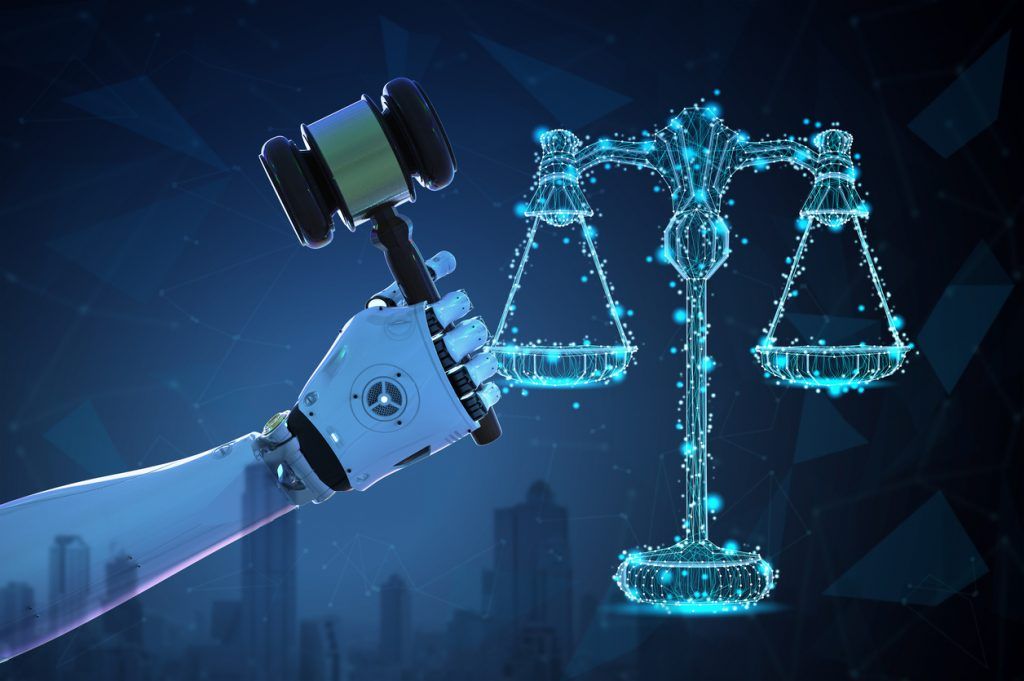
There are serious doctrinal, ethical, and jurisprudential issues raised by the widespread use of artificial intelligence (AI) in the legal field, which represents a paradigm shift in the way justice is administered. This article explores the evidentiary role of AI, statutory interpretation issues, and judicial discretion as it relates to substantive and procedural law. It examines whether AI is consistent with fundamental legal concepts like due process, natural justice, and the rule of law by drawing on both domestic and comparative jurisprudence. An assessment of AI’s admissibility as evidence in court, the parameters of
liability for autonomous systems, and newly raised issues of algorithmic accountability round out the conversation. The conclusion calls for a regulatory framework that embraces technological innovation while maintaining human agency.
Overview
The legal profession is changing as a result of artificial intelligence, especially in the areas of machine learning (ML) and natural language processing (NLP). AI’s influence is evident in everything from
algorithmic sentencing and predictive policing to automated contract review and virtual courts. But the law, which is normative and anthropocentric by nature, needs to adjust carefully. Can artificial
intelligence be consistent with legal principles like equality before the law, mens rea, and foreseeability? By analyzing the application of AI in legal procedures, its consequences for judicial reasoning, and the risks associated with its use, this article aims to provide an answer.
Legal Terminology and Definitional Framework
Computer systems that can carry out tasks that normally require human intelligence are referred to as artificial intelligence (AI) systems. There are differences in legalese between:
Narrow AI: task-specific AI (such as legal research bots),
Theoretically, general artificial intelligence is able to think like a human.
When AI functions without constant human supervision, the phrase “autonomous system” has legal significance and affects the concepts of strict liability, negligence, and causation.
Other pertinent terms are:
The “black box” issue that prevents explainability is algorithmic opacity.
Due process: constitutional protections that AI decisions may jeopardize
Predictive analytics limits the use of judicial discretion when determining bail and sentencing
Legal Use-Cases and Difficulties with Evidence
AI in Judicial Decision-Making
Several jurisdictions have incorporated AI systems into their courts. Widely used in American
sentencing, the COMPAS (Correctional Offender Management Profiling for Alternative Sanctions) tool has come under fire for sustaining racial bias. The Wisconsin Supreme Court supported the use of
COMPAS in State v. Loomis, 881 N.W.2d 749 (Wis. 2016), but cautioned against depending solely on it.
Under procedural due process, this presents issues. Is it possible for a defendant to effectively contest the results of an opaque algorithm? Withholding exonerating algorithmic evidence may be a violation of due process under Brady v. Maryland, 373 U.S. 83 (1963).
AI as Proof
. Examples of these outputs include algorithmic profiling and facial recognition hits. Their admissibility depends on meeting relevance and reliability requirements.
In accordance with the Daubert standard (Daubert v. Merrell Dow Pharmaceuticals, Inc., 509 U.S. 579 (1993)), scientific proof needs to be:
Tested empirically,
reviewed by peers,
Controlled by established error rates,
widely acknowledged.
These tests are frequently not met by facial recognition software, particularly when it comes to racial minorities, which raises concerns about equal protection under the Fourteenth Amendment.
Legal Personhood and Contract Automation
Contracts are now automatically drafted and negotiated by AI systems. Under contract law, it is unclear if such systems can act as a principal’s agent or as a party to a contract.
Intent and consent are necessary components of the Restatement (Second) of Agency that cannot be attributed to machines. But underwidely acknowledged.
A partial shift toward AI personification is indicated by the UETA and E-SIGN Acts, which allow electronic agents to create legally binding contracts.
Accountability and Liability
Liability for Torts
Whether AI systems can be held tortuously liable is a crucial question. The current theories of tort law are based on human-centric concepts such as duty of care, breach, causation, and damage.
Can a software developer who trains a discriminatory AI be considered negligent?
Product Liability: If an AI-powered car crashes, is it a faulty product?
The ongoing case of Hutson v. Tesla, Inc. investigates how Tesla’s autopilot worked after a deadly
collision. If AI is found to be a defective product, courts may apply strict liability under the Restatement (Third) of Torts.
In order to acknowledge AI as sui generis legal entities similar to corporate personhood, some academics propose a new category called “electronic personhood.”
Liability for Crime
The mental component of crime, mens rea, is hard to replicate in machines. Unless linked to a human operator, criminal liability is doctrinally incoherent due to AI’s lack of intent, knowledge, and recklessness.
Rule of Law and Algorithmic Discrimination
Algorithmic bias is one of the biggest dangers AI poses to justice. Machine learning models run the risk of encoding historical biases because they are trained on historical data, which would be against the Equal Protection Clause of U.S.
Open justice and the right to a reasoned decision—two tenets of the rule of law as stated in A.V. Dicey’s theory—are threatened by opaque algorithms.
Global and Comparative Views
The European Union
A risk-based approach to AI regulation is introduced by the EU AI Act (2024), which outlaws systems with unacceptable risk and strictly regulates high-risk AI, such as that employed by the judiciary and law enforcement.
It requires:
commitments to transparency, human error,
strong data governance.
United States
outlines five principles:
Safe and Effective Systems,
Algorithmic Discrimination Protections, Notice and Explanation,
Human Alternatives.
But these are currently non-binding and sectoral.
India
Although they lack legally binding guidelines, the Digital India Act (draft) and National Strategy on AI (NITI Aayog) place a strong emphasis on responsible AI. Despite worries about facial recognition and surveillance reaching the courts, Indian jurisprudence has not yet addressed AI in litigation in a
meaningful way.
Conclusion and Future Direction
Artificial intelligence raises the possibility of opacity, bias, and dehumanization in the legal system while also promising increased efficiency and consistency. The legal system must proceed cautiously, guaranteeing ethical protections, interpretability, and human-in-the-loop governance. While lawmakers must create strong, technology-neutral frameworks, courts should use constitutional values as
guidelines.
It is crucial to use a multi-stakeholder approach that includes regulators, technologists, judges, and civil society. AI in law must continue to be a tool, not a replacement for human judgment.
. Basic Legal Issues Presented
Deep jurisprudential questions are brought up by the use of AI in law:
FAQS
Is it possible to algorithmize justice?
ANS. It is possible to partially algorithmize justice, but not fully. While algorithms can assist in legal
decision-making—such as by analyzing case law, predicting outcomes, or enforcing consistency—they cannot replace human judgment, ethical reasoning, or the contextual understanding required for justice.
Who is accountable?
Is the creator, implementer, or user of AI liable?
ANS. Accountability in AI use is shared, but context-dependent. Liability may fall on the creator
(developer), implementer (organization), or user (end operator) based on their role, intent, and level of control over the AI system.
Is AI able to interpret the law?
Is it possible for AI to replicate the purposivism, textualism, and moral reasoning involved in statutory interpretation?
ANS. NAI can assist in interpreting the law to a limited extent, but it cannot fully understand or apply
legal interpretation like a human. Its abilities are based on pattern recognition, not deep comprehension or reasoning.
What precautions are required?
Should we establish data provenance guidelines, algorithmic audits, or a dedicated AI Ombudsman?
ANS. To ensure that Artificial Intelligence (AI) is used safely, ethically, and lawfully in the legal domain, several precautions are essential. These measures help prevent misuse, reduce harm, and preserve public trust in the justice system.
Does AI respect human dignity?
Does automation turn litigants into data points and dehumanize the legal system?
ANS. AI itself does not possess consciousness, values, or moral awareness—so it cannot “respect” human dignity in the true sense. However, the way AI is designed, used, and governed can either uphold or undermine human dignity.