
Author: Arnav Gupta
College: Bharati Vidyapeeth’s Institute of Management and Research, New Delhi
LinkedIn: https://www.linkedin.com/in/arnav-gupta-8377771b6
TO THE POINT
Every courtroom is built upon an invisible promise.
It is the promise that before a person’s liberty is taken away, before a family loses property, before a reputation is destroyed, or before guilt is declared, the truth will be tested. That promise has shaped legal systems for centuries. Witnesses take an oath to speak the truth. Lawyers challenge testimony through cross-examination. Experts defend their opinions under rigorous questioning. Documents are authenticated before they are relied upon. Every piece of evidence, regardless of how convincing it appears, is expected to withstand scrutiny before it influences the administration of justice.
This process reflects one of the oldest principles of evidence law: truth is not assumed—it is tested.
For generations, courts have accepted that human beings are imperfect. Witnesses may forget details, experts may disagree, investigators may make mistakes, and documentary evidence may sometimes be fabricated. Yet the legal system possesses mechanisms to expose these weaknesses. Cross-examination reveals inconsistencies. Forensic examination uncovers manipulation. Judicial reasoning separates credibility from conjecture. The legitimacy of every verdict therefore depends not upon the perfection of evidence, but upon the opportunity to question it.
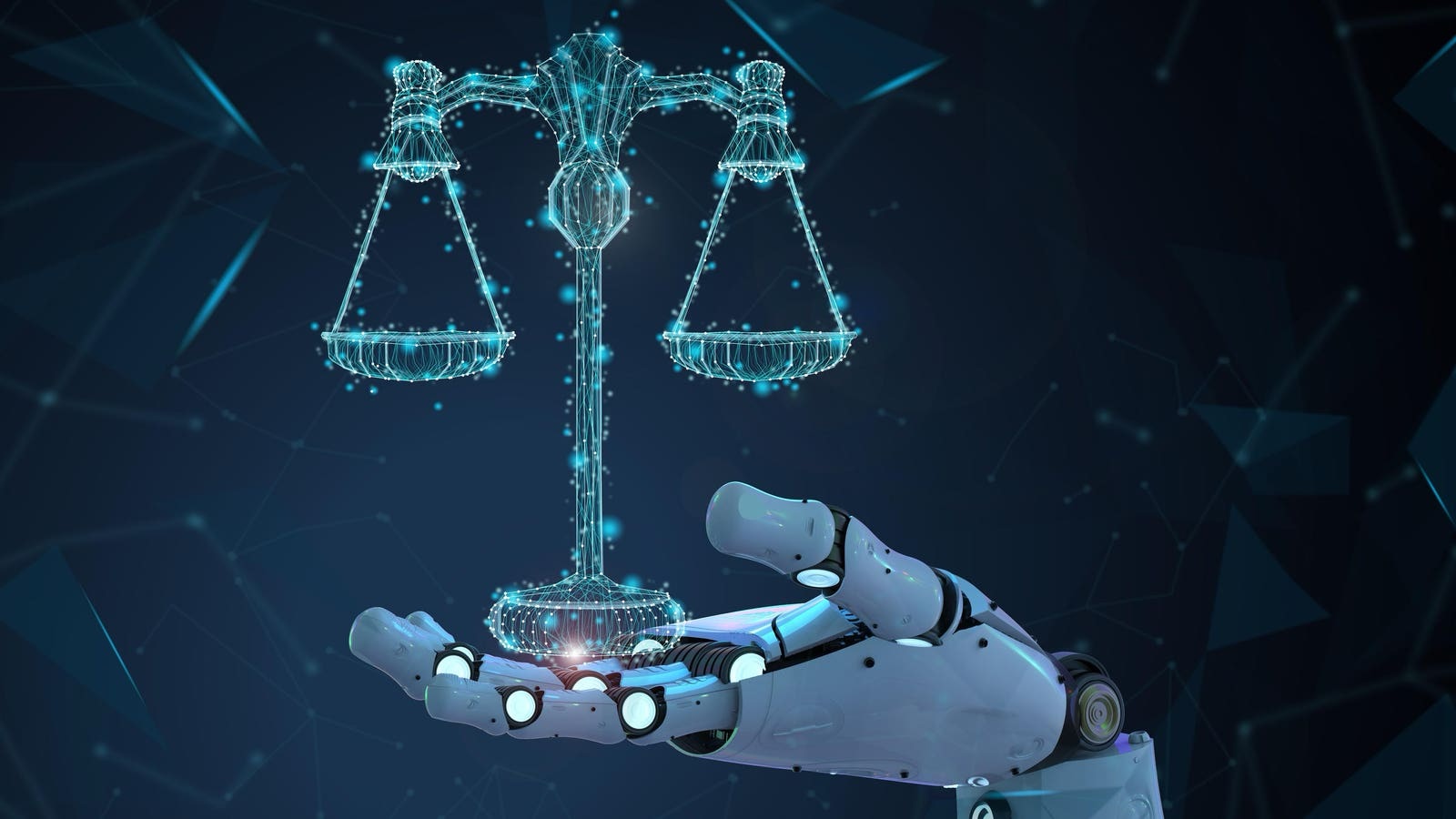
Artificial intelligence introduces a challenge unlike anything evidence law has encountered before.
Today, algorithms are capable of analysing crime scene footage, identifying faces within seconds, enhancing blurred images, reconstructing damaged recordings, translating conversations, generating transcripts, detecting behavioural patterns, predicting criminal risks, and even creating photographs, videos, and voices that appear indistinguishable from reality. What was once considered the exclusive domain of human intelligence is increasingly being performed by machines operating at extraordinary speed and scale.
The rapid integration of artificial intelligence into legal systems has created undeniable opportunities. Investigators can examine vast quantities of digital evidence in hours rather than weeks. Lawyers can organise thousands of documents with remarkable efficiency. Courts overwhelmed by mounting case backlogs may benefit from technologies capable of simplifying complex records and improving judicial administration. Used responsibly, artificial intelligence possesses the potential to strengthen access to justice and enhance the efficiency of legal institutions.
Yet efficiency has never been the ultimate objective of a courtroom.
Justice has.
That distinction lies at the heart of the emerging legal debate.
Unlike a human witness, an algorithm cannot stand in a witness box. It cannot swear an oath to tell the truth. It cannot explain why it reached a particular conclusion in the language of human experience. It cannot be confronted with inconsistencies during cross-examination, nor can it appreciate the moral consequences of an incorrect conclusion. Most importantly, many advanced artificial intelligence systems operate through complex computational processes that remain difficult—even for their own developers—to fully explain. When an algorithm identifies a suspect, recommends a conclusion, or generates evidence capable of influencing judicial proceedings, an important question immediately arises: who is accountable if the algorithm is wrong?
This concern extends far beyond science fiction.
Around the world, courts are increasingly encountering evidence that has been generated, enhanced, analysed, or interpreted using artificial intelligence. Facial recognition technology assists criminal investigations. AI-powered forensic software examines digital devices. Voice-cloning technology can replicate speech with extraordinary precision. Deepfake videos challenge conventional assumptions regarding authenticity. Generative AI systems can produce realistic documents, conversations, and visual content capable of misleading even trained observers. The courtroom is therefore entering an era in which seeing is no longer synonymous with believing.
For centuries, evidence law has operated on a simple assumption—that every source of evidence can ultimately be questioned. Artificial intelligence disrupts that assumption because some algorithms produce results without offering explanations that judges, lawyers, or litigants can independently verify. This phenomenon, often described as the “black box problem,” creates profound constitutional and evidentiary concerns. If a judicial decision is influenced by technology whose reasoning cannot be meaningfully examined, can the legal process truly satisfy the principles of procedural fairness?
The issue becomes even more significant when viewed through the lens of constitutional rights. A fair trial is not merely about reaching the correct outcome; it is about ensuring that the process leading to that outcome is transparent, accountable, and capable of challenge. The right to defend oneself necessarily includes the right to question the evidence presented against them. If an accused person cannot effectively challenge the reasoning of an algorithm that has materially influenced the prosecution’s case, the fairness of the trial itself may come into question.
At the same time, rejecting artificial intelligence altogether would ignore the remarkable benefits that technological innovation offers to modern justice systems. Artificial intelligence is capable of improving investigative accuracy, reducing administrative burdens, assisting forensic experts, and enhancing judicial efficiency in ways that were previously unimaginable. The challenge therefore is not whether artificial intelligence should enter the courtroom—it already has. The real challenge is determining the legal safeguards that must accompany its presence.
This article argues that the future of evidence law does not depend upon choosing between human judgment and artificial intelligence. Instead, it depends upon preserving the constitutional principles that have guided courts for centuries while adapting them to technologies capable of reshaping the very nature of evidence. The law has always evolved alongside scientific progress, but every technological advancement must ultimately answer to the same fundamental question: can it be trusted within a system where justice depends upon scrutiny, accountability, and fairness?
Perhaps, then, the most important question facing Indian evidence law is not whether an algorithm is intelligent enough to assist the courts. It is whether an algorithm can ever satisfy the responsibilities that the law has traditionally expected of every witness. Until that question is answered with confidence, artificial intelligence should remain an aid to judicial reasoning—not a substitute for the principles that have safeguarded justice for generations.
USE OF LEGAL JARGON
Evidence law has never been concerned merely with collecting information; its primary function is to determine whether information can be trusted. Every legal system develops rules governing admissibility, authenticity, relevance, and reliability because the administration of justice depends not upon the quantity of evidence presented before a court, but upon its credibility. Artificial intelligence challenges these traditional assumptions by introducing a new category of evidence that may be generated, interpreted, enhanced, or analysed through computational systems rather than direct human observation. Consequently, the question before courts is no longer limited to whether AI-generated material exists, but whether such material satisfies the legal standards that have governed evidence for centuries.
One of the foundational concepts of evidence law is admissibility. Evidence does not become acceptable merely because it appears persuasive or technologically sophisticated. Before a court can rely upon any material, it must first determine whether the evidence satisfies the legal conditions prescribed by statute and judicial precedent. In India, electronic evidence has long been recognised as admissible, subject to compliance with statutory safeguards. However, artificial intelligence introduces a distinction that traditional evidence law did not anticipate. Conventional electronic evidence generally records an event that actually occurred—such as CCTV footage, emails, or digital records. AI-generated evidence, on the other hand, may create entirely new content capable of resembling reality without actually representing it. This distinction fundamentally alters the legal inquiry surrounding admissibility.
Closely connected with admissibility is the principle of authenticity. A document, recording, or digital file must be shown to be genuine before it can influence judicial findings. Historically, authenticity could be established through witness testimony, expert examination, metadata, or documentary proof. Today, generative artificial intelligence has significantly complicated this process. Deepfake technology, synthetic audio recordings, AI-generated images, and fabricated digital documents can imitate reality with extraordinary precision. As a result, courts may increasingly confront evidence that appears authentic while being entirely artificial. The challenge therefore is no longer identifying whether evidence exists, but determining whether it truthfully represents the events it claims to depict.
Another essential requirement is reliability. Reliable evidence consistently reflects factual accuracy and can withstand independent verification. Artificial intelligence undoubtedly possesses remarkable analytical capabilities, yet its outputs are not immune from error. Machine-learning models may generate incorrect conclusions, reproduce biases present within training data, or produce entirely fabricated information despite appearing highly convincing. These so-called “hallucinations” highlight a legal concern that extends beyond technological imperfection. If a judicial decision relies upon AI-generated evidence that cannot be independently verified, the reliability of the adjudicatory process itself may be compromised.
Perhaps the most distinctive challenge posed by artificial intelligence is the issue of explainability. Judicial reasoning has always demanded that evidence be capable of meaningful examination. Human witnesses explain how they acquired knowledge. Experts describe the methodology underlying their opinions. Investigating officers justify the procedures they adopted. Many advanced AI systems, however, operate through complex computational processes that are not easily interpretable by judges, lawyers, or even the engineers responsible for designing them. This phenomenon, commonly referred to as the “black box problem,” raises an important legal concern: can courts rely upon conclusions that cannot be fully explained?
The answer to this question directly affects the principle of natural justice, particularly the doctrine of audi alteram partem—the right of every individual to be heard and to challenge the evidence presented against them. Cross-examination remains one of the most powerful safeguards against wrongful conviction because it exposes inaccuracies, inconsistencies, and unreliable testimony. Artificial intelligence cannot participate in cross-examination in the conventional sense. An algorithm cannot clarify ambiguity, respond to judicial questioning, or defend its reasoning under scrutiny. If its conclusions materially influence a criminal prosecution or civil dispute, parties may find themselves unable to effectively challenge the very evidence upon which judicial decisions are based.
This concern also intersects with the constitutional guarantee of a fair trial under Article 21 of the Constitution of India. The Supreme Court has repeatedly held that fairness is not limited to the final verdict; it extends to every stage of the judicial process. A conviction secured through evidence that cannot be adequately scrutinised may undermine procedural fairness, regardless of whether the technology appears efficient or scientifically advanced. The legitimacy of a judicial decision therefore depends not only upon technological accuracy but also upon procedural transparency.
Another important evidentiary safeguard is the chain of custody, which documents the collection, preservation, handling, and presentation of evidence from its origin until its production before a court. The purpose of maintaining an unbroken chain of custody is to ensure that evidence has not been altered, contaminated, or manipulated. Artificial intelligence introduces a new dimension to this doctrine. Even where the original evidence remains intact, AI may substantially modify, enhance, or interpret that evidence through processes that require careful documentation and independent verification. Courts may therefore need to expand traditional chain-of-custody principles to account not only for who handled the evidence, but also for how algorithms transformed or analysed it.
The increasing role of AI also raises questions regarding expert evidence. Courts frequently rely upon expert witnesses to explain scientific and technical matters beyond ordinary judicial knowledge. As AI systems become more sophisticated, experts may increasingly be called upon to validate algorithmic outputs, explain computational methodologies, and assess the reliability of machine-generated conclusions. Yet this creates a paradox. If experts themselves cannot fully explain the reasoning underlying highly complex AI systems, judicial reliance upon such evidence may become increasingly difficult to justify.
Ultimately, these legal principles converge upon a single constitutional concern: accountability. Every participant in the justice system—witnesses, investigators, forensic experts, and judicial officers—is accountable for the role they play in determining legal outcomes. Artificial intelligence, however, possesses no legal personality, no moral agency, and no capacity to assume responsibility for error. If an algorithm contributes to a wrongful conviction, identifies the wrong suspect, or generates inaccurate evidence, responsibility inevitably shifts back to human institutions. The law must therefore determine not whether artificial intelligence can assist the search for truth, but whether its use can remain consistent with the principles of transparency, accountability, and fairness that have always defined the administration of justice.
Evidence law has never demanded infallibility. It has demanded accountability. That distinction may ultimately determine whether artificial intelligence becomes one of the justice system’s greatest innovations or one of its greatest constitutional challenges.
THE PROOF
Artificial intelligence is no longer a futuristic concept confined to research laboratories or technology companies. It is steadily becoming part of criminal investigations, commercial litigation, forensic analysis, cybercrime detection, and even judicial administration. Around the world, AI-assisted tools are identifying suspects through facial recognition, analysing digital devices, transcribing witness statements, enhancing surveillance footage, and processing millions of documents within minutes. These developments demonstrate that artificial intelligence is no longer external to the justice system—it is gradually becoming embedded within it.
Yet the increasing use of AI in legal proceedings exposes a critical distinction that is often overlooked. The law does not ask whether technology is innovative; it asks whether technology produces evidence capable of satisfying judicial scrutiny. This distinction becomes particularly important because artificial intelligence is fundamentally different from traditional sources of evidence. A CCTV camera records an event. A witness narrates personal observations. A forensic expert explains scientific findings. Artificial intelligence, however, may interpret, predict, reconstruct, enhance, or even generate information. As technology moves from recording reality to creating or reshaping it, evidence law must confront entirely new legal questions.
One of the clearest illustrations of this challenge is the emergence of deepfake technology. Modern AI systems can generate videos and audio recordings so realistic that distinguishing fabricated content from genuine recordings has become increasingly difficult. A person may appear to confess to a crime they never committed, deliver a speech they never gave, or participate in an event that never occurred. Such material possesses the ability to influence public opinion and potentially mislead judicial proceedings if adequate verification mechanisms are absent.
Ironically, the danger posed by deepfakes extends beyond fabricated evidence. It also threatens genuine evidence. As awareness of synthetic media grows, individuals accused of wrongdoing may dismiss authentic recordings by alleging that they are AI-generated. This phenomenon—often referred to as the “liar’s dividend”—creates a dangerous evidentiary dilemma. The law may eventually face situations where false evidence appears authentic while authentic evidence is treated with suspicion. In either case, public confidence in digital evidence begins to erode.
Another pressing concern involves the phenomenon of AI hallucinations. Generative AI systems are capable of producing highly persuasive yet entirely inaccurate information. Internationally, there have already been instances where lawyers relied upon AI-generated legal research containing fictional judicial precedents and fabricated citations, leading to professional consequences and judicial criticism. These incidents serve as a cautionary reminder that persuasive language does not necessarily reflect factual accuracy. If such technology were relied upon without adequate human verification during judicial proceedings, the consequences could directly affect the administration of justice.
Artificial intelligence has also transformed forensic investigations. Machine-learning systems now assist in analysing fingerprints, reviewing surveillance footage, recognising facial characteristics, and identifying behavioural patterns. These tools undoubtedly improve investigative efficiency and enable law enforcement agencies to process evidence on an unprecedented scale. However, efficiency cannot become a substitute for legal reliability. Algorithmic systems are only as reliable as the data upon which they are trained. Incomplete datasets, historical biases, or flawed programming may influence outcomes in ways that remain invisible to judges, lawyers, and litigants. Consequently, the legal system must examine not only what an algorithm concludes, but also how it reaches that conclusion.
Indian law has already demonstrated its willingness to embrace technological innovation. Judicial recognition of electronic evidence and the statutory requirements governing its admissibility reflect an evolving legal framework capable of adapting to scientific advancement. However, these principles were developed primarily for electronic records created through human activity—emails, CCTV recordings, digital documents, or call records. They did not anticipate evidence generated or materially altered by artificial intelligence. This emerging gap suggests that existing evidentiary safeguards may require reinterpretation or legislative refinement to address technologies capable of independently producing persuasive digital content.
Comparative legal developments reveal a similar pattern. Courts and policymakers across several jurisdictions increasingly acknowledge the benefits of artificial intelligence while simultaneously emphasising the need for transparency, human oversight, and procedural fairness. Rather than rejecting AI altogether, legal systems are gradually adopting a principle of “trust through verification”—recognising that technological evidence should complement judicial reasoning only when its accuracy, methodology, and reliability can be independently assessed. This approach reflects a broader understanding that innovation cannot be permitted to dilute the safeguards that protect individual rights.
Perhaps the greatest lesson emerging from these developments is that artificial intelligence does not require the law to abandon its existing principles. Instead, it requires those principles to be applied with greater vigilance. Authenticity, reliability, procedural fairness, and the right to challenge evidence remain just as important today as they were centuries ago. What has changed is the nature of the evidence itself.
The debate, therefore, is not about whether courts should welcome technological progress—they must. It is about ensuring that progress does not outpace the principles upon which justice depends. An algorithm may assist investigators, support forensic experts, and improve judicial efficiency, but no technological advancement should diminish the accused’s right to question the evidence presented against them. Courts have always sought the truth, but they have never pursued truth at the cost of fairness.
Ultimately, artificial intelligence represents both an extraordinary opportunity and a profound constitutional challenge. Its greatest strength lies in its ability to process information beyond human capacity. Its greatest weakness lies in the possibility that its conclusions may influence judicial outcomes without being fully understood or effectively challenged. The future of evidence law will therefore depend not upon how intelligent machines become, but upon whether legal institutions remain committed to the principle that every piece of evidence—human or artificial—must earn the trust of the courtroom before it earns the power to shape justice.
ABSTRACT
For centuries, evidence law has been built upon a simple yet powerful assumption: every piece of evidence relied upon by a court can be examined, challenged, and tested before it influences judicial outcomes. The rapid emergence of artificial intelligence has begun to reshape this assumption. AI systems are no longer confined to administrative or technological functions; they increasingly assist in criminal investigations, forensic analysis, facial recognition, document review, surveillance enhancement, and digital evidence processing. As artificial intelligence assumes a greater role in legal proceedings, courts are confronted with a question that traditional evidence law was never designed to answer: can evidence generated, interpreted, or significantly influenced by an algorithm be trusted to the same extent as evidence produced through human observation?
This article examines the admissibility and evidentiary value of AI-assisted evidence within the Indian legal framework. It analyses the constitutional principles governing fair trial and natural justice, the statutory safeguards applicable to electronic evidence, and the emerging legal concerns relating to transparency, explainability, accountability, and procedural fairness. It argues that while artificial intelligence offers remarkable opportunities to improve judicial efficiency and investigative accuracy, technological advancement cannot dilute the fundamental safeguards that have historically protected the administration of justice.
The article ultimately contends that the future of evidence law does not lie in choosing between human judgment and artificial intelligence. Rather, it lies in ensuring that every technological innovation remains accountable to the constitutional values of fairness, transparency, and the right to challenge the evidence upon which justice depends.
IMPORTANT CASE LAWS
1. Anvar P.V. v. P.K. Basheer (2014)
This landmark judgment fundamentally transformed the law relating to electronic evidence in India. The Supreme Court held that electronic records are admissible only when accompanied by the statutory requirements prescribed for electronic evidence. The decision reinforced the importance of authenticity and procedural safeguards before digital material can be relied upon by courts. Its principles remain directly relevant when considering AI-generated or AI-processed evidence.
2. Arjun Panditrao Khotkar v. Kailash KushanraoGorantyal (2020)
The Supreme Court reaffirmed that compliance with the statutory requirements governing electronic evidence is generally mandatory. The judgment emphasised that technological convenience cannot replace evidentiary safeguards. As artificial intelligence increasingly contributes to digital evidence, this decision highlights the continuing importance of ensuring authenticity before courts rely upon technological material.
3. State of Maharashtra v. Dr. Praful B. Desai (2003)
The Court recognised that technological advancement should facilitate, rather than obstruct, the administration of justice by permitting evidence through video conferencing. Although the case predated modern artificial intelligence, it reflects the judiciary’s willingness to embrace innovation while preserving procedural fairness.
4. Tomaso Bruno v. State of Uttar Pradesh (2015)
The Supreme Court emphasised the growing importance of electronic evidence in criminal investigations and observed that technological evidence often provides greater objectivity than oral testimony when properly collected and preserved. The judgment illustrates the judiciary’s increasing reliance on technology, while simultaneously underscoring the need for reliability and authenticity.
5. Justice K.S. Puttaswamy (Retd.) v. Union of India (2017)
Although principally concerned with the constitutional right to privacy, this landmark judgment recognised informational privacy, autonomy, and dignity as integral components of Article 21. The reasoning assumes particular importance where AI systems process vast quantities of personal information and influence legal proceedings. It reinforces the principle that technological innovation must remain consistent with constitutional protections.
CONCLUSION
The law of evidence has never required perfection from those who participate in the justice system. Witnesses may make mistakes, experts may disagree, and investigations may occasionally fail to uncover every fact. Yet every participant remains subject to the same fundamental expectation: their evidence must be capable of scrutiny. That principle has protected the legitimacy of judicial decision-making for centuries.
Artificial intelligence challenges this tradition not because it is incapable of assisting justice, but because it introduces a form of decision-making that may not always be transparent, explainable, or easily questioned. Its ability to analyse vast quantities of information, identify patterns, and enhance investigative efficiency offers undeniable advantages to modern legal systems. However, no technological innovation, regardless of its sophistication, should weaken the constitutional safeguards that distinguish justice from mere administrative efficiency.
In my view, the future of Indian evidence law should not be shaped by fear of technology or blind faith in it. Courts need not reject artificial intelligence simply because it is new, nor should they accept it merely because it is efficient. The appropriate approach lies in ensuring that AI-assisted evidence satisfies the same legal standards expected of every other form of evidence—authenticity, reliability, transparency, and accountability.
An algorithm may assist investigators, support judges, and strengthen forensic analysis. It may even transform the way evidence is discovered and evaluated. Yet there remains one responsibility that cannot be delegated to a machine: the constitutional obligation to ensure that every person receives a fair trial based upon evidence that can be meaningfully challenged.
Perhaps the question is not whether an algorithm can ever become a witness. The more enduring question is whether justice can continue to fulfil its oldest promise if evidence itself becomes incapable of explaining the path by which it claims to reveal the truth. The future of evidence law will therefore be determined not by how intelligent machines become, but by how faithfully the legal system preserves the principles that have always made justice worthy of public trust.
FAQs
Q1. Can artificial intelligence currently act as a legal witness in Indian courts?
No. Artificial intelligence does not possess legal personality and cannot function as a witness in the traditional legal sense. However, AI-generated or AI-assisted evidence may increasingly influence judicial proceedings.
Q2. Is AI-generated evidence admissible in India?
There is presently no dedicated legal framework dealing exclusively with AI-generated evidence. Its admissibility would generally depend upon compliance with the statutory rules governing electronic evidence and the court’s assessment of authenticity, reliability, and relevance.
Q3. Why does AI create challenges for evidence law?
Artificial intelligence raises concerns regarding explainability, algorithmic bias, deepfakes, synthetic evidence, accountability, and the ability of parties to effectively challenge evidence during judicial proceedings.
Q4. Can AI replace judges or human witnesses?
No. While artificial intelligence can assist legal processes by analysing information and improving efficiency, judicial decision-making ultimately depends upon human reasoning, constitutional safeguards, and procedural fairness.
Q5. Why is the question “Can an algorithm be a witness?” legally significant?
The question highlights a fundamental challenge for modern evidence law: whether courts can rely upon evidence produced or influenced by systems that cannot take an oath, undergo cross-examination, or assume legal responsibility for their conclusions. It invites a broader discussion about preserving fairness and accountability in the age of artificial intelligence.

