Author :- RUCHI KOL
College:- UNIVERSITY OF ALLAHABAD
ABSTRACT:-
The Constitution of India is not merely a legal document but a social contract that guarantees democracy, liberty, and justice. However, from 1950 to 1973, India witnessed a serious constitutional tussle between Parliamentary Sovereignty and Judicial Supremacy. The question was simple yet profound – Can a Parliament elected with a brute majority amend any part of the Constitution, including Fundamental Rights? Can it convert India from a democracy to a dictatorship through a constitutional amendment? The Supreme Court of India answered this in Kesavananda Bharati v. State of Kerala (1973) by propounding the immortal Basic Structure Doctrine. Decided by a razor-thin majority of 7:6 by a 13-judge bench, this judgment held that while Parliament has wide power under Article 368 to amend the Constitution, it does not have the power to destroy or emasculate its basic structure. This article critically examines the factual matrix, legal arguments, evolution of amending power, and the far-reaching legacy of the judgment that is rightly called the Magna Carta of Indian constitutional law.
TO THE POINT:-
The facts of the case appear very simple but had deep political undertones.
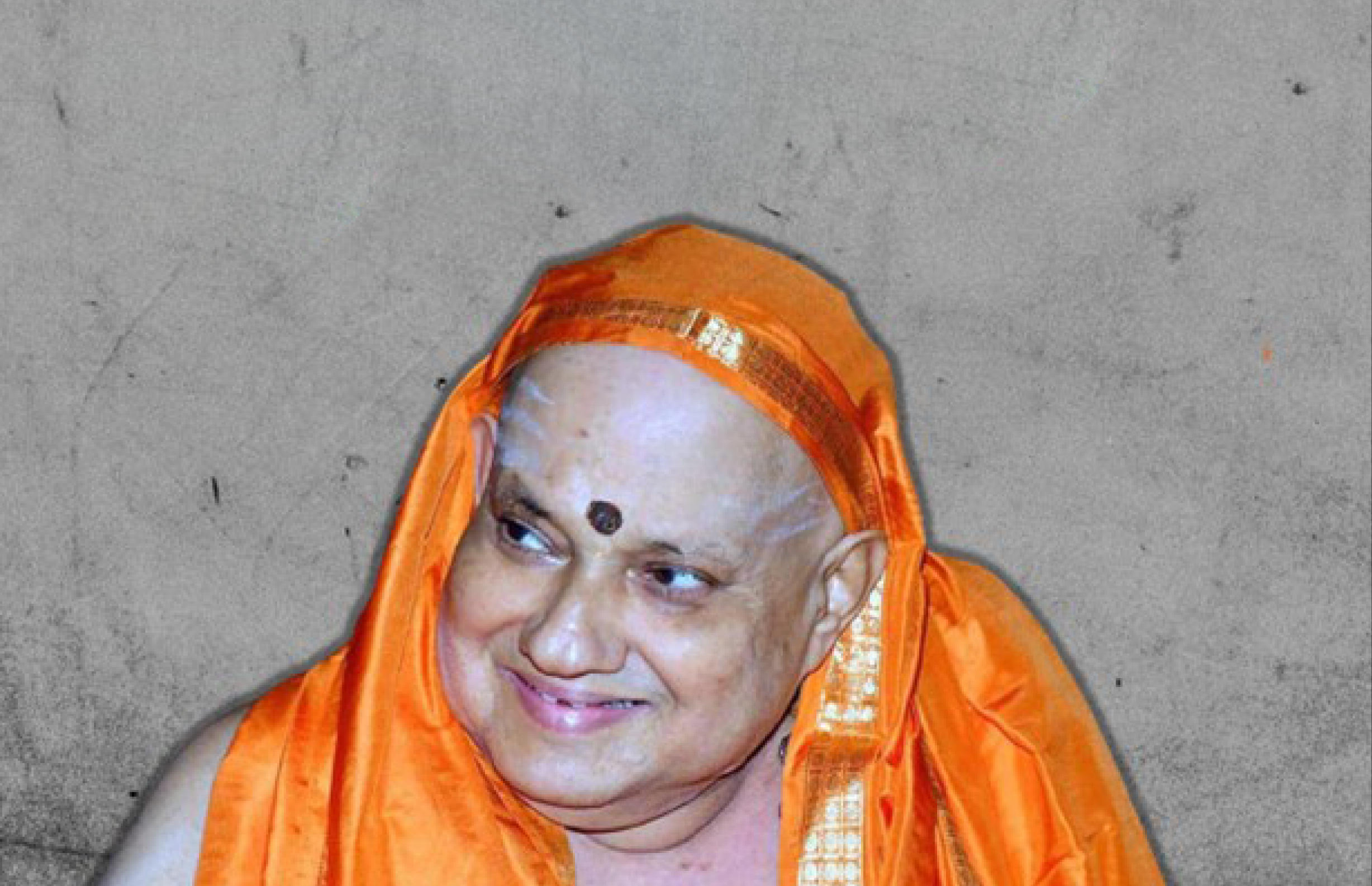
His Holiness Kesavananda Bharati Sripadagalvaru was the head seer of Edneer Mutt, a Hindu religious monastery in Kasaragod, Kerala. The Mutt owned large tracts of land. In 1969, the Kerala Government introduced the Kerala Land Reforms (Amendment) Act, 1969, which sought to impose a ceiling on land holdings and acquire surplus land of religious institutions like Mutts without adequate compensation.
The Swami challenged this Act under Article 26 (Right to manage religious affairs) and Article 19(1)(f) and 31 (Right to Property, then a Fundamental Right). During the pendency of his petition, the Indira Gandhi Government, to nullify the Supreme Court’s decision in Golaknath case, passed the 24th, 25th, and 29th Constitutional Amendments.
– 24th Amendment (1971):- Declared that Parliament can amend any part of the Constitution including Fundamental Rights under Article 368 and that such an amendment will not be considered as “law” under Article 13.
– 25th Amendment (1971):- Inserted Article 31C which provided that no law giving effect to Directive Principles under Article 39(b) and (c) can be challenged on grounds of violating Articles 14, 19 and 31.
– 29th Amendment (1972):- Inserted the Kerala Land Reforms Acts into the 9th Schedule to give them immunity from judicial review.
Therefore, Kesavananda Bharati amended his petition and challenged all these three amendments as unconstitutional, arguing that Parliament’s amending power is not absolute. This led to the formation of the largest ever bench in Supreme Court history.
USE OF LEGAL JARGON:-
To understand Kesavananda Bharati, one must understand the doctrinal conflict.
1. Article 13 vs Article 368:* Article 13(2) states “The State shall not make any law which takes away or abridges the rights conferred by Part III and any law made in contravention of this clause shall be void.” Article 368 gives the power to amend the Constitution. The question was whether a Constitutional Amendment under Article 368 is a “law” under Article 13. If yes, it cannot take away Fundamental Rights.
2.
3. Doctrine of Prospective Overruling:* First used in Golaknath case, where the Court said its decision will have only future effect to avoid chaos.
4.
5. Doctrine of Implied Limitations:* The argument of the petitioner, led by the legendary Nani Palkhivala, was that the Constitution has an inherent spirit. The power to amend under Article 368 is not the power to destroy. There are implied limitations on Article 368.
6.
7. Doctrine of Ultra Vires:* The petitioners argued that the 24th, 25th and 29th Amendments were ultra vires the amending power because they damaged the basic framework.
8.
THE PROOF – Detailed Legal Arguments and Judgment:-
The case was heard for 68 days. The arguments lasted for 5 months.
Arguments by Petitioner (Nani Palkhivala):-
Palkhivala gave one of the most brilliant arguments in legal history. He argued:
a) The word “amend” means to improve, not to destroy. You cannot amend a Constitution by making it unconstitutional.
b) The Fundamental Rights are the natural rights of citizens. They are placed in Part III to keep them beyond the reach of a transient majority.
c) The Preamble, which declares India as a Sovereign Democratic Republic, is the soul of the Constitution and cannot be altered.
d) If Parliament gets unlimited power, it could amend Article 368 itself to make theConstitution undemocratic and create a one-party state.
Arguments by Respondent (H.M. Seervai for the State):-
Seervai argued for Parliamentary Supremacy. He said:
a) There are no implied limitations on Article 368. If the framers wanted limitations, they would have written them.
b) The power to amend includes the power to add, alter and repeal any provision. Parliament represents the will of the people.
c) To check Parliament’s power would be anti-democratic and would make the judiciary supreme over the legislature.
The Historic Judgment (7:6 Majority):-
Chief Justice Sikri and 6 other judges (Shelat, Grover, Hegde, Mukherjea, Jaganmohan Reddy and Khanna) formed the majority. 6 judges (Ray, Palekar, Mathew, Beg, Dwivedi, Chandrachud) dissented.
The Supreme Court held:-
1. Golaknath overruled:- The majority held that Golaknath was wrongly decided. An amendment under Article 368 IS a law under Article 13 and Parliament CAN amend Fundamental Rights.
2.
3. Basic Structure Limitation:- However, Parliament’s power is not unlimited. It cannot alter the Basic Structure or Basic Framework of the Constitution. Justice Khanna’s judgment was crucial. He said amending power does not include power to destroy the identity of the Constitution.
4.
5. What is Basic Structure? The Court did not give an exhaustive list. Chief Justice Sikri mentioned:- Supremacy of Constitution, Republican and Democratic form of government, Secular character, Separation of powers, Federalism. Justice Shelat and Grover added: Mandate to build a welfare state, Unity and integrity of the nation.
6.
7. Validity of Amendments:- The Court upheld the 24th Amendment, partially upheld the 25th Amendment (first part of Article 31C valid, second part which ousted judicial review invalid), and upheld the 29th Amendment.
8.
9. Right to Property not a Basic Structure:- The Court held that the Right to Property is not a part of the basic structure, therefore the Kerala Land Reforms Act was upheld. So, factually, the Swami lost, but India won.
10.
Justice H.R. Khanna played the pivotal role. It is said that his judgment saved Indian democracy during the Emergency that followed.
CASE LAWS – Pre and Post Kesavananda:-
To understand the full journey, these cases must be studied:
1. Shankari Prasad Singh Deo v. Union of India (1951):- First Amendment challenged. SC said Parliament has unlimited power to amend, including Fundamental Rights. Amendment is not law under Article 13.
2.
3. Sajjan Singh v. State of Rajasthan (1965):- 17th Amendment challenged. SC again upheld unlimited power of Parliament.
4.
5. Golaknath v. State of Punjab (1967) – 11 Judge Bench:- SC took a U-turn. Held that Fundamental Rights cannot be amended at all. Parliament has no power to take away Fundamental Rights to implement Directive Principles. This led to Indira Gandhi Government bringing the 24th Amendment to overrule Golaknath.
6.
7. Kesavananda Bharati v. State of Kerala (1973):- The middle path. Parliament can amend Fundamental Rights but cannot touch Basic Structure.
8.
9. Indira Nehru Gandhi v. Raj Narain (1975) – The Election Case:- SC applied Kesavananda to strike down Clause (4) of Article 329A inserted by 39th Amendment which sought to immunize PM’s election from judicial review. Held that Free and Fair Elections and Judicial Review are part of Basic Structure.
10.
11. Minerva Mills Ltd. v. Union of India (1980):- SC struck down parts of the 42nd Amendment. Held that Limited Amending Power of Parliament itself is a Basic Structure and harmony between Fundamental Rights and Directive Principles is part of Basic Structure.
12.
13. S.R. Bommai v. Union of India (1994):* Secularism was declared as a Basic Feature of the Constitution.
14.
15. I.R. Coelho v. State of Tamil Nadu (2007) – 9th Schedule Case:* SC held that laws inserted into 9th Schedule after 24th April 1973 (the date of Kesavananda judgment) are open to challenge if they violate Basic Structure.
16.
CONCLUSION:-
The Kesavananda Bharati judgment is the bedrock of Indian constitutionalism. It came at a time when the executive was becoming authoritarian. Just two years later, in 1975, Emergency was imposed. Had the Basic Structure Doctrine not been propounded, Indira Gandhi could have legally amended the Constitution to make India a one-party state and the courts would have been helpless.
The genius of the doctrine lies in its flexibility. It does not freeze the Constitution; it allows amendments but protects its identity. It is a judicial invention that has no parallel in the world – neither the US nor the UK has such a doctrine. It makes the Indian judiciary one of the most powerful judiciaries in the world as the ultimate guardian of the Constitution.
As Granville Austin rightly said, this case established India as a “constitutional democracy, not a majoritarian democracy.” For every law student, Kesavananda is not just a case to be memorized; it is a reminder that the Constitution is supreme, not Parliament.
FAQ
Q1. What is the Basic Structure Doctrine in simple terms?*
It means Parliament can change the Constitution, but cannot change its soul. Its core principles like democracy, secularism, rule of law, and judicial review can never be deleted.
Q2. Why is Kesavananda Bharati called the saviour of Indian democracy?*
Because it prevented Parliament from becoming dictatorial. Without it, any government with a 2/3rd majority could have removed fundamental rights and democracy itself by an amendment.
Q3. Did Kesavananda Bharati win his case?
No, factually he lost. The Supreme Court upheld the Kerala Land Reforms Act. But his petition led to the greatest constitutional safeguard for the country.