
Author: Harpreet Kaur, Maharishi Markandeswar, Deemed to be University
To the Point
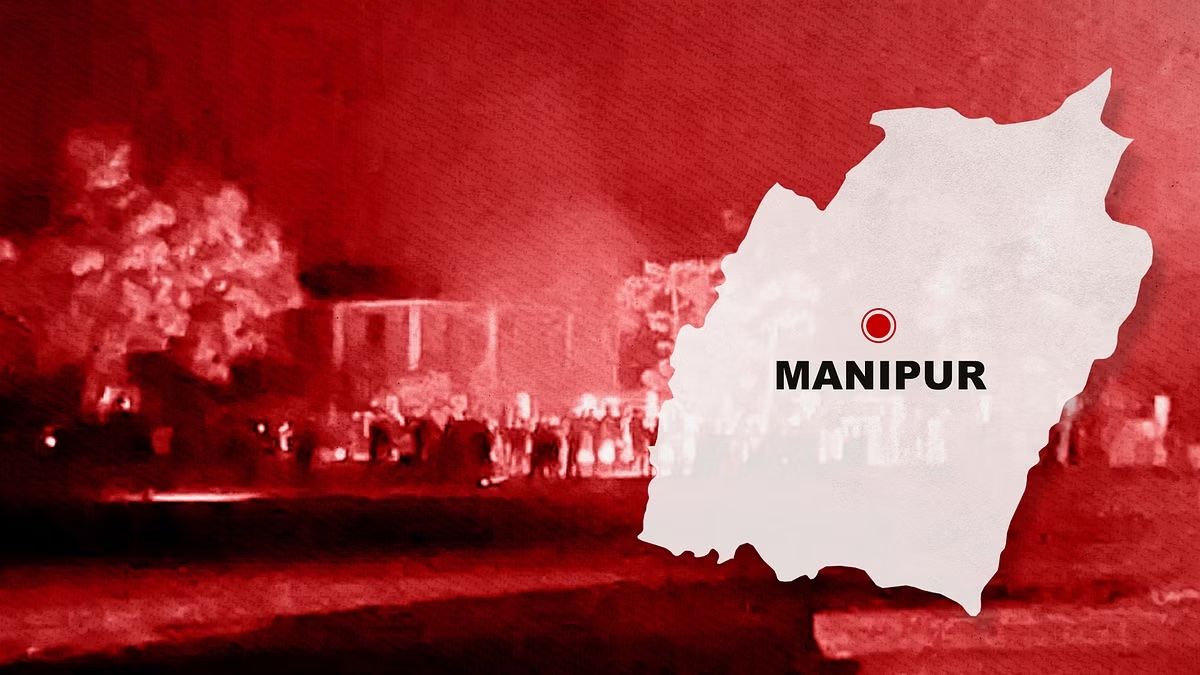
The outbreak of violence in manipur has resulted in significant loss of life, destruction of property, forced displacement, and widespread sexual and communal violence. More than a humanitarian disaster, it is a constitutional failure.
This article investigates whether the State of Manipur, and by extension the Union Government, has breached their constitutional obligations under the Indian Constitution—particularly the duty to protect life and liberty (Article 21), ensure equality before the law (Article 14), and maintain public order (Entry 1, State List). It also evaluates whether the conditions for invoking Articles 355 and 356 have arisen and discusses the scope of judicial intervention and State liability.
Use of Legal Jargon
There was the Breakdown of Constitutional Machinery which shows the Failure of the state government to govern per constitutional provisions (Art. 356)and the Positive Obligations of the State which include the Duties to protect individuals from harm, including by private actors (Art. 21). The principle of Vicarious Liability holds the State accountable for the wrongful acts of its agents, while the doctrine of Constitutional Tort allows for the redress of fundamental rights violations through public law remedies and as well provides the people with the public law compensation. It also directed towards the Doctrine of command responsibility that means higher official’s liability to prevent violations and to conduct the proportionality test to ensure wether the restriction were legally justified or not. Writ Jurisdiction is to be provided as the constitutional remedy for the violation of fundamental rights which is to be practised by The Supreme Court. Violence shows the State Negligence which is the failure of state organs to perform constitutional duties resulting in harm to citizens residing. Constitutional Morality is also discussed and the Governance should be done and practiced in good faith as well as in accordance with constitutional values, not communal bias or the tribal scenes.
The Proof
Followed are notables:-
Casualties and Displacement:- Over 220 deaths and more than 60,000 people were displaced and the Large-scale destruction of property, burning of houses and religious institutions.
Sexual Violence and Police Inaction:- It included multiple Public gang rapes and sexual assault among girls and women. FOR EXAMPLE :- The viral video of women being paraded naked in public. eyewitness accounts pointed towards the police apathy or complicity.
Internet Shutdown:- Continuous shutdowns over the internet which exceeded over more than 150 days, impeding access to healthcare, education, and legal recourse.No published shutdown orders, violating SC’s Anuradha Bhasin guidelines.
Breakdown of Law Enforcement:- Civilian groups (vigilantes)were given alleged arms and were allowed to operate freely which created destruction and violence There was Inadequate deployment of central forces in early weeks despite obvious escalation.
Judicial Intervention:- The Supreme Court observed a “complete breakdown of constitutional machinery” and formed a committee under former Chief Justice Gita Mittal to monitor relief, investigation, and rehabilitation efforts.
Partisan Governance Allegations:- Accusations of state bias in favour of one ethnic groups which was a crucial factor leading to loss of trust among citizens.
Abstract
The ethnic violence in Manipur, beginning in May 2023, has triggered a profound constitutional crisis, revealing systemic lapses in governance, law enforcement, and the protection of fundamental rights. This article undertakes a comprehensive legal and constitutional analysis of the responsibilities of both the State Government of Manipur and the Union of India during episodes of internal violence. Using the Manipur crisis as a case study, it interrogates whether the administrative inaction, selective policing, and failure to prevent or contain the violence amount to violations of fundamental rights under Articles 14, 19, and 21 of the Indian Constitution. It further examines the obligations imposed on the Union under Article 355—to protect every State against internal disturbances and ensure constitutional governance—and questions whether continued inaction by the Centre amounts to a breach of this constitutional duty. The article also evaluates whether the situation justified invoking Article 356 (President’s Rule), and critiques the political reluctance to exercise constitutional powers in the face of human rights violations.
To address the question of accountability, the article explores the evolving jurisprudence surrounding public law compensation and constitutional torts. It also introduces the concept of command responsibility, traditionally associated with international humanitarian law, as a possible framework for attributing legal responsibility to senior officials and political leaders who failed to discharge their constitutional duties. The potential for judicial intervention under Articles 32 and 226 is examined as a means for affected individuals and civil society to seek constitutional remedies and enforce accountability.
Through a synthesis of constitutional doctrine, case law, and factual investigation, this article argues that the Manipur violence represents not only a failure of public administration but also a breakdown of constitutional morality. It concludes that the legitimacy of the Indian constitutional framework hinges on the willingness of institutions to respond decisively and impartially during crises, and on the judiciary’s role in ensuring accountability for the breach of constitutional obligations.
Case Laws
Nilabati Behera v. State of Orissa (1993) 2 SCC 746
The Supreme Court awarded compensation for the custodial death of a young man, holding the State strictly liable under Article 21 for violation of the right to life. The Court distinguished between public law remedies and private tortious liability, affirming that victims of State abuse can claim compensation directly under constitutional provisions. This case laid the foundation for the doctrine of constitutional tort, emphasizing that enforcement of fundamental rights must be meaningful, not merely declaratory. It is a seminal precedent for public law compensation in cases of custodial violence and administrative negligence.
D.K. Basu v. State of West Bengal (1997) 1 SCC 416
This case arose from concerns about rampant custodial torture in India. The Court formulated a detailed list of procedural safeguards to prevent abuse during arrest and detention, reinforcing that any form of custodial violence is a direct infringement of Article 21. It emphasized that the State is vicariously liable for the misconduct of its police officials. It remains a foundational judgment for police accountability and procedural fairness in criminal law.
Vineet Narain v. Union of India (1998) 1 SCC 226
In this case concerning political corruption and investigative inertia, the Supreme Court held that inaction by investigative agencies constitutes a constitutional wrong. The Court ruled that the executive cannot obstruct or delay investigations, especially when public functionaries are involved. It introduced the doctrine of “continuing mandamus”, allowing the Court to monitor compliance with its orders over time.
The judgment reinforced the principle that the rule of law must prevail and that no authority is above legal accountability. It remains significant for promoting institutional independence and addressing systemic corruption.
Anuradha Bhasin v. Union of India (2020) 3 SCC 637
Following the communication blackout in Jammu & Kashmir post-Article 370 abrogation, the Court held that indefinite suspension of internet services is unconstitutional. This case strengthened digital rights and underscored that fundamental freedoms cannot be curtailed arbitrarily, even in the name of security.
S.R. Bommai v. Union of India (1994) 3 SCC 1
A landmark case on federalism and President’s Rule, the Court ruled that Article 356 can only be invoked in the event of a real breakdown of constitutional machinery, not for political purposes. It reaffirmed that secularism is a basic feature of the Constitution, and the State cannot promote communal agendas. The case remains the bedrock of constitutional federalism, checking central overreach, and establishing that democratically elected State governments cannot be dismissed without justifiable, constitutionally valid reasons.
Nandini Sundar v. State of Chhattisgarh (2011) 7 SCC 547
The Court declared the practice of arming civilians through Salwa Judum (a militia to combat Maoists) as unconstitutional, stating it violated Articles 14 and 21. The State cannot outsource policing to untrained private individuals, thereby abdicating its constitutional duty to protect life and liberty. The judgment criticized the State’s failure to uphold the rule of law and denounced the militarization of civil spaces. It emphasized the importance of maintaining constitutional governance even in insurgency-hit areas. This decision reinforced that security concerns cannot override human rights protections.
Conclusion
The Manipur violence represents a constitutional crisis, not just a law-and-order failure. The State’s abdication of its fundamental duties under Articles 14, 19, 21, and 355 has exposed citizens—particularly vulnerable communities—to grave injustice. The Union’s inaction, despite warnings and data, raises serious concerns under Article 355. In this backdrop, judicial intervention emerges as the only recourse to uphold the constitutional promise of justice, equality, and dignity.
The need of the hour is administrative accountability, judicial oversight, and reform in governance mechanisms. The victims of violence deserve not only justice but also constitutional recognition of their suffering. The crisis must serve as a wake-up call for redefining State liability in internal disturbances and institutionalising protections against communal impunity.
FAQS
Q1. Does manipur violence proves the failure of constitution?
A: Yes. The failure to protect life, liberty, and dignity violates Articles 14, 19, and 21, while inaction by both State and Union breaches Articles 355 and 356.
Q2. Can citizens sue the State for damages?
A: Yes. Under public law compensation and constitutional tort jurisprudence, victims can approach the High Court or Supreme Court for monetary relief.
Q3. Is President’s Rule applicable under Article 356?
A: If the Governor reports a breakdown of constitutional machinery, the President may impose central rule. The Supreme Court’s remarks point toward this possibility.
Q4 Can the judiciary force executive action during communal violence?
A: Yes. Under Articles 32 and 226, courts can issue mandatory writs compelling the government to protect rights and maintain order.
Q5. Is the internet shutdown in Manipur unconstitutional?
A: Likely yes. The prolonged nature and lack of review make it suspect.
Q6. What is meant by constitutional tort in this context?
A: It refers to State liability for violations of fundamental rights—such as loss of life or property—arising from State inaction or misuse of power.
Q7. How does this affect India’s federal structure?
A: It exposes tensions between State autonomy and Union responsibility, especially when State governments fail to act and the Union hesitates to intervene.

