
Author: PrinceRaj, K.K. University
ABSTRACT
The Nirbhaya case of December 16, 2012, remains one of the most significant events in contemporary Indian history. A 23-year-old physiotherapy intern, later known as “Nirbhaya,” was brutally gang-raped and assaulted inside a moving bus in Delhi by six men. She sustained severe injuries and passed away on December 29, 2012. The incident shocked the nation and generated widespread public outrage.
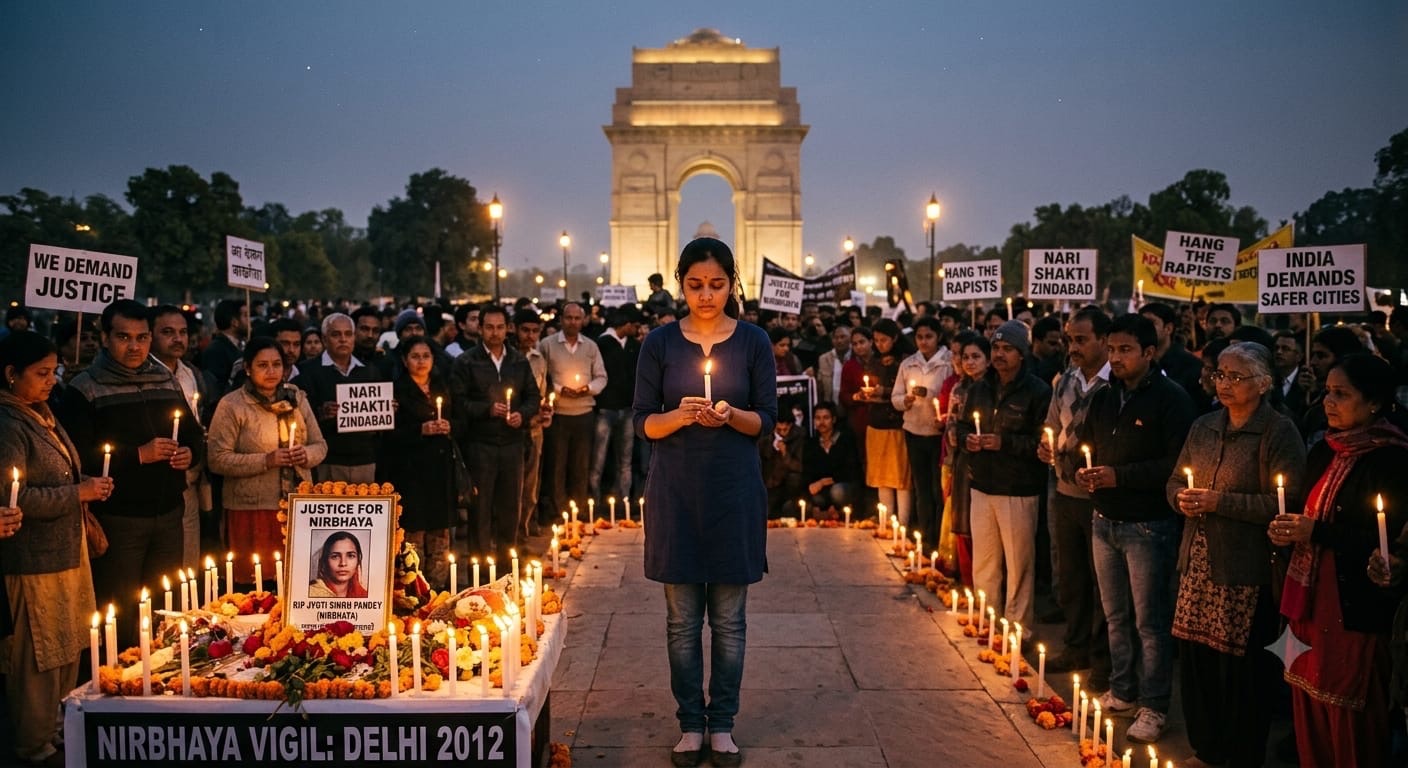
More than a criminal case, the incident became a symbol of the struggle against sexual violence and gender inequality. Massive demonstrations occurred throughout the country, demanding justice for the victim and stronger legal protection for women. The protests reflected growing frustration with the prevalence of sexual crimes and the perceived inadequacy of existing laws.
The case resulted in significant legal and institutional reforms. It prompted amendments to criminal law, expanded the definition of sexual offences, strengthened punishments, improved victim protection measures, and encouraged the establishment of fast-track courts for sexual assault cases. The prosecution and eventual execution of four convicted offenders in 2020 represented a major chapter in India’s criminal justice system.
The Nirbhaya case continues to influence legal discourse, public policy, and social awareness. It highlighted the urgent need for legal reform, effective law enforcement, and societal transformation. Even years later, it remains a reminder that ensuring women’s safety requires not only strong laws but also lasting changes in attitudes, institutions, and public accountability.
TO THE POINT
On the night of December 16, 2012, a 23-year-old physiotherapy student boarded a private bus in South Delhi with a male companion after watching a movie. The bus was occupied by six men who assaulted both passengers. The woman was subjected to a brutal gang rape and severe physical violence during the journey. After the attack, both victims were thrown from the moving vehicle onto the roadside.
The victim was immediately taken for medical treatment. Despite extensive efforts by doctors, her condition continued to deteriorate because of the seriousness of her injuries. She was later transferred to a hospital in Singapore for specialized treatment but died on December 29, 2012.
The incident generated unprecedented public reaction. Thousands of people gathered in Delhi and other cities demanding justice and stronger laws against sexual offences. Students, activists, professionals, and ordinary citizens participated in demonstrations calling for accountability and institutional reform. The case transformed public discussion regarding women’s safety, gender discrimination, and criminal justice.
The police investigation led to the arrest of six accused individuals. Evidence collected through forensic examination, witness testimony, and medical reports played a crucial role in the prosecution. Four adult offenders were convicted and sentenced to death. Their convictions were upheld by higher courts after extensive judicial review. The executions were carried out on March 20, 2020, following the rejection of all legal remedies and mercy petitions.
The case became internationally known and attracted global attention. It symbolized the challenges faced by women in public spaces and highlighted the need for effective legal safeguards. More importantly, it demonstrated how public participation and social pressure can influence legislative and judicial reforms.
The Nirbhaya incident remains a landmark event because it transformed a criminal prosecution into a broader movement for legal reform and gender justice. Its impact continues to shape debates concerning women’s rights, criminal law, and public safety in India.
LEGAL JARGON
Understanding the legal significance of the Nirbhaya case requires an examination of the concepts and reforms associated with it.
Rape and Gang Rape –
Before 2013, the definition of rape under Section 375 of the Indian Penal Code was comparatively narrow. The offence primarily focused on specific forms of sexual penetration. Gang rape, involving multiple offenders acting together, attracted enhanced punishment because of the aggravated nature of the crime.
Criminal Law (Amendment) Act, 2013
One of the most important outcomes of the case was the enactment of the Criminal Law (Amendment) Act, 2013. The legislation expanded the definition of rape and recognized several additional forms of sexual violence. It also introduced new offences such as stalking, voyeurism, and acid attacks. The objective was to strengthen legal protection for women and address gaps in existing criminal law.
Consent –
The concept of consent received greater legal clarity after the amendments. The law emphasized that consent must be voluntary, informed, and unequivocal. Mere absence of resistance cannot be treated as consent. This clarification significantly strengthened the legal framework governing sexual offences.
Victim Compensation –
The reforms introduced mechanisms for providing financial assistance to victims of sexual violence. Victim compensation schemes were intended to support rehabilitation, medical treatment, and recovery. These provisions recognized the long-term physical and psychological impact of such crimes.
Fast-Track Courts –
The case highlighted concerns regarding delays in criminal trials. As a result, specialized fast-track courts were established in many jurisdictions to ensure quicker disposal of sexual assault cases. The purpose was to improve access to justice while maintaining procedural fairness.
Evidence Act Reforms –
Amendments to evidentiary rules sought to protect the dignity and privacy of victims. Courts became increasingly cautious about allowing questions relating to a victim’s previous sexual history. Such information was considered largely irrelevant to determining whether consent existed in the incident under consideration.
Death Penalty and the “Rarest of Rare” Doctrine –
Indian courts apply the death penalty only in exceptional circumstances under the “rarest of rare” doctrine. The Nirbhaya case was considered sufficiently grave because of the extreme brutality involved. The courts concluded that the offence shocked the collective conscience of society and therefore justified the highest punishment available under law.
Procedural Justice –
The case also encouraged improvements in investigation and prosecution. Greater emphasis was placed on forensic science, medical documentation, victim assistance, and evidence collection. These measures were intended to increase both efficiency and fairness within the criminal justice system.
The legal developments arising from the Nirbhaya case represent one of the most significant reforms in modern Indian criminal law. They continue to influence the prosecution of sexual offences and the protection of victims across the country.
THE PROOF
The conviction of the accused in the Nirbhaya case was based upon a combination of forensic, medical, documentary, and testimonial evidence. The investigation was conducted on a priority basis because of the seriousness of the offence and the public attention surrounding the case.
▪︎ Forensic Evidence
Forensic examination played a decisive role in establishing the guilt of the accused. DNA samples collected from the victim were matched with the accused persons. Biological evidence recovered from the bus and other locations linked the perpetrators directly to the crime. Fingerprints and other forensic findings further strengthened the prosecution’s case.
▪︎ Medical Evidence
Medical reports documented the extensive injuries suffered by the victim. Doctors testified regarding the nature and severity of the wounds, demonstrating the extreme brutality of the assault. The injuries were consistent with the events described by witnesses and supported the prosecution’s allegations regarding the violence committed inside the bus.
▪︎ Eyewitness Testimony
The victim’s male companion served as a crucial witness. He identified the accused and described the sequence of events that occurred during the attack. His testimony was considered reliable and was supported by medical and forensic findings. Additional witnesses assisted investigators in reconstructing the movement of the vehicle and the actions of the accused.
▪︎ CCTV and Documentary Evidence
Surveillance footage from different locations helped establish the route taken by the bus and corroborated the timeline presented by investigators. Documentary evidence, including police records and recovery reports, further connected the accused to the crime.
▪︎ Digital and Circumstantial Evidence
Mobile phone records and related evidence assisted investigators in tracing movements and communications connected with the incident. Circumstantial evidence also supported the prosecution by demonstrating the involvement of each accused in the commission of the offence.
The cumulative effect of forensic reports, medical findings, eyewitness accounts, and documentary evidence enabled the prosecution to establish guilt beyond reasonable doubt. The courts relied heavily upon this evidence while affirming the convictions and sentences imposed upon the accused.
CASE LAWS
The Nirbhaya case significantly influenced the interpretation and development of criminal law in India. Several legal principles emerged from judicial decisions and legislative reforms connected with the incident.
Mukesh Singh & Ors. v. State (NCT of Delhi)
This case represents the principal judicial proceeding arising from the Nirbhaya incident. The courts examined the evidence in detail and concluded that the crime fell within the category of the “rarest of rare” cases. The judgments emphasized the exceptional brutality of the offence and the profound impact it had on society.
Criminal Law (Amendment) Act, 2013
Although a legislative measure rather than a judicial precedent, this Act constitutes the most significant legal consequence of the case. The amendments expanded the definition of rape, introduced new offences, strengthened punishments, and improved safeguards for victims.
Victim Protection Principles
The case reinforced the importance of protecting victims and witnesses during criminal proceedings. Greater attention was directed toward ensuring privacy, dignity, and security throughout investigation and trial processes.
Fast-Track Court Jurisprudence
The demand for timely justice led to the strengthening of fast-track courts dealing with sexual offences. Judicial authorities emphasized the importance of expeditious trials while preserving the rights of both victims and accused persons.
Juvenile Justice Reforms
One of the accused was a juvenile at the time of the offence. The sentence imposed upon him generated significant public debate and contributed to reforms within the juvenile justice system. Subsequent legislative changes permitted stricter scrutiny of juveniles accused of heinous offences.
Evidentiary Reforms
The case encouraged a more victim-sensitive approach to evidence. Courts increasingly rejected attempts to rely upon a victim’s sexual history to undermine credibility. This development reflected a broader commitment to fairness and dignity in sexual offence prosecutions.
Death Penalty Jurisprudence
The confirmation of death sentences in the Nirbhaya case reaffirmed the application of the “rarest of rare” doctrine. The judgments clarified that exceptionally brutal crimes involving sexual violence and murder may justify capital punishment under Indian law.
Collectively, these legal developments strengthened the criminal justice framework and influenced future prosecutions involving sexual offences.
CONCLUSION
The Nirbhaya case remains one of the most important events in modern Indian legal and social history. What began as a horrific criminal act evolved into a nationwide movement demanding justice, accountability, and reform. The incident exposed serious concerns regarding women’s safety and highlighted weaknesses in legal and institutional mechanisms designed to protect victims of sexual violence.
The public response demonstrated the power of collective action. Citizens across the country demanded stronger laws, effective investigations, and greater accountability from public institutions. These demands resulted in significant legislative reforms, most notably the Criminal Law (Amendment) Act, 2013. The amendments transformed the legal framework governing sexual offences and strengthened protections available to victims.
The judicial process also reflected the seriousness with which the case was treated. The convictions and eventual execution of four adult offenders represented the culmination of extensive legal proceedings. At the same time, the case generated important discussions regarding juvenile justice, victim rights, evidentiary standards, and criminal procedure.
Despite these achievements, the broader challenge of ensuring women’s safety continues. Legal reforms alone cannot eliminate sexual violence. Effective implementation of laws, professional investigation, timely trials, public awareness, and social change remain essential. The persistence of gender-based violence demonstrates that legal progress must be accompanied by cultural transformation.
The legacy of Nirbhaya extends beyond courtrooms and legislation. The case became a symbol of resistance against injustice and inspired renewed commitment toward gender equality and human dignity. It encouraged public discussion regarding consent, respect, and the rights of women in society.
More than a decade later, the case continues to influence policy, legal scholarship, and public consciousness. It serves as a reminder that justice requires not only punishment of offenders but also continuous efforts to build a safer and more equitable society. The memory of Jyoti Singh continues to inspire individuals and institutions to work toward a future in which women can live, travel, study, and work without fear.
FAQs
Q1. Who was Nirbhaya?
Nirbhaya was the name given by the media to Jyoti Singh, a 23-year-old physiotherapy intern who became the victim of a brutal gang rape and assault in Delhi on December 16, 2012. The name means “fearless.”
Q2. What reforms followed the Nirbhaya case?
The Criminal Law (Amendment) Act, 2013 expanded the definition of rape, introduced offences such as stalking and voyeurism, strengthened punishments, improved victim protection measures, and encouraged the establishment of fast-track courts.
Q3. What happened to the accused persons?
Six individuals were accused in the case. Four adult offenders were convicted and sentenced to death. Their executions were carried out on March 20, 2020. One accused was a juvenile and was dealt with under juvenile justice laws.
Q4. Why is the case legally significant?
The case led to major reforms in criminal law, victim protection, evidentiary rules, and juvenile justice. It also reaffirmed the application of the “rarest of rare” doctrine in sentencing.
Q5. What is the lasting impact of the Nirbhaya case?
The case transformed public discourse regarding women’s safety, gender equality, and criminal justice. It remains a symbol of legal reform, social awareness, and the continuing struggle against sexual violence.

