Author: Priyanka Ratnakar Musale
College: ILS Law College, Pune
LinkedIn Link: www.linkedin.com/in/priyankamusale
Abstract
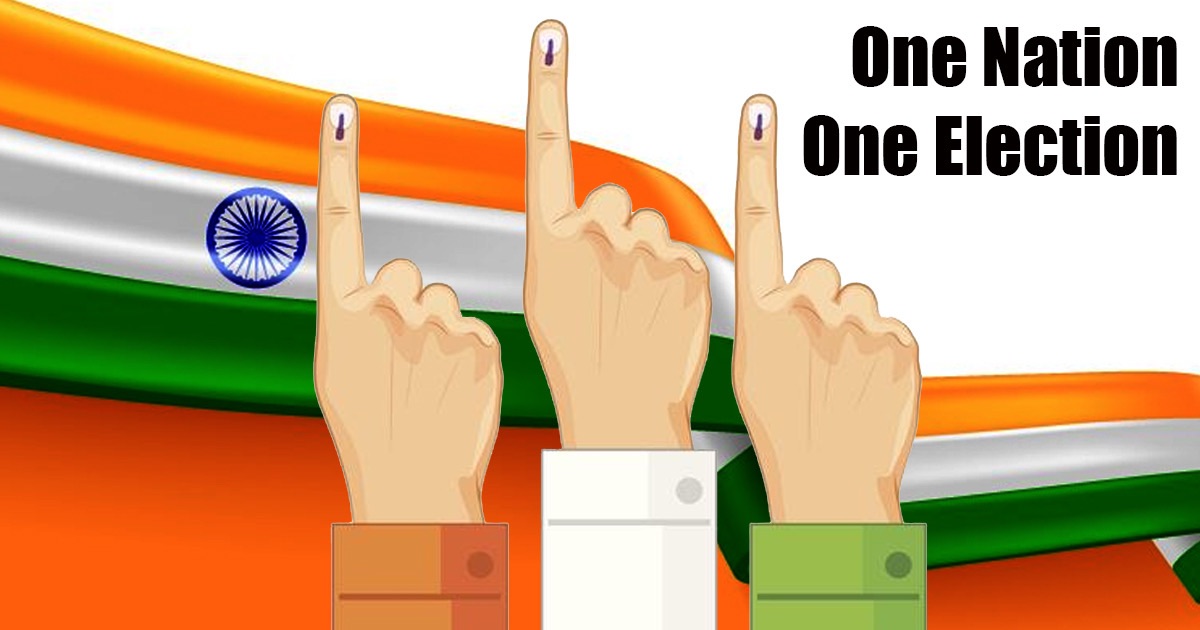
The concept of One Nation, One Election (ONOE) refers to conducting elections for the Lok Sabha and all State Legislative Assemblies simultaneously. The primary objective of this proposal is to reduce election expenditure, improve administrative efficiency, and ensure uninterrupted governance by minimizing the frequency of elections. India followed the system of simultaneous elections during the general elections held in 1952, 1957, 1962, and 1967.However, the cycle was disrupted after the premature dissolution of the Lok Sabha and several State Legislative Assemblies. In recent years, the proposal has regained attention as an electoral reform aimed at strengthening governance and reducing public expenditure. At the same time, it has raised important constitutional and legal concerns relating to federalism, democratic accountability, and the tenure of legislatures. This article examines the constitutional framework governing One Nation, One Election (ONOE), the legal challenges involved in its implementation, and its overall feasibility within the constitutional structure of India.
To the Point
One Nation, One Election (ONOE) is a proposal to conduct elections for the Lok Sabha and all State Legislative Assemblies at the same time. The main objective of this proposal is to reduce election expenditure, improve administrative efficiency, and enable governments to focus on governance and development instead of frequent election campaigns. India followed the system of simultaneous elections during the general elections held in 1952, 1957, 1962, and 1967. However, the election cycle was disrupted after the premature dissolution of the Lok Sabha and several State Legislative Assemblies. Since then, elections have been held at different times across the country.
The proposal has become an important subject of constitutional and political debate. Supporters believe that simultaneous elections will reduce public expenditure, ensure continuity in governance, and minimize the repeated implementation of the Model Code of Conduct. On the other hand, critics argue that it may affect the federal structure of the Constitution, reduce the autonomy of State Governments, and create practical difficulties if a government falls before completing its five-year term. Implementing One Nation, One Election would require amendments to various constitutional provisions relating to the tenure and dissolution of the Lok Sabha and State Legislative Assemblies. Therefore, any reform must preserve the basic structure of the Constitution, including democracy, federalism, and free and fair elections, while ensuring that the interests of both the Union and the States are adequately protected.
Use of Legal Jargon
The proposal of One Nation, One Election (ONOE) is closely related to important constitutional principles and electoral laws. Article 83(2) of the Constitution provides that the normal term of the Lok Sabha is five years unless it is dissolved earlier. Similarly, Article 172(1) provides that the normal term of a State Legislative Assembly is five years unless it is dissolved before the expiry of its term. Article 85 empowers the President to summon, prorogue, and dissolve the Lok Sabha, while Article 174 gives similar powers to the Governor in relation to the State Legislative Assembly. The Election Commission of India, established under Article 324, is responsible for conducting free and fair elections to Parliament, State Legislatures, and the offices of the President and Vice-President.
The implementation of ONOE would require amendments to certain constitutional provisions under Article 368, which lays down the procedure for amending the Constitution. However, such amendments must not violate the Basic Structure Doctrine, evolved by the Supreme Court, which protects essential features of the Constitution such as democracy, federalism, judicial review, and free and fair elections. The proposal also involves legal concepts such as federalism, parliamentary democracy, collective responsibility, constitutional supremacy, and judicial review. Therefore, while ONOE aims to improve electoral efficiency, it must also ensure that constitutional values and democratic principles remain fully protected.
The Proof
The proposal for One Nation, One Election (ONOE) has been supported by several committees and experts who believe that simultaneous elections can improve electoral efficiency in India. Frequent elections require significant public expenditure on security, election officials, polling arrangements, and other administrative activities. They also lead to the repeated enforcement of the Model Code of Conduct (MCC), which often delays the implementation of government policies and development projects. The Law Commission of India and the High-Level Committee on Simultaneous Elections have observed that conducting simultaneous elections may reduce election-related expenditure, improve governance, and allow governments to focus on long-term policy implementation. They have also suggested that synchronized elections could reduce the burden on the Election Commission, security forces, and public administration.
However, the proposal also faces important constitutional and practical challenges. Governments may lose their majority before completing their five-year term because of a no-confidence motion, coalition disputes, or other political developments. In such situations, maintaining a common election schedule becomes difficult. Further, India’s federal system gives constitutional autonomy to both the Union and the States. Any change in the tenure of State Legislative Assemblies must therefore be made carefully to ensure that the principles of federalism, parliamentary democracy, and constitutional governance are not affected. These legal and practical issues show that while One Nation, One Election has several potential benefits, its successful implementation requires constitutional amendments, political consensus, and careful planning to ensure that democratic values are fully protected.
Case Laws
1. Kesavananda Bharati v. State of Kerala (1973)
The petitioner challenged the constitutional validity of several amendments that restricted the right to property and increased Parliament’s power to amend the Constitution. The case raised the question of whether Parliament had unlimited power to amend the Constitution. The Supreme Court held that Parliament can amend any part of the Constitution, but it cannot alter or destroy its Basic Structure. This doctrine is important for One Nation, One Election because anyconstitutional amendment implementing the proposal must preserve democracy, federalism, and free and fair elections.
2. S.R. Bommai v. Union of India (1994)
Several State Governments were dismissed under Article 356, and President’s Rule was imposed. The dismissed governments challenged the constitutional validity of these actions before the Supreme Court. The Court held that federalism is a part of the Basic Structure of the Constitution and that the President’s power under Article 356 is subject to judicial review. The judgment is relevant because One Nation, One Election should not weaken the constitutional autonomy of State Governments.
3. Indira Nehru Gandhi v. Raj Narain (1975)
Raj Narain challenged the election of Prime Minister Indira Gandhi on the ground of electoral malpractice. During the case, Parliament passed the 39th Constitutional Amendment to protect the Prime Minister’s election from judicial review.The Supreme Court struck down the amendment and held thatfree and fair elections are part of the Basic Structure of the Constitution. This principle is important because any electoral reform, including One Nation, One Election, must strengthen democratic values and protect the fairness of elections.
Conclusion
One Nation, One Election is an important electoral reform proposal that aims to reduce election expenditure, improve administrative efficiency, and ensure continuity in governance. At the same time, its implementation raises important constitutional questions relating to federalism, democratic accountability, and the tenure of the Lok Sabha and State Legislative Assemblies. Although the proposal offers several advantages, it cannot be implemented without suitable constitutional amendments and broad political consensus. Any reform must respect the Basic Structure of the Constitution and protect essential constitutional values such as democracy, federalism, judicial review, and free and fair elections.
Therefore, before implementing One Nation, One Election, the Union Government, State Governments, Parliament, and other stakeholders must carefully examine its legal,constitutional, and practical implications. A balanced and well-planned approach, supported by constitutional safeguards and cooperation between the Union and the States, will be essential to ensure that electoral reforms strengthen India’s democratic system without compromising constitutional principles.
FAQs
Q1. What is One Nation, One Election?
One Nation, One Election (ONOE) is a proposal to conduct elections for the Lok Sabha and all State Legislative Assemblies simultaneously. Its main objective is to reduce election expenditure, improve administrative efficiency, and ensure that governments can focus on governance and development instead of frequent election campaigns.
Q2. Why is One Nation, One Election a constitutional issue?
The proposal is a constitutional issue because the tenure and dissolution of the Lok Sabha and State Legislative Assemblies are governed by the Constitution of India. Implementing ONOE would require amendments to several constitutional provisions while ensuring that the Basic Structure of the Constitution, including democracy, federalism, and free and fair elections, remains protected.
Q3. What are the main challenges in implementing One Nation, One Election?
The major challenges include maintaining the federal structure, managing situations where governments are dissolved before completing their term, and obtaining political consensus among the Union and the States. It also requires constitutional amendments, effective planning, and administrative coordination to ensure smooth implementation without affecting democratic principles.