
Author: Vanshika Mulchandani, Prestige institute of management and research, Department and law, Indore
LinkedIn Profile: https://www.linkedin.com/in/vanshika-mulchandani-6630833a1?utm_source=share_via&utm_content=profile&utm_medium=member_ios
TO THE POINT-
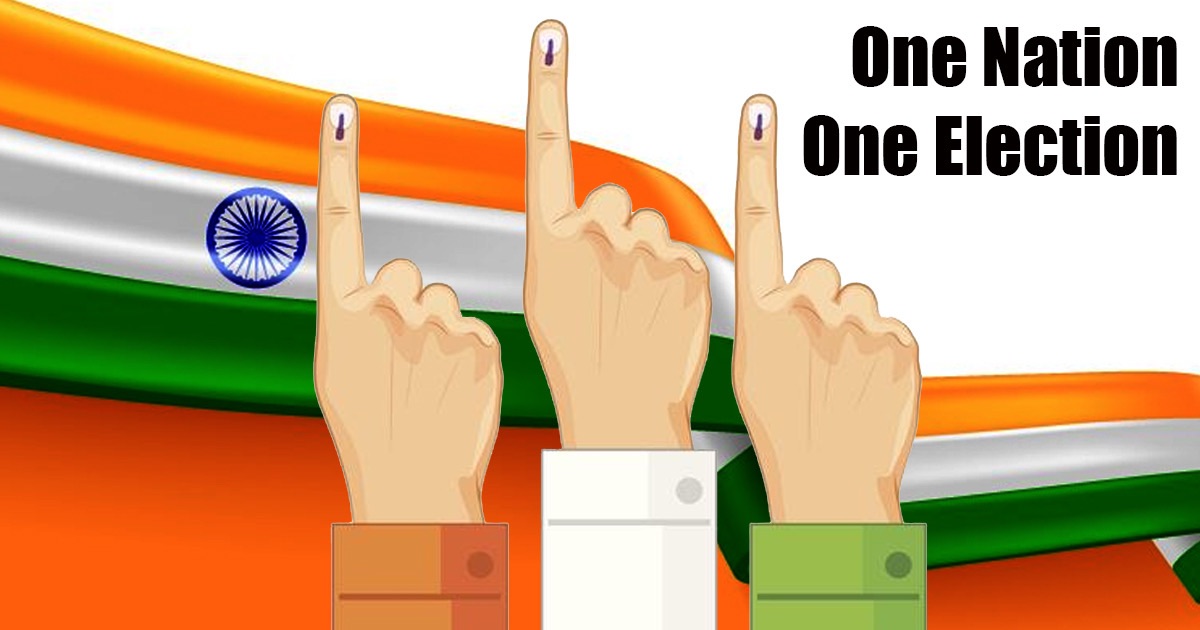
“ONE NATION, ONE ELECTION” (ONOE) refers to the concept of conducting concurrent elections for the Lok Sabha, State Legislative Assemblies, and other potentially local bodies across India. The proposal aims to reduce election expenditure, administrative burden, and policy disruptions caused by frequent elections. However, the implications of the ONOE raise significant constitutional, legal, federal, and democratic concerns. The Union Government’s recent steps, including the formation of a high-level committee under former President Ram Nath Kovind, have brought this proposal back into focus.
The concept existed during the early days after independence, when simultaneous elections were held in 1951-52 and 1967. The cycle was disrupted due to the premature dissolution of several State Assemblies and the Lok Sabha.
The key objectives of ONOE include:
• Reduction in election expenditure.
• Minimization of governance disruptions caused by frequent elections.
• Greater political stability and policy continuity.
• Efficient utilization of security forces and administrative machinery.
USE OF LEGAL JARGON-
1. Federalism- A constitutional principle that divides power between the Union and the State governments. ONOE raises concerns that simultaneous elections may affect thefederal balance by increasing the parties’ influence over thestates.
2. Constitutional Amendment- A formal modification of constitutional provisions under Article 368. Implementation of ONOE would require multiple constitutional amendments.
3. Vote of No Confidence- A parliamentary procedure through which legislators express a lack of confidence in the government, potentially leading to its removal.
4. Basic Structure Doctrine- A judicial doctrine established by the Supreme Court which holds that Parliament cannot amend the Constitution in a manner that destroys its essential features, such as democracy, federalism, secularism, and judicial review.
5. Judicial Review- The power of constitutional courts to examine the validity of laws, executive actions, and constitutional amendments. ONOE-related amendments may be subject to judicial review.
THE PROOFS-
The implication of ONE NATION ONE ELECTION would require amendments to several constitutional provisions, including:
1. Article 83(2): Provides that the Lok Sabha shall continue for five years unless dissolved earlier.
2. Article 85: Empowers the President to dissolve the Lok Sabha.
3. Article 172(1): Provides a five-year tenure for State Legislative Assemblies unless dissolved earlier.
4. Article 174: Empowers the Governor to dissolve State Assembly.
5. Article 365: Allows imposition of President’s Rule in aState.
6. Article 368: Provides the procedure for constitutional amendments.
7. Article 75(3): Collective responsibility of the Union Council of Ministers.
8. Article 164(2): Collective responsibility of the State Council of Ministers.
CONSTITUTIONAL CHALLENGES-
1. Requirement of Extensive Amendments-
Implementation would require amendments to multiple constitutional provisions relating to legislative tenure, dissolution, and emergency governance.
2. Basic Structure Concerns-
Any constitutional amendments implementing ONOE must comply with the Basic Structure Doctrine established by the Supreme Court. If the amendments’ sustainability affects democracy or federalism, they may face judicial scrutiny.
3. Impact on Democratic Accountability-
Frequent elections allow voters to regularly evaluate governments. ONOE may reduce opportunities for democratic accountability and responsiveness.
4. Challenge to the Federal Structure-
India follows a Federal System with a strong centre, where the State and Union have separate constitutional identities. Simultaneous elections may diminish the importance of state-specific political issues and strengthen the national political narrative, potentially affecting the balance between the Union and the States.
ABSTRACT-
The concept of ONE NATION, ONE ELECTION proposal seeks to conduct concurrent elections for the Lok Sabha and all the State Legislative Assemblies across India with the objective of improving governance, reducing electoral expenditure, minimizing administrative disruption, and ensuring policy continuity. Although simultaneous elections were held in the early years after independence, the cycle was disrupted by the premature dissolution of several legislative bodies.
The implication of ONOE presents significant constitutional and legal challenges. It would require extensive amendments to the constitution, particularly provisions relating to tenure and dissolution of the legislature, and must comply with the procedure prescribed under Article 368. It also raises important questions regarding federalism, democratic accountability, the autonomy of states, and the protection of the Constitution’s Basic Structure. Issues such as premature fall of government, extensions of legislative terms, and the increased use of constitutional mechanisms like President’s Rule further complicate its implementation.
CASE LAWS-
1. Kesavananda Bharati v. State of Kerala-
Citation- (1973) 4SCC 225
Principle- Basic Structure Doctrine
The Supreme Court held that Parliament can amend the Constitution but cannot alter its basic structure. Any ONOE amendment affecting democracy, federalism, or free and fair elections would be tested under this doctrine.
2. S. R. Bommai v. Union of India-
Citation- (1994) 3 SCC 1
Principle- Federalism as a Basic Structure.
The Court recognized federalism as part of the Constitution’s basic structure. Any ONOE mechanism affecting State autonomy may be examined considering this judgment.
3. Indira Nehru Gandhi v. Raj Narain
Citation- 1975 Supp SCC 1
Principle- Free and Fair Elections
The court declared free and fair elections as an essential feature of democracy and part of the constitution’s basic structure.
CONCLUSION-
The “ONE NATION, ONE ELECTION” proposal represents one of the most ambitious electoral reforms contemplated in independent India. While it promises administrative efficiency, reduced election expenditure, and uninterrupted governance, it also raises profound constitutional questions concerning federalism, democratic accountability, legislative tenure, and the basic structure of the constitution.
The proposal requires extensive amendments to the Constitution, cooperation between the Union and the States, and a mechanism to address premature dissolution of legislatures. Most importantly, any reform must preserve the basic features of the constitution, including federalism, democracy, and fair elections.
Therefore, the success of ONOE depends not merely on political consensus but also on ensuring that constitutional values remain protected while pursuing electoral efficiency.
FREQUENTLY ASKED QUESTIONS-
1. What is ONE NATION, ONE ELECTION?
It is a proposal to conduct elections to the Lok Sabha and all State Legislative Assemblies simultaneously across India.
2. Why is ONOE being proposed?
The proposal aims to:
• Reduce the cost of conducting frequent elections.
• Ensuring continuity in governance.
• Minimize disruptions caused by the model code of conduct.
3. Is the ONOE currently provided for in the Constitutions?
No, the Constitution currently allows separate election cycles for the Lok Sabha and State Legislative Assemblies. Implementing ONOE would require constitutional amendments.

