Author: Anish Tandi, Centurion University, Bhubaneswar
LinkedIn Profile: www.linkedin.com/in/anish-tandi-668a7b2a1
ABSTRACT
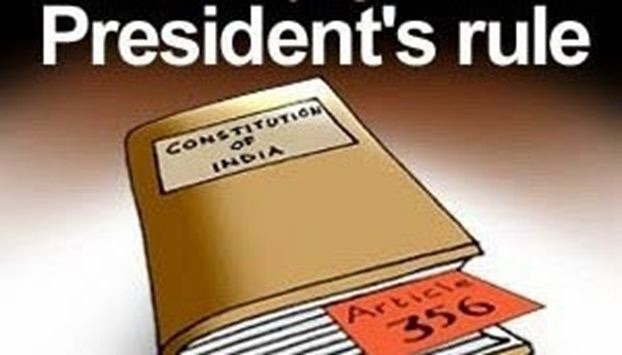
Article 356 of the Constitution of India, which enables the President to dismiss a state government when the state machinery has broken down, continues to be a highly controversial provision of our Constitution. While Article 356 was originally conceived of as an emergency provision invoked in the most extreme situations, it has in fact been used on over 120 occasions since independence, largely for partisan political ends. This article explores the constitutional legality of Article 356, its non-constitutional abuse over the years and the judicial response to such abuse. It focuses, in particular, on the case of S.R. Bommai v. Union of India (1994) which was the occasion of the judiciary’s attempt to draw constitutional parameters around the use of Article 356 through the therapeutic doctrine of the ‘rule of law’ in the facet of the other basic feature of the Indian constitution; secularism. The article highlights how the fall of the Vajpayee government led to a spate of dismissals to reveal the limits of the judicial approach. The article concludes that the simple concept of a floor test as enunciated in Bommai can serve as a safeguard against misuse of Article 356 and that Barrister Chidambaram’s interpretations cannot be accepted as the law of the land.
TO THE POINT
Article 356 of the Constitution of India provides that a situation has arisen in which the government of the state cannot be carried on in accordance with the provisions of this Constitution, the president may be proclamation assume to himself the direction of the government of the State. This provision had its precedents in Section 93 of the Government of the States. This provision had its precedents in section 93 of the Government of India Act, 1935 which was a colonial device designed to provide for governor’s rule in the provinces. Dr. B.R. Ambedkar in the debates of the Constitution Assembly hoped that this provision will be a dead letter and that the president will issue warnings and order elections before resorting to it.
Alas, this hope has been tragically disappointed. The provision has been used over 120 times, most of these usages were patently political and, the data analysis indicates that the chance of calling in Article 356 depended almost entirely on the strength of the party in power at the State level, and that it was not used in genuine emergencies like riots, natural calamities, etc. The misuse of the article soared under different regimes under Indira Gandhi, 48 impositions in 1977, the Janta government imposed 13 times, of which 9 states led by the congress.
However, the continued use of this power resulted in the Supreme Court having to strike down the abuse through a much-publicized ruling. In S.R. Bommai v. Union of India(1994), batch of 9 judge Constitution Benches made a landmark decision while upholding the parliamentary supremacy of Article 356 by ruling out the pro-presidential approach taken in State of Rajasthan v. Union of India (1977)and held that real Governor’s satisfaction vis-à-vis the proclamation is subject to the jurisdiction of courts, courts can look into the material on which the declaration was based, and whether the decision was vitiated by mala fides, etc. The court also held that the majority of the State Government should be tested on the floor of the Assembly and the President cannot now dissolve the Assembly before Parliament gives consent.
The Bommai judgement has constrained the arbitrary top in governments greatly. Since 1994, the imposition of Article 356 has become much less frequent, and the coalitions have not been overly dismissed. However, the provision remains open to abuse, since Central rule has been imposed in J&K since 2018, where assembly elections have not been conducted and yet the President’s Rule has officially been transferred.
USE OF LEGAL JARGON
It is based on Article 356 and not of the doctrines of both federalism as well as emergency power. It is made on the doctrine of constitutional breakdown which means a failure of constitutional machinery and the concept has been defined a lot by the Supreme Court in the case of Bommai. The Court observed that the failure would amount to the constitutional machinery and not administrative breakdown.
The basic structure doctrine laid down in KesavanandaBharati (1973) was resorted to by the Court to defend against encroachment into federalism and democracy on the part of the legislature or executive. In Bommai the Court observed that democracy and federalism were part of the basic structure of the Constitution.
The concept of justiciability was considered crucial to the Bommai judgement. An inquiry into the advice given by the Council of Ministers to the President was prohibited by Article 74 (2). Nonetheless the matter on which the advice is based can be examined. The court also directed its thoughts to the concept of ouster clauses, differing from the American doctrine of the political question.
The court also discussed the doctrine of proportionality, namely that the power vested in the president under Article 356 should be proportional to the exigency, that is the Court. The Court also considered the issue of burden of proof by observing that when the union government seeks to justify a proclamation then material must be produced before the court and held mala fides or reliance on irrelevant grounds would vitiate the exercise of the power.
THE PROOF
Evidence seems to suggest that the abuse of Article 356 is rampant, it was been proclaimed more than 120 times since 1950 and the total time in which President’s rule was imposed was more then 60 years. The fact one-third of the no-confidence motions or Article 356 prosecutions were politically motivated was also supported by the report of the Sarkaria Commission. It was also determined statistically that it is the political strength of the state itself that is a significant factor and the probability of a coalition government going into President’s Rule is about three times higher than that of a single party government.
Looking back, we see partisan tendencies. Indira Gandhi imposed President’s Rule 48 times, including 4 times during Emergency of 1975-7. The Janta government, which came to power in 1977, dismissed nine Congress governments in one stroke. In 1980, Indira Gandhi, back in power, responded by dismissing nine Opposition governments. Such tit for tat impositions reveals the provision’s weaponization.
Evidence of the factual matrix of the Bommai case confirms this. It is of note that in April 1989 the Karnataka Chief Minister, S.R. Bommai was dismissed from office with 12 of the 19 MLAs, who had apparently withdrawn support, reinstating him. The governor refused to allow the motion of confidence to be before the House and the Supreme Court later declared this action to be unconstitutional, shifting faith to the floor of the Assembly.
Such arbitrary circumventions were also effected in Meghalaya (1991) when a spurious ruling of the Speaker result sin the imposition of President’s Rule, and Nagaland (1988) when the illegal detention of MLAs was pounced upon as a convenient excuse. All these instances were declared to be unconstitutional by the Court.
CASE LAWS
1. State of Rajasthan v. Union of India (1977) 3 SCC 592
Following the Janta government’s booting of nine Congress governments in 1977 the case was heard by the Supreme Court which adopted a narrow view that the powers of the courts of review of the Presidential proclamation is limited and that the political questions would go beyond and non-justiciable. Such a view enabled the abuse of Article 356, but was repelled in the Bommai judgement.
2. S.R. Bommai v. Union of India (1994) 3 SCC 1
The landmark judgement by a nine-judge Constitution Bench established that:
• Proclamations can be challenged in Court under Article 356, are subject to judicial review.
• The president’s satisfaction must be based upon relevant material, in addition courts are able to examine whether the material is relevant, and whether it exits.
• The wrongful exercise of power under Article 356 is unconditional. If the constitutional power is exercised by the executive for improper purpose, the exercise will be mala fide.
• The Assembly should not be dissolved at once but kept in suspend animation until the parliament which was to adopt the proclamation.
• The Assembly is the only place where most of the government is held accountable.
• “Secularism” is a fundamental feature of the Constitution and breach there of would invite invocation of Article 356 (this was passed in the case of the BJP Governments of Madhya Pradesh, Rajasthan and Himachal Pradesh in the wake of Demolition of Babri Masjid).
3. Rameshwar Prasad v. Union of India (2006) 2 SCC 1
In 2005, the Supreme Court struck down dissolution of the Bihar Legislative Assembly as unconstitutional. It once again held that the president could not dissolve as assembly without the sanction of Parliament and further stated that it had the power to restore the dissolved assembly but did not do so since the process of elections being notified had begun.
4. S.R. Chaudhuri v. State of Punjab (2001) 7 SCC 126
The Court made it clear that Governor’s report must be based on objective material and it cannot be founded on subjective satisfaction alone. The Governor’s role is to act as a constitutional functionary, not as an agent of the Central Government.
CONCLUSION
The judicial safeguards provided through the Bommai case are a milestone as far as the preservation of India’s federal safeguard and democratic governance are concerned. By providing for judicial oversight of Article 356 proclamations and floor tests, the court has brough down the over-use of these provisions by the executive. The post Bommai is lump in the number of instances of imposition of president’s Rule from 81 cases till 1994 to 26 till 2004 reflects the success of the judgement.
Yet, the procedures still remain manipulation. The non-holding of elections in Jammu & Kashmir even after revoking the President’s Rule since 2018 and converting the State into a Union Territory has shown the ease with which the Union government can outwit provisions of Article 365. The politics of states continues to be paramount to the existing temptation to dismiss states with small or fragile majority.
The last line of defence is to reinforce the institutional machinery of checks and balances independent Governor’s office, active scrutiny by parliament, and alert scrutiny by the courts. The Bommai blueprint has furnished the constitutional instruments their use and reuse must be institutionalized. To quote Justice B.P. Jeevan Reddy, the magnitude of the authority to reverse the popular will must act as a check on its misuse. The constitutional commitment to cooperative federalism must triumph over political expediency.
FAQs
Q1. What is Article 356 of the Constitution of India?
According to Article 356 the president has to power to take over the administration of a State when the government of a State cannot be run in accordance with the provisions of the Constitution. This is called ‘President’s Rule’. It is required to be proclaimed within two months by the Parliament.
Q2. What was the significance of the S.R. Bommaijudgment?
In 1994, the nine-judge Constitution Bench held that: 356 proclamations are now covered by judicial review, floors tests would governor body dissolutions, and the Legislative Assemblies are now not be dissolved immediately. They also decided that federalism and democracy are part of the Basic Structure of the Constitution.
Q3. Can the courts review a Presidential Proclamation under Article 356?
Yes, although the courts cannot go into the advice given to the President, they can go into whether the proclamation is based on relevant material, and whether there is mala fides or extraneous considerations.
Q4. When can Article 356 be invoked?
It can be invoked only when there is real break down of constitutional machinery. Administrative or political instability do not constitute for calling of the instrument. The Governor will allow the government to prove the majority support on the floor of the Assembly.
Q5. Has Article 356 been misused?
Yes, it is been used at least 120 times, usually for partisan political motives as in the case of Sarkaria commission where it found that at least one-third of the collections were motivated.
Q6. What role does the Governor play in the imposition of President’s Rule?
The Governor forwards a report to the President recommending imposition of President’ rule. It has been held by the Supreme Court that the Governor should act simply as a constitutional functionary and not as an agent of the Central government. In case of doubt, he should conduct the floor tests before suggesting imposition of President’s rule.
REFERENCES
• Constitution of India, 1950, Article 356.
• Supreme Court of India. (1994). S.R. Bommai v. Union of India, (1994) 3 SCC 1.
• Supreme Court of India. (1977). State of Rajasthan v. Union of India, (1977) 3 SCC 592.
• Supreme Court of India. (2006). Rameshwar Prasad v. Union of India, (2006) 2 SCC 1.
• Supreme Court of India. (2006). S.R. Chaudhari v. State of Punjab, (2001) 7 SCC 126.
• Sarkaria Commission. (1988). Report of the Commission on Centre-State Relations.
• Krishnaswamy, S., & Khosla, M. (2009). Regional Emergencies under Article 356: The Extent of Judicial Review. Indian Journal of Constitutional Law, 3, 168.
• Bjørnskov, C., & Voigt, S. (2024). Keeping up the Balance between the Federation and the states. In State of Emergency: An Economic Analysis (pp. 226-256). Cambridge University Press.