Author – Aditya gupta, OP JINDAL GLOBAL UNIVERSITY, SONIPAT
To the Point
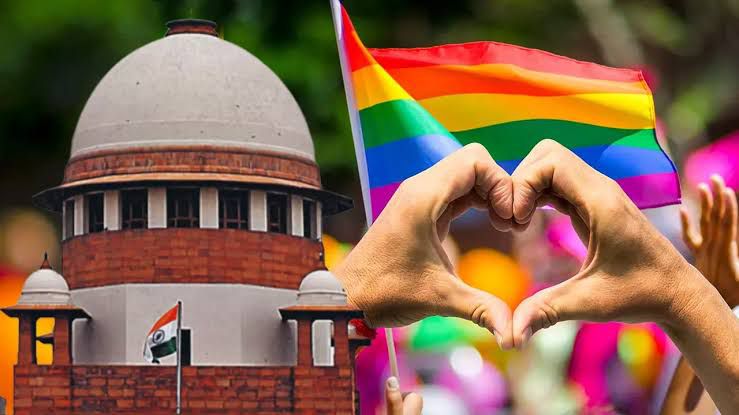
In the case of Navtej Johar v. Union of India (2018) ,Supreme Court has declared the same-sex relations as non-criminal (Union of India, 2018), but queer people in India still are not included in the system of law, such as marriage, adoption, inheritance, right to health, and access to it, right to own family, the right to maternity. Despite the progressive tone, Union of India was not ashamed to not legalize same-sex marriage and left the idea of the full citizenship of queer Indians in an empty space. In this article, we will essentially examine the course of queer rights in India, the ramifications of the Supriyo judgment, what gaps in the Constitution and the law still exist, and what the future journey must have to so that LGBTQIA + people get substantive equality.
Abstract
This paper aims at examining the legal environment after Supriyo that postulates rights of the queer in India increasing in effect a significant change in the activist legal past. Although the Court reinstated the dignity and equality of queer people, it did not grant their relationships the same legal status as heterosexual ones. This is a departure of the course occupied by the precedent of cases like Navtej Johar and NALSA, in which the courts had to be initiative in guarding and increasing the collection of minority liberties. The article argues that based on the implication of verdict in the area of adoption, right to inheritance, healthcare, succession, and property, there should be a proactive policy-based, legislative and judiciary intervention. It based its approach on international developments in comparative jurisprudence and social movement studies to provide a multi-pronged approach to bringing substantive and transformative equality to LGBTQIA+ people in India through legislative transformation, judicial reinterpretation, and grass-roots movements at large.
Use of Legal Jargon
The constitutional principles that are deeply involved in this article include, constitutional morality, equal protection clause under Article 14, non-discrimination under Article 15, right to privacy and personal autonomy of life under article 21 as well as the right to freedom of association and dignity. It is a criticism to the fact that judicial reasoning is too biased by the socio-legal rights being not justiciable and separation of powers doctrine. More specifically, the analysis brings out the lost chance by the apex court to advance the ideals of transformative constitutionalism jurisprudence which regards the Constitution as a breathing document or document seeking to obliterate these deep-rooted structures and power disparities.
The Proof
The issue has been addressed in Supriyo v. Union of India (2023) The petitioners wanted to be granted the right to marry in accordance with the special marriage act of 1954 (Union of India (2023). They claimed that the omission of same-sex unions under this law contravened the core rights provided under Articles 14 (equal protection of law), 15 (ban on discrimination), 19 (freedom of speech and association) and 21 (right to life and freedoms) of the Constitution. The five-judge Constitution Bench of the Supreme Court refused to legalize same-sex marriage even though the oral arguments were strong and the advocates served the cause with vigor. It is on this basis that CJI DY Chandrachud, writing majority opinion, acknowledged that queer persons have the right to form unions and cohabit. He also pointed out how these unions ought to be honored by the Constitution and that queer couples have to be given civil rights and lawful protection. But in the end, he was unable to come to the conclusion that formulating law of marriage falls under the powers of legislature rather than the judiciary. In the ruling, it advised an investigation by a high-level committee to look into the option of providing queer persons with civil union rights. However, it still failed to provide any enforceable relief or deadline on enforcement and the Special Marriage Act continues to only apply to heterosexual couples.
The History of Queer Rights in India
The journey of the recent development of the queer rights in India has been rather twisted in the road to the judicial, and legislative process. The prominent case , Naz Foundation v. NCT of Delhi (2009), where Delhi High Court determined that consensual same sex relations ceased to attract a criminal penalty under s.377 of the IPC and struck down that provision. But, this gradual verdict of the Supreme Court has been ousted by the Suresh Kumar Koushal v.Naz foundation and in that scenario, Naz Foundation (2013) which Invalidate same-sex marriage relations once more.
Navtej Singh Johar v. Union of India (2018), An amendment was made to the largest extent in Union of India (2018). The ruling by the Union of India (2018) determined decriminalization of the sexual relations between consenting adults of the same sex and further states that sexual orientation can be regarded as a component of identity and is a core part of its being and must be protected under Article 21. The Court put a lot of stress on the values of dignity, privacy, and constitutional morality. On the same note, in NALSA v. Supreme Court of India (2014), transgender persons were given legal status and the right to choose their gender and that the state was to take affirmative action towards the same (Union of India (2014)). Such rulings have brought hope and anticipation that the court would remain as a counter-majoritarian force that would set back queer rights in India. But this was very different in the Supriyo verdict of 2023. The Court, though feeling empathetic towards the case of queer individuals, took a conservative and formalist stance following the decision of leaving with the legislature to rectify its laws regarding marriage. This reflection of an activist to a proceduralist judiciary is emblematic of the present socio-political context that queer rights are an object of debate.
Insights of the Supriyo Judgment
The case of Supriyo was a combination of a set of petitions by queer individuals and couples, who wanted recognition of same-sex marriages under the same law/regulations on marriage, namely Special Marriage Act (SMA), 1954. The petitioners have argued that the SMA, by remaining silent or by discriminating against non-heterosexual couples, has infringed on their basic rights.
In his opinion, Chief Justice Chandrachud stated that although the practice of forming unions is safeguarded in the Constitution, the SMA cannot be amended by the court to grant couples of a queer sexual orientation the right to form unions. He argued that it is a policy which should be so big that it must be made by the legislature. By failing to give a gender-neutral interpretation of the SMA, the judgment also did not provide any possibilities of same-sex marriages.
Justice Kaul also agreed with this reasoning and reaffirmed describing the constitutional morality in the country as justifying the legalisation of queer relationships. However, he conceded to the legislative arena saying that the judiciary is not to be asked to set up legislation.
Justices Bhat, Kohli and Narasimha were more conservative. According to them, all people regardless of their gender ought to be respected and given equal treatment but that does not entitle them to marry. They advised against activism of courts and emphasized upon the separation of powers.
In the end, the judgment decided stating the need to create a committee to look at the rights and entitlements of queer couples. But in a situation where the order is not binding, the effects of such an order are minimal.
Post-Verdict Legal Developments and Critiques
The direct reaction to the verdict was the explosion of disillusion by the civil society, legal scholars, and queer communities. Many people believed that the Court’s ruling violated Navtej and NALSA’s constitutional pledges. It was viewed as regressive at worst and timid at best.
Some of the discrimination the queer couples are facing right now:
• Adoption and Parenting Rights: According to the Indian law, same-sex couples are not allowed to adopt a child together. According to the utterances of the Central Adoption Resource Authority (CARA), queers are not seen as potential adoptive parents.
• Surrogacy and ART Laws: New laws such as the Surrogacy (Regulation) Act, 2021 and the ART Act, 2021 further ensure that the queer community is deprived of access to reproductive services by means of heteronormative definition.
• Property and Succession: The absence of recognition of marriage implies that the partners are not recognized as legal spouses under personal or secular laws and as a result, they cannot inherit each other.
• Healthcare and Nomination Rights: The same is done to queer partners who are not usually allowed the rights of making medical decisions, accessing insurance benefits, or being nominated.
• Visitation and Next-of-Kin Status: Most hospitals and government institutions do not consider the queer partner as a next-of-kin.
• Social Welfare Schemes: Most of the government schemes in housing, pensions and even economic benefits are subject to the recognized spouses.
Comparative Jurisprudence: Lessons of the Other World
The reluctance of the Indian nation to accept same-sex marriage is not aligned with the international trend of legalizing such unions. Countries like South Africa, Canada, Germany, Taiwan, United Kingdom and United States have either passed judgments or laws recognizing marriage equality.
• South Africa: Minister of Home Affairs v. In Fourie (2005), the Constitutional Court dismissed the exclusion of same-sex couples by virtue of the fact that it was against the equality clause.
• Obergefell v. Hodges (2015), the U.S. Supreme Court held that same-sex marriage is a fundamental right under the Due Process and Equal Protection Clauses of the Fourteenth Amendment, making it legal across the United States. The Court emphasized equality, dignity, and personal liberty for same-sex couples.
• Taiwan, a country in Asia known for its progressive stance, became the first in the region to legalize same-sex marriage in 2019, showing that cultural conservatism doesn’t always prevent legal reforms in favour of equality.
• Germany and Canada: These countries have come up with gender-neutral laws on marriage and have clearly given queer couples rights to adoption and parenthood.
Such examples reveal that constitutional democracies are capable of and have a necessity to redefine legal institutions to correspond with the changing perception of the identity, love and family.
Policy Recommendations
To make substantive equality between queer persons a reality, the following reforms should be applied:
1. Modify the Special Marriage Act 1954 so it contains non gender specific language and specifically allows all adult couples irrespective of sexual orientation to get married.
2. Some guidelines should be adopted related to adoption under Juvenile Justice Act and similarly joint adoption should be permit Amend adoption guidelines by Juvenile Justice Act and CARA to permit joint adoption by the same sex couples.
3. 3. Enact all inclusive anti-discrimination laws that bar discrimination in the fields of sexual orientation, gender identity, and gender expression in both the private and the government sectors.
4. Provide a queer-friendly family law scheme with a view of the chosen families, cohabitation partnerships, and care giving relationships.
5. Run gender and sexuality sensitization training to judiciary, law enforcement, healthcare professionals and bureaucracy.
6. Include LGBTQIA+ in school and university syllabus, focusing on understanding, difference, and openness
7. Include queer communities in the participatory legislative processes through hosting of public consultations and parliamentary hearings.
Case Laws
• Navtej Singh Johar v. Union of India (2018): Decriminalized homosexuality; emphasized the principles of dignity, equality, and privacy.
• NALSA v. Union of India (2014): Transgender got their rights and upheld the right to self-identification.
• Supriyo v. Union of India (2023): The Indian Supreme Court declined to legalize same-sex marriage, saying it’s for the legislature to decide, but supported civil unions for queer couples.
• Obergefell v. Hodges (U.S., 2015): The U.S. Supreme Court ruled that same-sex marriage is a constitutional right, legalizing it across all states.
• Minister of Home Affairs v. Fourie (South Africa, 2005): decided that excluding queer couples from the right to marry is unfair, discriminatory, and not allowed under the Constitution.
Conclusion
The Supriyo case, being progressive in words, is again a conservative and formalist interpretation of the Constitution. It acknowledges the humanity of queers but fails in applying the same to their relationships and accepting them as such. The difference between declaratory rights and entitlements that can be enforced illustrates the extent to which the bridge still needs to be spanned.
Marriage is not an agreement on an individual level, it is a law relationship and provides a set of rights, economical, social and also cultural. The rejection of the queer persons to be familiarized with this institution is an exercise of not only exclusion to the legal recognition but the trampling on the dignity the queer persons and their equality.
Only the judiciary is tasked with the role of ensuring that this gap must be bridged but also the Parliament and the civil society. A future of queer rights in India needs an integrative form of approach which comprises, constitutional vision, legislative activation and social activation.
FAQs
Q1. Does same sex marriage is allowed by supreme court?
No. The verdict in the Supriyo case has categorically stated that it is not willing to legalize same-sex marriage and instead, has said it is upon Parliament to determine that it is to be legally recognized or not.
Q2. Can the same-sex relationship adopt in India?
Not jointly. The adoption laws on an individual and CARA guidelines on adoption only allow single persons to adopt. Gays and lesbians are not allowed to adopt together.
Q3. What then is a civil union according to the ruling?
A civil union is a term that is used to regard same sex couples with the right to be together and have relationships which can involve a few legal rights. These rights are not defined or assured through the judgment though.
Q4. Do queer couples receive the right to choosing each other as pensioners or insured?
It lacks standard legal requirement. The rights to nomination are subjective to institutional discretion and have mostly been thwarted in absence of marital recognition.
Q5. What is constitutional morality?
The constitutional morality is a proposal that rather than the social norms and/or opinion of the people, the elements of the constitutional law ought to be used when interpreting the law and making policy particularly in support of the rights of the minorities.
Q6. Where do we go after the Supriyo verdict?
The way ahead incorporates state reform of the current laws, re-interpretation of the future court cases, direct civil society participation, and educative efforts permeating the regularization of queer identities and relationships.
FAQs
Q1. Does same sex marriage is allowed by supreme court?
No. The verdict in the Supriyo case has categorically stated that it is not willing to legalize same-sex marriage and instead, has said it is upon Parliament to determine that it is to be legally recognized or not.
Q2. Can the same-sex relationship adopt in India?
Not jointly. The adoption laws on an individual and CARA guidelines on adoption only allow single persons to adopt. Gays and lesbians are not allowed to adopt together.
Q3. What then is a civil union according to the ruling?
A civil union is a term that is used to regard same sex couples with the right to be together and have relationships which can involve a few legal rights. These rights are not defined or assured through the judgment though.
Q4. Do queer couples receive the right to choosing each other as pensioners or insured?
It lacks standard legal requirement. The rights to nomination are subjective to institutional discretion and have mostly been thwarted in absence of marital recognition.
Q5. What is constitutional morality?
The constitutional morality is a proposal that rather than the social norms and/or opinion of the people, the elements of the constitutional law ought to be used when interpreting the law and making policy particularly in support of the rights of the minorities.
Q6. Where do we go after the Supriyo verdict?
The way ahead incorporates state reform of the current laws, re-interpretation of the future court cases, direct civil society participation, and educative efforts permeating the regularization of queer identities and relationships.