Author: Anish Tandi, Centurion University, Bhubaneswar
LinkedIn Profile: www.linkedin.com/in/anish-tandi-668a7b2a1
ABSTRACT
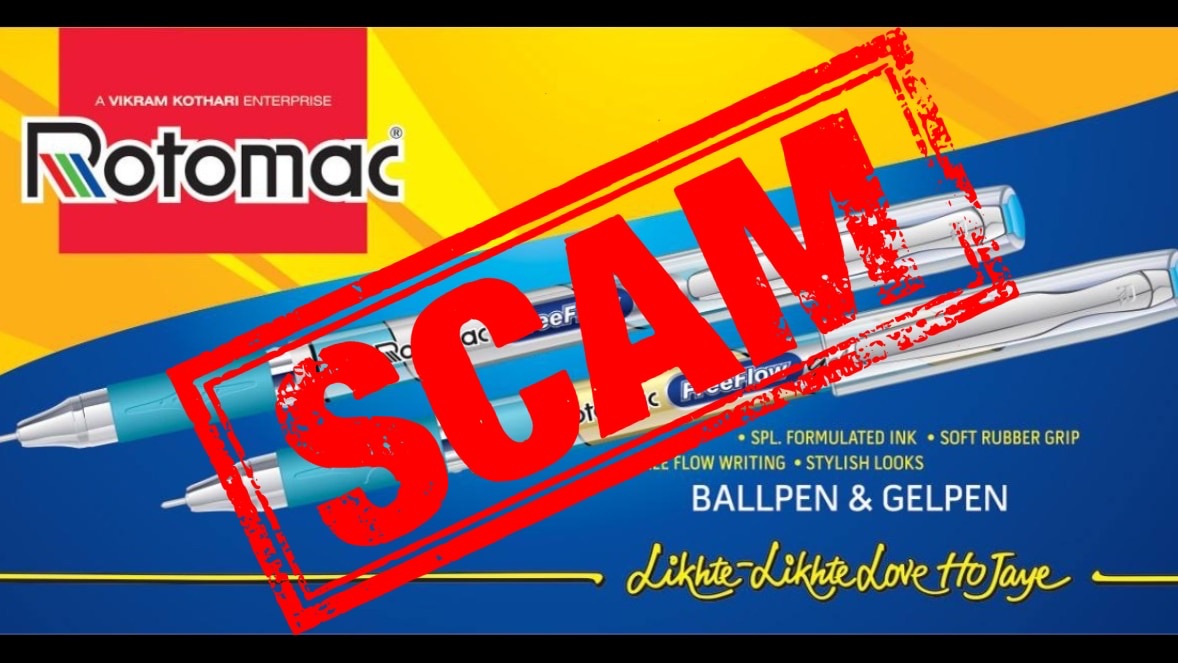
Rotomac, bank Fraud is one of the post-NPA repugnant story that broke out in India in 2018 which had a Suspective money of Rs. 3695 crore in nonperforming loans. Rotomac Global Private Limited, under the leadership of its promoter Vikram Kothari and Family members, allegedly diverted the funds borrowed from a consortium of seven banks for purposes other than the ones for which the loans were granted. The scandal exposed institutional lacunae in credit appraisal systems, monitoring processes post-disbursement and the culture of willful default and fraudulent diversion in Indian banking. This article embarks on a detailed examination of the legal nuances of Rotomac scandal, foci of operation, penal and judicial responses and the overall impact of the case on India’s financial lexicon. The case is a ready reference point to reiterate the difference between business failure and fraudulent diversion, and the legal pathways to combat economic crimes in India.
TO THE POINT
The Rotomac Scandal surfaced publicly when the CBI registered a First information Report (FIR) against the promoters of the Company Vikram Kothari, his wife Sadhana and son Rahul. The FIR was registered against the company’s promoters for cheating a seven-bank syndicate of Rs. 3,695 crore fraudulently in February 2018. The writing instruments and stationery products manufacturing company had been availing of various credit facilitates since the early 2000s including cash credit, term loans and letter of credits.
The main allegation was that the sum borrowed was piped through off shore bank accounts and a web of shell companies and was not used for the business of the company or for capital expenditure. It was also the CBI’s case that the Kothari family had established fake companies to route funds through, had issued manipulated stock statements to banks and falsified books of accounts. In 2027 when the bank account was declared a NPA, the dues outstanding amounted to over 3,600 crore.
The ED thereafter registered a case under the Prevention of Money Laundering Act, 2002 (PMLA) alleging that the amounts which were the proceeds of a crime in the form of money, were laundering through a series of transactions. Vikram Kothari was arrested on 2 March 2018 and a day later his son Rahul Kothari was also arrested. 2024, the case remains for trail and various applications for bail have been rejected by the Allahabad High Court as well as the Supreme Court on the grounds of the magnitude of an economic offence and the possibility of evidence tampering.
USE OF LEGAL JARGON
The Rotomac Scandal has a patchwork of many violations of legal provisions. The main offenses of the state which have been purported are these under the Indian Penal Code, 1860 (IPC) consisting of criminal conspiracy under section 120 B cheating under Section 420 criminal breach of trust under Section 405, 468 for forgery (for purpose of cheating).
The ED in its proceedings under the Prevention of Money Laundering Act, 2002 (PMLA), invoked section 3 of the PMLA (the definition of ‘offence of money laundering’) which states that ‘money laundering’ means any activity connected with the proceeds of crime and projecting it as untainted property. Under the PMLA the suspected offence of money laundering was related to the proceeds of crime (in the context, the ML fraudulently diverted loan amount) by the process of layering and integration layering refers to a series of transactions to conceal the source of money Laundering; integration is the reentry of money Laundering into the legitimate economy; and placement is the first entry of proceeds of crime into the financial system. These latter provisions require the courts to be satisfied that reasonable grounds exits for believing accused is not guilty of such offence (section 45 of PMLA).
The Case also attracted violation under the Banking Regulation Act, 1949, especially Section 26A (penalties for certain contravention) and the provisions relating to wilful default. The Securitisation and Reconstruction of Financial Assets and Enforcement of Security Interest Act, 2002 (SARFAESI Act) was used by the banks to auction secured assets to recover dues.
The CBI also relied on criminal breach of trust under Section 405 of the IPC by which the essentials are proved: entrustment of property, misappropriation or conversion to own use, and dishonest intention to use the property as one’s own. The doctrine of actus non facit reum nisi mens sit res (an act does not make a person guilty unless the mind is also guilty) which encompasses the element of mens rea or reason for action, is the intent to defraud instead of business failure, was also relied upon.
The requirement of wilful default creating a Criminal offence as opposed to business failure, which does not, become a matter of serious legal importance, as wilful default is committed by a borrower whose means are sufficient to pay, and no such means are available in business failure.
THE PROOF
The Evidentiary foundation of the Rotomac case rests on multiple investigation findings: Bank audit reports: Forensic audits done by the consortium banks could establish that the stock statements filed by Rotomac were overstated. Physical verification proved that the stocks listed at 200 crore were actually only at 20 crore value. Such overstated inventories led to higher credit limits.
Transaction Trial. The ED identified that money sent to off shore shell companies in places such as Hong Kong, Singapore and Dubai. The money total over 1500 crores was ‘moved’ via over 50 off shore shell companies, without any import of services or goods. The transfer was identified through the bank account statements and SWIFT transactions.
Sebi and RoC Filings: Regulatory filings (with RoC and SEBI) revealed inconsistencies in the glorified turnover figures presented to banks and underdeclared income in returns to tax authorities, although ‘dual bookkeeping’ was a systemic feature of the matter. The CBI acquired the same during searches held in February 218.
Witness statements: Ex- bank officials and Rotomac employees gave evidence that loan disbursements were carried out without proper due diligence and monitoring mechanisms post disbursement were bypassed. Several officials confirmed that they were instructed to disburse funds even where there was a red flag.
Seized documents and Digital Evidence it is known that CBI raids of Kothari residence and Rotomac officers resulted in several compromising documents and electronic devices. Electronic forensic analysis revealed intercepted emails detailing the establishment of fictitious accounts and the subsequent transfer of funds. An electronic dairy of Vikram Kothari was said to have mentions of “accommodation entries” a popular terminology in financial fraud of taking an inward remittance.
Property Attachment: In this case the ED attached assets (Rs. 80 crore, approx.) of the entire Kothari family, comprising Agriculture land, Residential property, Bank balances etc. the Attachment order issued by ED u/s 5 of PMLA showed that proceeds of crime were grossly dissipated and far exceeded the value of the attached property.
CASE LAWS
1. State of Gujarat v. Chhotalal Karsandas Patel (2019)
This Gujarat High Court judgment, cited in Rotomac bail proceedings, held that economic crimes committed against baking institutions should be taken as gravely serious. It was observed by the court that fraud that involves public money strikes at the very financial base of the state and bail as such, cannot be granted as a matter of rule.
2. Nikesh Tarachand Shah v. Union of India (2017) 16 SCC 536
Though the case struck down PMLA section 45(1)(ii) (or the twin conditions for bail) as void, its legality was challenged in the court of law and overturned by Supreme Court in the case of Union of India v. Nikesh Tarachand Shah (pending review). Though some of the court decisions by Delhi High Court in some of the Rotomac related cases relied on the Nikesh Tarachand case, which stayed by the Supreme Court.
3. P. Chidambaram v. Directorate of Enforcement (2019) 9 SCC 24
This case was a further step taken by the Hon’ble Supreme Court to expand the test for bail in PMLA cases, in that it considered, (a) the nature of the offence committed, (b) the quantum of the proceeds of such offence, and (c) the likelihood of the accused influencing witness or tampering with evidence.
4. Central Bureau of Investigation v. Vikram Kothari (Allahabad High Court, 2018)
In the bail rejection order on the Rotomac case the Allahabad High Court observed that the amount involved being 3,695 crore and the accused had transferred the entire amount in regards to the modus operandi of diverting funds through firms and shell companies, bail was refused. The court also observed that the case was still under investigation and the offence was punishable with fine and could have tampered evidence.
5. Rohit Tandan v. Directorate of Enforcement (2018) 11 SCC 46
This verdict asserted that demonetized currency deposited n banks would be proceeds of crime under PMLA. Even though the PMLA did not apply here, the court rendered the dictum that proceeds of any banking fraud can be attached irrespective of subsequent sale of the same.
CONCLUSION
The very high profile Rotomac bank fraud also highlights the ongoing issue of wilful defaulters and diversion of loans in Indian banking industry. While the quantum of fraud (3,695 crore) is large, the importance of the case is in revealing the ways in which corporate borrowers navigate the lacunae in regulation (say false stock statements, a chain of lowest common denominator shell companies) in order to sleepwalk away with loan monies.
The legal proceedings had dragged on for a long period, kotharis’ son Rahul was granted bail earlier and his father was granted bail by the Supreme Court earlier on the grounds of ill health in 2020. The case is still not settled, again reiterating the trend of long drawn complex proceedings in complex proceedings in complex economic crimes. This case also stresses the need for stricter credit appraisal procedures, real time monitoring of loan utilization and increased powers for forensic auditors.
Jurisprudentially speaking, the Rotomac judgment brings much needed clarity. It differentiates between criminal non-performance (business failure) and pre-meditated fraud, diversion of funds and wilful default, sanctioning the latter with criminal sanctions. Being a part of the trend of banking defaulted loans that the Indian penal system has begum to create, this judgment is another step in the evolution of the criminal regime surrounding economic offenses.
FQAs
Q1. What was the total amount involved in the Rotomac bank fraud case?
The total dues outstanding were 3,695 crore for belonging to 7 public sector banks consortium. The diverted amount whether actual, as per CBI, is 1,615 crore and is under verification.
Q2. Who were the main accused in the Rotomac case?
The defendant was led by Vikram Kothari (promoter of the company ‘Rotomac Global Private Limited’), his wife and son, Ms. Sadhana Kothari, and Rahul Kothari respectively. Other bank authorities were also investigated for conspiracy.
Q3. Under which laws were criminal charges filed?
Criminal offences were under the Indian penal code sections 120B, 420, 405, 468; the Prevention of Money Laundering Act, 2002 Sections 3,4; and other Sections of the Banking Regulation Act, 1949.
Q4. What was the modus operandi of the fraud?
A false stock statement was allegedly prepared by the Kotharis to earn higher credit limits. Money from the loan was smuggled out of India through a shell company into a web of fictitious organizations. Books of accounts were doctored.
Q5. What is the difference between wilful default and business failure?
Wilful default is the non-payment of a loan when the borrower has the ability to pay but deliberately chooses not to in order to pocket the money, for example by diverting funds. A business failure is not an act of criminal default as it was not a case of inability ton pay in a financial sense, but the bank lost money due to a dead business due to an inability to sell a product at a profit.
Q6. What is the Current status of case?
Vikram Kothari has been released on bail by Supreme Court in 2020 on medical grounds. The relevant court is conducting the trail. The ED has continued with its investigation and has attached more assets.
REFERENCES
• Central Bureau of Investigation. (2018). FIR No. RC0062018A0005, CBI/ACB/Chennai.
• Enforcement Directorate. (2018). ECIR No. ECIR/04/HIU/2018 (Rotomac Case).
• Supreme Court of India. (2019). P. Chidambaram v. Directorate of Enforcement, (2019) 9 SCC 24.
• Supreme Court of India. (2018). Rohit Tandon v. Directorate of Enforcement, (2018) 11 SCC 46.
• Allahabad High Court. (2018). Central Bureau of Investigation v. Vikram Kothari, Bail Application No. 1234/2018.
• Prevention of Money Laundering Act, 2002 (Act No. 15 of 2023), as amended.
• Indian Penal Code, 1860 (Act No. of 1860).