
Author : Krushna Bawa a student at DES’S Shri Navalmal Firodia Law College, Pune.
LinkedIn Profile: https://www.linkedin.com/in/krushna-bawa-b56968387?utm_source=share_via&utm_content=profile&utm_medium=member_android
ABSTRACT:
The Bellary Mining Scandal is one of the biggest illegal mining scams ever to happen in India. It shows a huge failure on the part of environmental governance. This scandal was all about the unlawful extraction, transportation, and exportation of iron ore from areas rich in the metal in Karnataka, India.This scandal revealed the connection between politics, administrative corruption, and mining in private hands. Such mining resulted in devastating impacts on the environment as well as enormous financial damage to the government coffers.The crucial part of investigation of such illegal activities was played by the Supreme Court of India, together with CEC and Lokayukta of Karnataka investigations. This article explores the Bellary Mining Scandal, the legal issues arising from it, its environmental impact, and its implications for environmental governance in India.
TO THE POINT
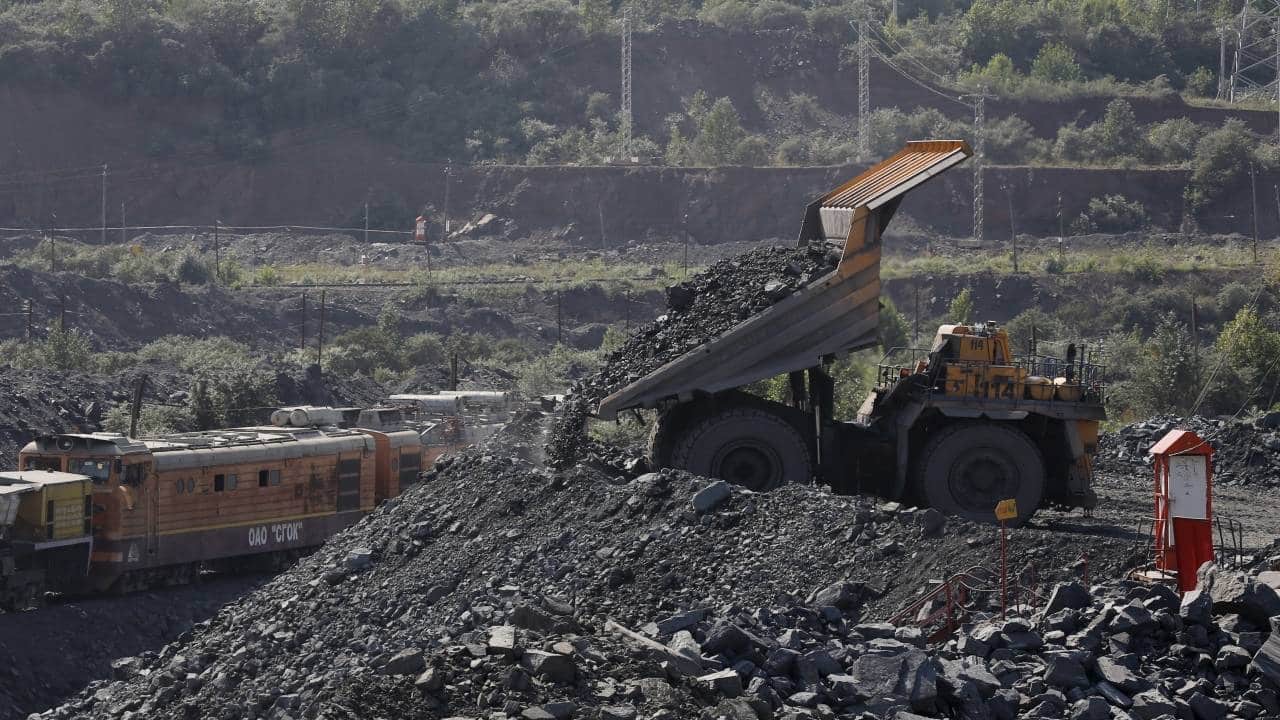
The Bellary Mining Scam is the case of extensive illegal mining in Karnataka in the beginning of the decade. Companies engaged in illegal mining by exceeding the allowed limits, using forests in violation of laws, transporting the illegally extracted mineral and selling it illegally.
This scam made headlines in the country following the revelation made in the 2011 Karnataka Lokayukta report, which stated that there had been major lapses on the part of politicians, government officials, and miners.
The Supreme Court got involved, stopped mining, initiated investigations, and introduced sustainable changes. This case is now regarded as a prime example of judicial activism in the field of environmental governance.
USE OF LEGAL JARGON:
Illegal Mining:
The activity carried out without any legal sanction, which may either flout statutory requirements, environmental clearances, and mineral licenses.
Environmental Governance:
The system that governs all laws and policies, and regulates environmental protection and resource management issues.
Rule of Law:
The idea that everybody, including both people and institutions as well as governments, is subject to the law.
Natural Resource Governance:
The management and control of natural resources in such a way that they serve public interest.
Public Trust Doctrine:
The doctrine that states that natural resources are held by the government in trust for the benefit of the public.
Sustainable Development:
Sustainable Development is the principle that Development should meet the needs of the present without compromising the ability of future generations to meet their own needs.
Forest Conservation:
The protection and management of forest environments using laws and regulations.
Environmental Impact Assessment:
The assessment of the environmental impacts of potential development initiatives prior to their approval.
Judicial Review:
This refers to the authority held by the courts to review the constitutionality of actions taken by the government.
Regulatory Capture:
This happens when a regulatory body acts in self-interest instead of for the common good.
THE PROOF:
Background of the Scam:
Karnataka state’s Bellary district boasts rich reserves of iron ore. With the surge in commodity prices during the 2000s globally, there was an increased need for iron ore, especially in countries such as China.
The increase presented many opportunities for huge gains. This was seen through illegal mining and export of iron ore, which became rampant due to the presence of regulatory loopholes. Investigation into this matter proved that the mining had moved beyond the lease areas and even invaded protected forests.
Karnataka Lokayukta, headed by Justice N. Santosh Hegde, carried out an inquiry into the mining activities taking place in the State. In 2011, a report issued by Karnataka Lokayukta highlighted various illegal activities taking place within the mining industry that involved politicians, bureaucrats, and mining companies.
Some of the major violations cited in the report include:
• Mining beyond the sanctioned areas.
• Conducting mining activities without any licenses.
• Illegally occupying forest lands for mining purposes.
• Fraudulently issuing transport permits.
• Illegal export of iron ore.
• Violation of environmental protection regulations.
• Collaboration between mining firms and authorities.
These violations were found to result in the loss of crores of rupees.
Environmental Consequences:
The environmental effect of illegal mining operations in Bellary had been very detrimental and wide-ranging.
Deforestation on a massive scale led to the degradation of forest environments and the destruction of natural habitats for flora and fauna. Excavation work resulted in substantial soil erosion. Dust pollution polluted the air, causing health problems among the local population.
This destruction of the environment went well beyond just the mining sites themselves.
Supreme Court Intervention:
Realizing the gravity of the matter, the Supreme Court of India stepped in to adjudicate various cases concerning illegal mining activities in Karnataka.
The court heavily depended on reports submitted by the Central Empowered Committee (CEC). There were serious violations of both environment and mining laws as stated in the CEC’s report.
In 2011, the Supreme Court stopped mining activities in all affected areas. The Court categorized all the mines based on their level of violation and came up with measures that would allow the mine to reopen under certain conditions.
Natural resources, as per the Supreme Court, belong to the Indian people and should be used as stipulated in the Constitution.
Legal Violations:
Statutory Violations
Some of the statutory violations that were committed by the fraudulent individuals include:
• Act for Mines and Minerals (Development and Regulation), 1957.
• Forest Conservation Act, 1980.
• Environmental Protection Act, 1986.
• Indian Forest Act, 1927.
• Air Pollution Prevention and Control of Act, 1981.
• Water Prevention and Control of Pollution Act, 1974.
The fraud illustrated the ineffectiveness of the enforcement measures in the abuse of natural resources.
Case Laws:
1. Samaj Parivartan Samudaya v. State of Karnataka, (2013)
Facts:
In the case of Samaj Parivartan Samudaya v. State of Karnataka (2013), a Public Interest Litigation (PIL) was filed challenging the large-scale illegal mining for minerals in the State of Karnataka, especially in Bellary district. The petition claimed illegal extraction of mineral wealth without licenses, encroachments on forests and environmental degradation through illegal mining in the area.
Arguments:
It was contended by the Petitioner that due to the illegal mining there had been an immense impact on the environment, depletion of natural resources and ecological damage, in contravention of sustainable development and public trust doctrine. It was opposed by the State and the mining leaseholders that mining activities were crucial for economic development and employment opportunities and corrective action would suffice to address any malpractice.
Judgment:
The Supreme Court found that illegal mining activities had led to extensive damage to the environment and it was a major abuse of natural resources. On the basis of recommendations of the Central Empowered Committee (CEC), the Supreme Court ordered suspension and cancellation of mining leases where major violations were committed, besides rehabilitation measures. The judgment strengthened the doctrines of sustainable development; polluter pays doctrine and public trust doctrine.
2. M.C. Mehta v. Kamal Nath (1997)
Facts
The decision of the court in the case M.C. Mehta v. Kamal Nath (1997) involved allowing a privately owned organization run by Kamal Nath to change the course of the Beas River in order to improve a motel situated on the river banks.
Arguments:
The plaintiff contended that rivers and other natural resources belong to the citizens and are not to be utilized for personal gain. On the other hand, the defendants maintained that the government had legally authorized the project.
Judgement:
The Supreme Court of India declared that the government functions as a trustee of the natural resources that have to be protected for public use. Based on the Public Trust Doctrine, the Court passed an order that the defendant will pay compensation for the damage done to the environment.
3. Centre for Public Interest Litigation v. Union of India, (2012) (2G Spectrum Case)
Facts:
In the famous 2G Spectrum Case (Centre for Public Interest Litigation v. Union of India), 2008 saw the Government of India allocate 2G spectrum licenses to telecom companies based on a ‘first come, first serve’ basis. There have been claims of arbitrariness, lack of transparency, and massive financial loss to the exchequer because of the allocation of licenses in question.
Arguments:
The petitioners claimed that the allocation amounted to a violation of the rights guaranteed to citizens under Article 14 of the Indian Constitution, as well as misuse of public property. On the other hand, the government argued that such policies were formulated to help develop the telecommunications industry.
Judgment:
The apex court ruled that the license allocations were unfair, as well as unconstitutional, and annulled licenses granted to 122 telecoms. It ruled that resources like telecommunication spectrum are common public property and should be distributed fairly and without any arbitrariness.
4. Goa Foundation v. Union of India, (2014):
Facts:
In Goa Foundation v. Union of India (2014), the petitioners alleged illegal mining of iron ore in Goa on account of violation of laws on environment, mining norms, and over-exploitation of natural resources.
Arguments:
Petitioners argued that mining had resulted in environmental damage and over-exploitation of public natural resources. The companies and the state maintained that mining was necessary for economic development and generation of employment opportunities.
Judgement:
The Supreme Court held that there were several instances where mining operations had violated law and environmental norms. The Court ordered suspension of mining operations and stringent regulation of the mining sector. The Court observed that mineral resources are part of the public wealth, and therefore their extraction must be regulated in consonance with the doctrine of sustainable development and Public Trust Doctrine.
5. Common Cause v. Union of India, (2017)
Facts:
In the case of Common Cause v. Union of India (2017), a PIL was lodged on the ground that there was widespread illegal mining going on in the state of Odisha, where many mining firms were involved in the mining of minerals without environmental clearance, forest clearance, or renewal of their mining leases.
Arguments:
It was pleaded that mining without the requisite clearances was contrary to law, and resulted in the loss both to the environment and the government treasury. The respondents pleaded that the mining had been done after receiving the necessary clearances.
Judgment:
The Supreme Court of India held that mining without the necessary clearances was illegal. The Court made an application of the Polluter Pays Principle and the Public Trust Doctrine to hold that the mining companies shall compensate for the illegal mining activity.
CONCLUSION:
The Bellary Mining Scandal is one of the most prominent instances of environmental crimes in contemporary India. The case revealed not only the risks associated with unrestricted exploitation of the country’s natural resources but also pointed to the possibility of manipulating the legal framework for regulating the environment by corrupt officials.
Furthermore, the case demonstrated the importance of constitutional mechanisms of protection of the national property of people. Thanks to their timely actions, it was possible to shed light on the scope of illegal operations that had been carried out in India.
Probably the most important lesson that could be learned from the Bellary Mining Scam would be the fact that natural resources are not commodities that can be exploited in any manner. They are actually public resources, and thus, must be preserved for the current and upcoming generations in consonance with the principles of Sustainable Development and the Public Trust Doctrine.
While India continues to strive for development and growth in its industries and infrastructure sector, the Bellary Mining Scam highlights the need for effective and rigorous environmental governance in the country. It is necessary that development should not occur through the destruction of natural resources but within constitutional bounds.
FAQS
Q1. What was the Bellary Mining Scam?
Bellary Mining Scam entailed a massive scale of illegal mining, transporting, and exporting of iron ore causing environmental degradation along with economic loss for the State.
Q2. How was it exposed?
The Bellary Mining Scam was primarily exposed by the Karnataka Lokayukta headed by Justice N. Santosh Hegde due to the 2011 report.
Q3. Mention any supreme court cases that relate to the scandal.
The case that relates to the Bellary Mining Scandal includes the judgment in Samaj Parivartan Samudaya v. State of Karnataka, (2013) 8 SCC 154.
Q4. Mention the environment laws breached.
Some of the environmental laws that were broken include the Mines and Minerals (Development and Regulation) Act, Forest (Conservation) Act, Environment (Protection) Act, Air Act, and Water Act.
Q5. Environmental effect of the scandal.
Deforestation, soil erosion, air pollution, water pollution, and environmental destruction were some of the environmental impacts caused by the Bellary Mining Scam.
Q6. Why is the Bellary Mining Scam relevant to the study of law?
This mining scam helps understand the connection between environmental law and anti-corruption laws.
REFERENCES:
1. Samaj Parivartan Samudaya v. State of Karnataka, (2013) 8 SCC 154.
2. M.C. Mehta v. Kamal Nath, (1997) 1 SCC 388.
3. Centre for Public Interest Litigation v. Union of India, (2012) 3 SCC 1.
4. Goa Foundation v. Union of India, (2014) 6 SCC 590.
5. Common Cause v. Union of India, (2017) 9 SCC 499.
6. Mines and Minerals (Development and Regulation) Act, 1957.
7. Forest (Conservation) Act, 1980.
8. Environment (Protection) Act, 1986.
9. Air (Prevention and Control of Pollution) Act, 1981.
10. Water (Prevention and Control of Pollution) Act, 1974

