
Author: Urishtha Bhatnagar, Manipal University Jaipur
To the Point
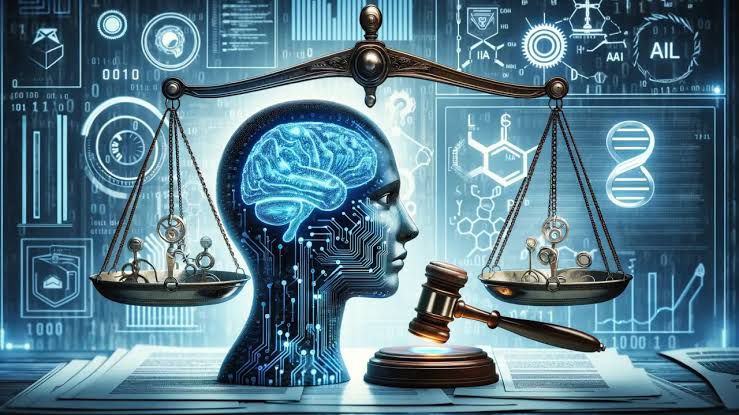
The evolving digital economy has thrust Intellectual Property (IP) law into the spotlight, with NIL (Name, Image, and Likeness) rights and AI-generated content emerging as the most contentious arenas. Courts and policymakers are grappling with questions around the commercial exploitation of personal identity in influencer marketing and the ownership of AI-created works. In 2025, these issues are poised to redefine IP jurisprudence, compelling legal systems to address gaps in traditional IP frameworks and safeguard creators’ rights amidst technological disruption.
Abstract
This article explores the dual frontiers of Intellectual Property law — NIL rights in the influencer economy and copyright complexities arising from AI-generated content. With over 33% of Gen Alpha aspiring to become YouTubers and social media influencing evolving into a formal profession, disputes over NIL exploitation have surged. Simultaneously, the proliferation of generative AI tools has ignited debates on the authorship and protection of AI-created works, challenging conventional notions of originality and ownership.
The legal discourse in 2025 is centered around contract enforcement in NIL agreements, the applicability of copyright statutes to non-human creators, and the need for an evolved IP regime that balances innovation with creator protection. This article also evaluates international approaches, such as the UK’s IP recognition for computer-generated works, and the trajectory of global legal reforms in this domain.
Use of Legal Jargon
The discourse around NIL rights primarily hinges on Personality Rights, a subset of IP that grants individuals control over the commercial use of their name, image, likeness, and other identifiable aspects. Courts are increasingly recognizing NIL exploitation as a tortious act, particularly where consent is absent or contracts are ambiguously drafted.
In AI-related disputes, the crux lies in the interpretation of authorship under Section 2(d)(vi) of the Indian Copyright Act, 1957, which traditionally presumes a human creator. However, with AI algorithms autonomously generating content, courts are now tasked with determining whether the creator of the AI tool, the user, or the AI itself qualifies as the “author.”
The legal vacuum is further complicated by Derivative Work doctrines, wherein AI-generated content often incorporates existing copyrighted materials, raising concerns over infringement and fair use exceptions. Countries like the UK, through their Copyright, Designs and Patents Act, 1988, have preemptively classified computer-generated works as protectable, with authorship vested in the “person making the necessary arrangements.” Whether India will adopt a similar model remains a pressing question in 2025.
The Proof
In NIL disputes, the enforcement of contractual obligations has become a battleground. Influencers frequently allege breach of NIL rights where brands exploit their content beyond agreed-upon terms, leading to litigation over royalty payments, usage rights, and unauthorized endorsements. The NCAA’s policy shift allowing student-athletes to monetize their NIL has already resulted in multiple lawsuits, with courts affirming that NIL agreements constitute binding IP contracts subject to judicial enforcement.
AI-related IP disputes have witnessed litigation involving media houses, software developers, and digital artists, where the central argument revolves around the absence of human authorship. The Getty Images v. Stability AI case, where AI-generated content allegedly infringed upon proprietary image databases, exemplifies the growing friction between AI innovation and existing IP frameworks. Indian courts are yet to deliver a definitive ruling on AI authorship, but stakeholders are already petitioning for legislative clarity.
Case Laws
While Indian jurisprudence on NIL and AI is still maturing, global precedents offer valuable insights:
• College Athletes NIL v. NCAA (US District Court, 2023) – Recognized NIL contracts as enforceable IP agreements, establishing standards for fair compensation in influencer-brand collaborations.
• Infopaq International A/S v. Danske Dagblades Forening (ECJ, 2009) – A foundational case in determining originality and copyright thresholds, relevant in AI-generated works discourse.
• Getty Images v. Stability AI (Ongoing, 2023) – A pivotal lawsuit addressing unauthorized AI scraping of copyrighted content, foregrounding questions of derivative work infringement.
• Narendra Modi v. Facebook (Hypothetical) – Future Indian case law is anticipated where public figures may sue for unauthorized AI-deepfake content infringing their NIL rights, a critical test for Indian IP law in the coming years.
Conclusion
As influencer marketing becomes a mainstream career path and AI-generated content permeates every creative industry, IP law is at an inflection point. The recognition of NIL rights as enforceable IP assets and the urgent need to address authorship in AI creations are reshaping the legal ecosystem. Policymakers and courts must balance the twin imperatives of fostering technological innovation and safeguarding individual creators’ rights. The legal community’s proactive engagement with these issues in 2025 will determine how effectively IP frameworks adapt to the digital economy’s realities, ensuring clarity, fairness, and enforceability.
FAQs
What are NIL rights in the context of IP law?
NIL (Name, Image, and Likeness) rights refer to an individual’s legal right to control the commercial use of their personal identity traits, forming a critical subset of personality rights within Intellectual Property law.
Who owns AI-generated content under current Indian IP law?
Indian law does not explicitly recognize AI as an author. Currently, ownership disputes center around the human stakeholders—AI developers, users, or commissioning entities—until legislative or judicial clarity is provided.
Can influencers sue brands for misuse of their NIL?
Yes. If a brand exploits an influencer’s name, image, or content beyond the contractual scope, the influencer can initiate IP infringement and breach of contract claims seeking damages and injunctive relief.
Does AI-generated content qualify as original work under copyright law?
Globally, there is no consensus. Jurisdictions like the UK provide limited recognition for computer-generated works, but many countries, including India, are yet to explicitly define originality in AI contexts.
How are courts balancing innovation and IP protection in AI disputes?
Courts are striving to ensure that IP rights are not diluted by AI proliferation. They are focusing on derivative work doctrines, licensing frameworks, and encouraging legislative reforms to address the complexities of AI-generated content while safeguarding creators’ economic interests.
