Author-Chirag Batra, Bharati Vidyapeeth College, New Delhi
To the Point
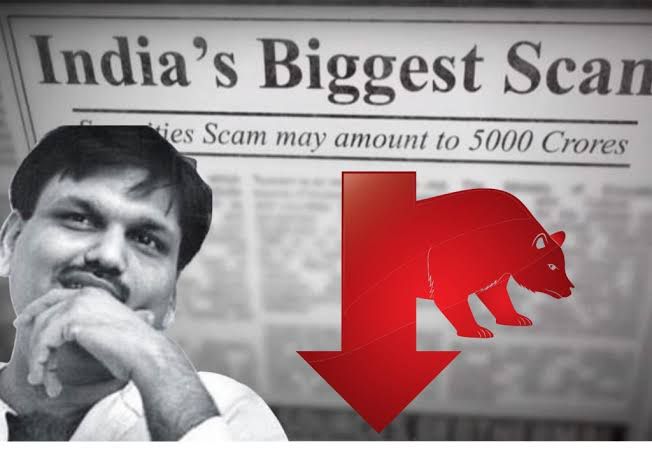
The Harshad Mehta securities scam of 1992, valued at approximately ₹4,000 crores, remains India’s most notorious financial fraud, exposing systemic vulnerabilities in the banking and stock market frameworks. Orchestrated by stockbroker Harshad Mehta, the scam involved manipulating bank receipts and ready-forward deals to siphon funds into the stock market, artificially inflating share prices. Exposed by journalist Sucheta Dalal, the scandal led to a market crash, eroded investor confidence, and prompted sweeping regulatory reforms, including the strengthening of the Securities and Exchange Board of India (SEBI) and the establishment of the National Stock Exchange (NSE). This article provides a comprehensive legal analysis, exploring the scam’s mechanics, judicial proceedings, relevant case laws, and enduring impact on India’s financial jurisprudence.
Use of Legal Jargon
Several legal infractions were involved in the Harshad Mehta controversy, which made the usage of intricate legal jargon necessary:
Fraudulent Misrepresentation: According to Section 17 of the Indian Contract Act, 1872, Mehta’s submission of forged bank receipts involved deliberate deception aimed at persuading banks to engage in unsecured lending.
Criminal Breach of Trust: As per Section 405 of the Indian Penal Code (IPC), 1860, Mehta’s misappropriation of bank funds entrusted to him as a broker amounted to a criminal breach.
Cheating: Clause 420 IPC was activated as a result of Mehta’s fraudulent persuasion of financial institutions to release money based on misleading claims.
Criminal Conspiracy: Section 120B IPC applied to Mehta’s collusion with bank officials to perpetrate the fraud.
Market Manipulation: Violations under the SEBI Act, 1992, particularly Section 24, addressed Mehta’s artificial inflation of stock prices through fraudulent trade practices.
Embezzlement: The diversion of bank funds into personal accounts constituted embezzlement under the Banking Regulation Act, 1949.
Insider Trading: Though not the primary charge, Mehta’s actions bordered on insider trading, later clarified in SEBI v. Rakesh Agarwal (2003).
Special Court Jurisdiction: The Special Court (Trial of Offences Relating to Transactions in Securities) Act, 1992, facilitated expedited adjudication of the scam-related cases.
Asset Forfeiture: The Custodian’s role under the Special Court Act involved attaching and liquidating Mehta’s assets to satisfy creditor claims.
Regulatory Lapses: The scam exposed deficiencies in SEBI’s oversight and RBI’s interbank transaction monitoring, necessitating statutory amendments.
The Proof
The evidence substantiating Harshad Mehta’s fraudulent activities was multifaceted, comprising documentary, testimonial, and investigative findings:
Forged Bank Receipts (BRs): Mehta exploited the ready-forward (RF) deal mechanism, wherein banks traded government securities for short-term liquidity.He created bogus bank receipts, misrepresenting interbank transfers, in order to obtain unsecured loans from banks such as the State Bank of India (SBI) and Punjab National Bank (PNB). Audits showed that these receipts were not backed by any securities, revealing the fraud..
Financial Trail: Transaction records traced funds from banks to Mehta’s personal and corporate accounts, which were then funneled into the Bombay Stock Exchange (BSE). Stocks like ACC, Videocon, and Apollo Tyres saw unnatural price spikes, uncorrelated with their intrinsic valuations, indicating manipulation.
Investigative Journalism: Sucheta Dalal’s exposé in The Times of India (April 1992) detailed Mehta’s operations, triggering public and regulatory scrutiny. Her articles correlated market anomalies with Mehta’s transactions, providing a critical catalyst for investigations.
Witness Testimonies: Bank officials and intermediaries admitted to colluding with Mehta, issuing cheques in his name against RBI guidelines, which mandated payments only to other banks. These admissions supported the deceptive series of transactions..
Regulatory Audits: Investigations by SEBI and the Reserve Bank of India (RBI) uncovered systemic lapses, including inadequate oversight of RF deals and uncollateralized BRs.
Seized Documents: A June 1992 income tax raid on Mehta’s premises yielded shares, securities, and account books, evidencing well-documented transactions. However, the Income Tax Department’s erroneous classification of legitimate brokerage receipts as undisclosed income was later contested.
Stock Market Crash: The BSE Sensex plummeted from 4,500 to 2,500 post-exposure, reflecting a ₹1,000 billion market capitalization loss, directly attributable to Mehta’s artificial bull run.
Abstract
An important turning point in India’s financial history was the 1992 Harshad Mehta securities fraud, which exposed serious operational and regulatory shortcomings in the banking and stock market industries. Harshad Mehta, an influential stockbroker known as the “Big Bull,” took advantage of gaps in ready-forward transactions and bank receipt systems to reroute around ₹4,000 crores from public sector banks into the Bombay Stock Exchange, creating an artificial inflation of stock prices. His actions, uncovered by investigative journalist Sucheta Dalal, precipitated a market crash, eroded investor trust, and led to Mehta’s arrest in November 1992. Facing over 70 criminal charges and 600 civil lawsuits, Mehta was convicted in four cases before his death in 2001. The scam catalyzed significant reforms, including SEBI’s empowerment, the Depositories Act, 1996, and the establishment of the NSE. This article examines the scam’s legal dimensions, judicial outcomes, and its transformative impact on India’s financial regulatory framework, supported by relevant case laws and FAQs.
Case Laws
The Harshad Mehta scam spawned numerous judicial proceedings, establishing precedents in financial jurisprudence. Key case laws include:
1. Ketan Parekh Scam (1998–2001)
Manipulating stock prices by bank loans and circular trading.
Manipulated a set of K-10 stocks.
Involved the unlawful taking of money from financial institutions such as Madhavpura Mercantile Cooperative Bank.
2. Satyam Scam (2009)
Falsified company accounts and inflated profits by ₹7,000+ crore.
Created fictitious assets and manipulated financial statements.
Led to conviction of founder Ramalinga Raju under fraud and forgery charges.
3. NSEL Scam (2013)
Sold non-existent commodities through “paired contracts”.
Investors were misled into believing in guaranteed returns.
Estimated loss: over ₹5,600 crore.
4. Saradha & Rose Valley Chit Fund Scams
Ran unauthorized investment schemes promising high returns.
Collected money from lakhs of small investors.
5. Karvy Stock Broking Scam (2019)
Misused client securities worth ₹2,300 crore without consent.
Pledged securities to raise funds for own use.
SEBI barred Karvy from trading and depositories froze its accounts.
6. NSE Co-location Scam
Using co-location servers, traders had preferred access to NSE data.
Allowed unfair speed advantage in trades.
Involved top NSE officials and led to a CBI investigation.
Conclusion
One pivotal incident that revealed the weakness of India’s financial systems and sparked revolutionary reforms was the Harshad Mehta securities scandal in 1992. Mehta’s exploitation of banking loopholes, through forged bank receipts and ready-forward deals, orchestrated a ₹4,000 crore fraud that shook investor confidence and triggered a market crash. Although Mehta convicted in just four cases before to his death in 2001, the court processes, which included more than 70 criminal and 600 civil cases, highlighted the difficulties in pursuing complicated economic misdeeds. The scam’s exposure by Sucheta Dalal and subsequent investigations by SEBI, RBI, and CBI revealed systemic lapses, prompting the empowerment of SEBI, the enactment of the Depositories Act, 1996, and the creation of the NSE. Judicial precedents, such as R.K. Dalmia and SEBI v. P.K. Sinha, reinforced the legal framework for addressing financial crimes. The scam remains a cautionary tale, emphasizing the need for robust regulation, transparency, and investor protection. Its legacy endures in India’s strengthened financial markets, serving as a benchmark for corporate governance and regulatory oversight.
FAQs
What was the Harshad Mehta scam?
In the 1992 financial scam known as the Harshad Mehta scam, stockbroker Harshad Mehta used ready-forward agreements and fake bank receipts to steal about ₹4,000 crores from banks in order to influence stock prices on the Bombay Stock Exchange and cause a market crash..
How was the scam exposed?
Investigative journalist Sucheta Dalal exposed the scam through articles in The Times of India in April 1992, detailing Mehta’s fraudulent banking practices and market manipulations.
What legal charges did Harshad Mehta face?
Mehta was charged with fraud (Section 420 IPC), criminal breach of trust (Section 405 IPC), criminal conspiracy (Section 120B IPC), market manipulation (SEBI Act, 1992), and violations under the Banking Regulation Act, 1949.
What was the effect on the Indian stock market?
The scam caused a 40% crash in the BSE Sensex, wiping out ₹1,000 billion in market capitalization and eroding investor confidence for years.
What reforms followed the scam?
Reforms included strengthening SEBI’s regulatory powers, enacting the Depositories Act, 1996, for share dematerialization, establishing the NSE, and enhancing banking oversight by RBI.
Was Harshad Mehta fully convicted?
Mehta was convicted in four of 27 criminal cases before his death in 2001 due to a heart attack. Many civil cases remain unresolved.
What role did the Special Court Act, 1992, play?
The Act established a Special Court to expedite trials and asset recovery for scam-related offenses, facilitating creditor claims against Mehta’s estate.
How did the scam affect retail investors?
Retail investors suffered significant losses due to the market crash, leading to a conservative approach to equity investments and diminished trust in the financial system.
Did Mehta’s family face legal consequences?
Yes, family members faced civil liabilities, with assets attached by the Custodian. Some cases, like Sudhir Shantilal Mehta v. CBI, addressed their involvement.
Why is the scam still relevant?
The scam’s lessons on regulatory oversight, transparency, and investor protection continue to shape India’s financial policies and serve as a case study in corporate governance.