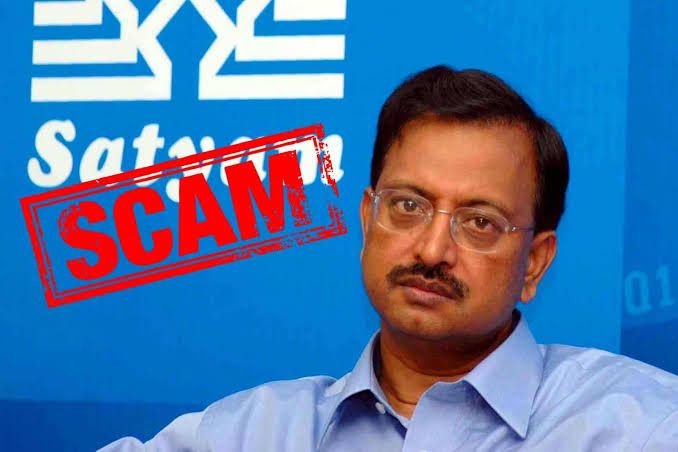
Author: Ashwina Venkatramanan, School of Excellence in Law, The Tamil Nadu Dr. Ambedkar Law University, Chennai
TO THE POINT
The Satyam scam, involving one of the biggest software companies in India, shocked the investors, employees and the public when it was exposed in January 2009. The disclosure was eye-opening as the company was widely perceived to be a profitable and successful enterprise. The mastermind of the scam, Byrraju Ramalinga Raju, founder of the Satyam Computer Services Ltd. confessed that he had been falsifying the financial statements and deceiving the share market for roughly 7-8 years and was unable to hide the money-gap any longer. This massive corporate fraud was not only a wake-up call to the future shareholders but also highlighted the urgency for enforcing stricter regulations for corporate governance and ethics. The Satyam scam has become a significant topic of study in the corporate world as it served as the basis for many important legal reforms.
ABSTRACT
The introduction of corporate entities, second to agriculture, is undeniably the major driving force behind the development of the healthcare, infrastructure and industries in India. These entities have created employment, expanded access to education and enhanced the quality of many Indian lives. The metropolitan cities such as Chennai, Bangalore, Mumbai, etc. have evolved as corporate hubs where a large portion of their population are employed in various companies. However corporate scandals like Satyam scam shatters the dreams and hopes placed in such institutions leading to job loss, lesser opportunities and serious destruction of the country’s economy. This article will focus on the legal, financial and ethical implications kicked up by the Satyam scam and explore how it triggered the need for improvements in the corporate framework.
LEGAL JARGON
The Satyam Computer Services Ltd., often referred to as India’s Enron was established as a private company in 1987 by Ramalinga Raju primarily providing Information Technology (IT) services across various sectors. It was recognised by the NSE, BSE, New York Stock Exchange and Euronext. Before the scam, Satyam was well-respected with its presence in over 30 countries. It was the first Asian company to feature in the Training Magazine’s list of Top 125 companies for learning and became the Official IT Services Provider for the FIFA World Cups 2010 (South Africa) and 2014 (Brazil). But the scam shattered the company’s image and public trust in corporate governance. The chairman, Raju, admitted to many fraudulent activities including inflating the share prices, faking invoices, customer numbers, falsifying bank statements, paying salary to non-existent ‘employees’, diverting funds to real estate to cover financial gaps. Even the auditors who were tasked with finding any inadequacies failed to bring the manipulation to light questioning corporate governance and ethics. It all started when Raju, along with the Managing Director (his brother) and a couple of top executives of the company defrauded the shareholders by faking clients, invoices, bank accounts, audit reports and even employees. From 2003-2008, Satyam successfully managed to evade auditors, investors and regulators. The company’s reserves were even used in investing in his family businesses like ‘Maytas’. The share price jumped from ₹10 to ₹544 and was even awarded the Golden Peacock award for corporate governance.
The downfall of Satyam however began after this at the end of 2008 during the global financial crisis. Raju was unable to handle the creditors and the loans kept piling on because of the sudden decrease in the profits. Furthermore, the World Bank imposed an eight-year ban on Satyam for providing improper benefits to its employees. In a desperate attempt to rescue the company, Ramalinga Raju proposed acquiring Maytas, a real estate enterprise run by his family, for $1.6 billion using the company’s own funds.
This move backfired spectacularly, sparking shareholder outrage and resulting in a 55% plunge in the company’s stock price. Ultimately, in January, 2009, Raju, after being backed into a corner, confessed in a letter addressed to Satyam’s Board of Directors and authorities that he was solely responsible for inflating the share prices and overstating the annual income by huge amounts. After the investigations launched by the CBI, SFIO and SEBI, Raju and his accomplices were indicted on multiple charges including cheating, forgery, criminal conspiracy and criminal breach of trust under the respective provisions of the IPC. It included violations of the Securities Exchange Act, 1934 (for failing to meet the reporting requirements, maintaining accurate records, and implementing internal controls under Section 13 Clauses (a), (b)(2)(A), (b)(2)(B)), Companies Act (for failures in corporate governance, including inadequate oversight by the Board of Directors and the Audit Committee). It was also revealed that a whistleblower with the alias Joseph Abraham had initially sent an e-mail to company’s directors and also alerted the SEBI and the media about the ongoing scam which later forced Raju to confess. Legal action was also taken against the external auditors, PricewaterhouseCoopers, who was said to be Raju’s key ally for violating auditing standards and unethical conduct. In hindsight, the scam was a pivotal moment prompting a major overhaul of the outdated corporate laws for improvement of transparency, accountability and ethics in corporate environments.
PROOF
The magnitude of the Satyam scam and the duration for which it went undetected revealed alarming deficiencies in India’s corporate regulatory and compliance mechanisms. The corporate laws which existed at that time did not provide strong safeguards against auditor collusion, false disclosures, or boardroom fraud. Despite being listed on both Indian and U.S. stock exchanges, Satyam’s fraudulent financials remained unchecked due to the failure of external auditors (PricewaterhouseCoopers) and weak internal governance.
The scam prompted major legislative and institutional reforms. Key among them was the enactment of the Companies Act, 2013, which introduced provisions for:
Class action suits (Section 245)
Stricter director responsibilities (Sections 166, 177)
Enhanced role of audit committees
Mandatory rotation of auditors (Section 139)
Increased penalties for fraud (Section 447)
Additionally, the National Financial Reporting Authority (NFRA) was established to regulate auditors and ensure compliance with auditing standards. However, the case also highlighted that laws alone are not enough, their implementation, regular auditing, whistleblower protections, and a vigilant regulatory approach are equally essential to prevent such scams. The Satyam scandal, thus, became a turning point in Indian corporate history, sparking reforms aimed at restoring public trust in corporate governance and investor protection mechanisms.
LEGAL CASES
Experts like Rohit Mahajan, the executive director, forensic services advisory, at audit and consulting firm KPMG, says there are several such cases of fraud simmering in the sidelights. With India becoming increasingly globalized, corporate frauds are also evolving in complexity and scale. In a recent interview with The Economic Times, it was revealed that more than 60% of respondents in a survey admitted to experiencing fraud within their organizations. Many of these organizations estimated their financial losses at range between ₹10 million and ₹100 million.
1. Harshad Mehta Scam:
Popularly known as the “1992 Scam,” this financial scandal involved Harshad Mehta and his associates’ exploiting loopholes in the Indian banking system to fraudulently siphon off approximately ₹4,000 crores—an amount valued at nearly ₹24,000 crores today. At the time, it was one of the largest financial scams in Indian history, prior to the Satyam scandal. The fraud occurred during 1991–1992, a period marked by a booming stock market and lax regulatory oversight. Mehta manipulated the system by forging bank receipts, fabricating business deals, and misusing securities transactions to illegally obtain funds from banks.
2. Ketan Parekh Scam of 2001:
Ketan Parekh, an associate and widely regarded as a mentee of Harshad Mehta, was infamously involved in one of the biggest scams the Indian stock market had witnessed. He was once again arrested for engaging in circular trading and manipulating stock prices despite previous restrictions. He manipulated the stock prices of around 10–12 companies, often called the K-10 stocks. He used a method called circular trading, where stocks were repeatedly bought and sold between connected parties to artificially inflate their prices.
3. NSE Co-location Scam:
The NSE co-location scam first came to light in 2015 when a whistleblower raised concerns with the Securities and Exchange Board of India (SEBI). The complaint painted a troubling picture — it claimed that some traders, allegedly in collusion with NSE officials, were given unfair access to the exchange’s co-location facilities. This essentially meant that a few brokers had a speed advantage, allowing them to execute trades faster than others — a major issue in high-frequency and algorithmic trading. Back then, NSE used what’s known as a tick-by-tick (TBT) protocol to share market data. But this system had its flaws. According to investigations by SEBI’s Technical Advisory Committee and Deloitte India, it was vulnerable to misuse. The whistleblower alleged that certain brokers logged into the system using specially configured hardware that gave them access to data fractions of a second before everyone else, a small margin that could lead to massive profits in the stock market. As the scandal unfolded, the NSE found itself under intense scrutiny. Multiple agencies such as the SEBI, the CBI, and the Income Tax Department began digging deeper. Their focus has been not only on the brokers involved but also on current and former NSE executives who may have turned a blind eye or actively enabled these practices. Even years later, the case continues to cast a shadow over the exchange, raising serious questions about transparency and fairness in India’s financial markets.
CONCLUSION
The Satyam Scam is considered to be the biggest corporate scam to ever take place in India. But it occurred primarily due to a failure to adhere to strict standards at the grassroots level. Even with strengthening of legislative frameworks, individuals with fraudulent intent will still find creative ways to exploit the system’s loopholes. It is not the law that we should focus on alone, but work ethics as well. These are problems that must be nipped in the bud and not allowed to go unchecked. Scams of such large scale destroy many lives, damage the Indian economy, and take even more time to recover from.
FAQS
1. Whether the reforms introduced post-Satyam Scam had a positive impact?
Yes, the reforms introduced after the Satyam scam had a significant positive impact on corporate governance and transparency in India. Key reforms included amendment of the Companies Act, 2013, establishment of NFRA (National Financial Reporting Authority), mandatory auditor rotation and enhanced roles for audit committees. Greater emphasis was placed on disclosures, internal controls, and accountability.
2. What was the punishment inflicted on Ramalinga Raju for his misdeeds and was it sufficient?
Not always. In many high-profile financial frauds, including the Satyam case, Ramalinga Raju was sentenced in 2015 to 7 years of rigorous imprisonment and fined ₹5 crore. Many critics argue that the punishment is not proportionate to the scale of damage (₹7,800 crore in this case) and that it lacks a strong deterrent effect.
3. What was the next largest scam after the Satyam Scam?
The Punjab National Bank (PNB) scam of 2018, involving Nirav Modi and Mehul Choksi, is considered the next major financial scam after Satyam. They had defrauded almost ₹13,000+ crore. The scam involved fraudulent Letters of Undertaking (LoUs) issued by PNB employees and also exposed serious lapses in banking supervision and SWIFT integration, leading to major banking reforms.
4. What is Ramalinga Raju doing currently?
Ramalinga Raju has remained largely out of the public eye, maintaining a low-profile post-conviction. His involvement in any business activities has not been publicly confirmed, and he has stayed away from media and corporate circles.
REFERENCES
Rohit Mahajan, More Satyam-like Cases Simmering: KPMG Executive, The Economic Times (Jan. 8, 2009), available at
More Satyam-like cases simmering: Rohit Mahajan, KPMG executive – The Economic Times
Scam 1992: The Harshad Mehta Financial Fraud That Shook India’s Stock Market, 5paisa (accessed June 4, 2025), available at
Scam 1992: The Harshad Mehta Financial Fraud That Shook India’s Stock Market | 5paisa
NSE Co-location Scam: Chitra Ramkrishna Controversy Explained, The Economic Times (updated Mar. 2022), available at
NSE Co-location case | Chitra Ramakrishna controversy | NSE scam
5paisa Research Team, Satyam Scam: Case Study of the Satyam Fraud Case, 5paisa Blog (Feb. 17, 2025), available at https://www.5paisa.com/blog/satyam-scam.