Author: Anirudh Gupta, Prestige Institute of Management and Research
To the Point
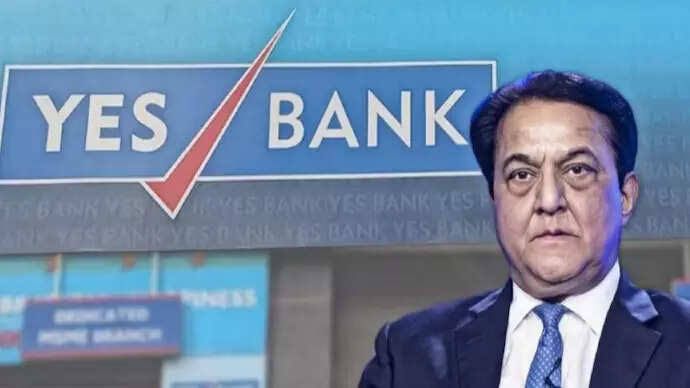
The fraud case in Yes Bank, focusing on its co-founder and former Managing Director & CEO Rana Kapoor, is one of the biggest examples of financial malfeasance in India’s banking history. The case highlights how failures of leadership and regulatory checks at top levels can destabilize a whole bank. Rana Kapoor is accused of masterminding a large-scale financial scam through misuse of office to extend huge, unsecured, and generally dubious loans to chosen business houses in return for illegal money benefits channeled through labyrinthine webs of shell firms and family-run entities.
The Enforcement Directorate (ED) and Central Bureau of Investigation (CBI) claim that Kapoor utilized his executive powers to approve loans to companies such as DHFL (Dewan Housing Finance Corporation Limited), which were already in financial trouble. For this, his family-owned companies reportedly got hefty investments or loans worth hundreds of crores, making a clear quid pro quo deal. These transactions not only contravened internal bank procedures and Reserve Bank of India (RBI) directives but also enabled large-scale money laundering, in brazen defiance of statutory requirements under Indian financial legislations.
By 2020, the asset quality of the bank had worsened considerably, with non-performing assets (NPAs) skyrocketing, capital adequacy plummeting, and depositor confidence declining. This finally led the RBI to intervene by imposing a moratorium, limiting withdrawals, and facilitating a rescue scheme involving a State Bank of India-led consortium. The scandal left a long shadow on the credibility of private sector Indian banking and revealed hidden structural vulnerabilities in risk governance, ethical compliance, and the strength of watchdog institutions.
The case is representative of a deeper crisis of accountability in India’s corporate and banking industry. It raises urgent questions on the efficacy of due diligence processes, the credibility of board management, and the enforcement of fiduciary obligations by senior management. Fundamentally, the case is not about one person’s malfeasance but a systemic collapse that necessitates strong reforms in company governance, regulatory oversight, and financial morality.
Abstract
The Yes Bank fraud case involving its former MD & CEO, Rana Kapoor, has emerged as a watershed moment in India’s financial and legal landscape, highlighting serious vulnerabilities in the functioning of private banking institutions. This article explores the intricate network of alleged fraudulent transactions, kickbacks, and money laundering schemes orchestrated under Kapoor’s leadership. By a close analysis of investigative reports by the Enforcement Directorate (ED) and the Central Bureau of Investigation (CBI), the article explains the modus operandi of corporate financial crimes in India—where individual enrichment comes at the expense of institutional integrity.
The case is a practical application of important anti-money laundering and anti-corruption legislation, such as the Prevention of Corruption Act, 1988, and the Prevention of Money Laundering Act, 2002 (PMLA). It highlights how legislative machinery is utilized in prosecuting white-collar crimes and enforcing accountability on top business leaders. The article also elaborates on the theory of corporate criminal liability, examining how legal doctrine is applied when organizational decision-makers deploy the veil of incorporation to conceal criminal activity.
Notably, the case is not limited to the actions of a single person. It refers to deeper institutional shortcomings like poor regulatory oversight, defective risk assessment procedures, and poor corporate governance structures. The article therefore tries to assess the wider implications of the case for India’s financial system, especially the private banking segment. It calls for stricter compliance mechanisms, better board level monitoring, and prompt regulatory action to ward off similar system failures in the future.
Through examining the legal, regulatory, and corporate governance aspects of the Yes Bank scandal, the article offers an integrated perspective on how high-profile banking scams happen, how they are treated in Indian law, and what they demonstrate regarding the gaps that still exist in India’s financial landscape.
Use of Legal Jargon
The legal action against Rana Kapoor and his co-accused evokes a complex interplay of various statutory provisions and judicial principles designed to prevent financial malfeasance and enforce accountability in the banking industry. Peculiar to the legal action are charges under the Prevention of Corruption Act, 1988, specifically Sections 7 and 13, which penalize public servants for receiving gratification as an inducement or incentive for the official act. When Kapoor was running a private bank, his quasi-public character as a fiduciary—Yes Bank being deeply entrenched in the public financial system—brings him into the scope of this law, as settled in precedents like CBI v. Ramesh Gelli.
The Prevention of Money Laundering Act, 2002 (PMLA), is also a key law involved in this investigation. The Enforcement Directorate has charged that Kapoor employed a chain of shell companies and middleman firms—some connected to his relatives—to layer and integrate proceeds of crime. The act, under Section 3, defines money laundering as any endeavour to hide, hold, obtain or utilize the proceeds of crime. Under Section 4, it is punishable with rigorous imprisonment for a maximum of 7 years (extendable to 10 years in cases involving PCA offences) and fines.
Another key legal principle involved is corporate criminal liability, under which a corporate body such as Yes Bank can be held criminally responsible for actions by individuals who run the company, subject to proof of intent (mens rea) and action (actus reus). The jurisprudential milestone of a Supreme Court judgment in Iridium India Telecom Ltd. v. Motorola Inc. [(2011) 1 SCC 74] reaffirmed that corporations can very much be prosecuted and punished for criminal offenses, even when the statute demands mens rea. This directly translates in proving the guilt of Yes Bank as an institution, as much as Rana Kapoor individually.
In addition, Kapoor’s conduct could also constitute a violation of the duty of fiduciary under the Companies Act, 2013, specifically Section 166, which requires directors to act in good faith in the interests of the company and its stakeholders. In putatively employing his position in order to enrich himself at the expense of institutional failure, Kapoor could be convicted of a violation of fundamental corporate governance standards.
The Reserve Bank of India’s prudential norms, especially those related to credit risk, exposure limits, and non-performing asset (NPA) classification, were reportedly violated repeatedly during Kapoor’s tenure. These violations bring into question Yes Bank’s compliance with Basel III norms and the RBI’s Master Circulars on Prudential Norms, thereby adding a regulatory dimension to the legal framework.
Brought together, these legislations and precedents reflect the complex legal difficulties involved in prosecuting such big-ticket financial crimes involving so closely intertwined corporate fraud, corruption, regulatory offences, and criminal conspiracy.
The Evidence
The Enforcement Directorate (ED) and Central Bureau of Investigation (CBI) have laid open a meticulous chain of financial improprieties and illicit transactions that comprise the evidential spine of Rana Kapoor’s case. At the heart of the charges is a complex quid pro quo nexus between Yes Bank and cash-strapped entities, primarily Dewan Housing Finance Corporation Ltd. (DHFL). Kapoor, according to investigators, used his position as the MD and CEO of Yes Bank to ensure sanction of loans exceeding ₹3,700 crore to DHFL and its group companies. DHFL allegedly loaned ₹600 crore to DOIT Urban Ventures Pvt. Ltd. an indirectly owned and controlled company of Kapoor’s wife and daughters. The deal qualifies as a clear-cut case of kickback in the garb of investment and hence amounts to bribery and money laundering.
Additional investigations show that Kapoor and his group used a sophisticated network of shell firms and trust entities to conceal the source, character, and flow of funds. They were allegedly used to clean dirty proceeds, buy high-value properties in proxy names (benamis), and divert money to foreign destinations. The ED has also seized assets valued at more than ₹2,000 crore, including London and Delhi luxury apartments, art works, and bank accounts, all said to be proceeds of crime under the PMLA Section 5.
Ignoring internal risk assessment warning signals and RBI warnings, Kapoor is said to have continued lending to them against the norms of prudent banking practices. The wilful misclassification and understatement of NPAs artificially boosted the bank’s health, which misdirected investors, depositors, and regulators.
Yes Bank’s capital adequacy had weakened to the point of being critical by early 2020, and its gross NPA ratio accelerated to more than 18%. Depositors’ fear-driven withdrawals caused a liquidity crisis, forcing the Reserve Bank of India (RBI) to impose a 30-day embargo under Section 45 of the Banking Regulation Act, 1949. It restricted withdrawal from an account to ₹50,000 and curbed the functioning of the bank. This historic step was followed by an emergency recap scheme led by State Bank of India (SBI), which injected capital and acquired a 49% stake in the revamped Yes Bank.
These facts cumulatively form the basis of a conspiracy to cheat, as defined by Section 120B of the Indian Penal Code (IPC), and various offences under the Prevention of Corruption Act and PMLA.
Case Laws
- CBI v. Ramesh Gelli & Others (Global Trust Bank case)
This case explained that executives of banks can be prosecuted under the Prevention of Corruption Act if the bank is conducting a “public duty.” Rana Kapoor’s prosecution is along the same lines, as Yes Bank, though a private one, is conducting public duties under RBI oversight.
- Iridium India Telecom v. Motorola Inc., (2011) 1 SCC 74
The Supreme Court held corporations to be criminally liable for mens rea offences. This precedent upholds the ED’s jurisdiction in pursuing Yes Bank as a corporate culprit along with Kapoor.
- State of Maharashtra v. Tapas D. Neogy (1999) 7 SCC 685
This case extended the definition of “public servant” in anti-corruption legislation. Although Kapoor was not an employee of the government, his conduct is examined under public accountability due to the systemic significance of Yes Bank.
Conclusion
The Yes Bank-Rana Kapoor scandal is a grim reminder of the systemic weaknesses that are inherent in India’s corporate governance and financial ecosystem. The scandal has not only revealed the dangers of unchecked executive power as well as moral failures at the highest levels of financial institutions, but it also brought to light the fallout of regulatory lethargy and belated intervention. The failure of one of India’s top private banks, and the subsequent bailout ordered by the state, highlight the wide-ranging consequences of elite bank crimes—not merely for private investors.
Essentially, this case illustrates the manner in which a fiduciary abuse, when combined with regulatory failure and weak controls, enables fraudulent activity to go unchecked. Rana Kapoor’s alleged preferential lending to politically influential and financially distressed groups, followed by money laundering illicit proceeds through family-run businesses, underscores the imperative for strong systems to track .
The interjection of top-notch investigating agencies like ED and the CBI has lent much-needed judicial oversight to corporate fraud using the twin umbrellas of the Prevention of Corruption Act, 1988 and the Prevention of Money Laundering Act, 2002. These proceedings are noteworthy not only for their criminal and financial aspects but also for their likely bearings on jurisprudence relating to corporate criminal liability, director responsibility, and public-interest prosecution in cases related to financial institutions.
This case should also act as a clarion call for such regulatory bodies like the Reserve Bank of India (RBI) and the Securities and Exchange Board of India (SEBI) to revisit their supervisory mechanisms. Early detection of warning signs such as accelerated loan growth to risky borrowers, declining asset quality, and lack of transparency in disclosures would have dissipated the crisis. The scandal has once again fueled the debate regarding whether India requires a more consolidated and technologically integrated financial regulatory infrastructure to address dynamic risks in real time.
In the future, the Yes Bank saga should not be viewed as a one-off aberration but as a chance to reform the regulatory framework, intensify financial audits, and enhance compliance standards for all financial institutions. Reforms through the law to shield whistleblowers, enhance transparency at board levels, and hold chief executives personally responsible for institutional corruption could do much to revive public confidence.
FAQs
1. Who is Rana Kapoor and why is he being investigated?
Rana Kapoor is a co-founder and former Managing Director & Chief Executive Officer of Yes Bank, India’s largest private sector bank. He stands investigation by the Enforcement Directorate (ED) and the Central Bureau of Investigation (CBI) for allegedly indulging in a string of corrupt banking practices. The agencies accuse Kapoor of abusing his executive powers by approving high-risk loans to financially troubled businesses in exchange for kickbacks. These illegal kickbacks were reportedly channeled through a web of shell firms and his family’s controlled companies. The scale of these activities caused direct harm to the financial health and regulatory failure of Yes Bank.
2. What are the main charges against him?
Rana Kapoor is charged with several criminal offenses, mainly under the Prevention of Corruption Act, 1988, and the Prevention of Money Laundering Act, 2002 (PMLA).
The main allegations are:
• Misuse of official position for extending loans in return for pecuniary benefits to himself.
• Criminal breach of trust under Section 7 and Section 13 of the Prevention of Corruption Act.
• Money laundering under Section 3 of the PMLA, involving placement, layering, and integration of proceeds of crime.
• Breach of fiduciary duty, abrogating the faith reposed in him by depositors, regulators, and shareholders.
Charges can also be pressed under the Indian Penal Code (IPC) for cheating (Section 420) and conspiracy (Section 120B), thereby constituting a case of multi-pronged corporate and financial crime.
3. How did this fraud impact Yes Bank?
The fraudulent activity engineered by Kapoor caused tremendous institutional and financial harm:
• Extensive exposure to non-performing assets (NPAs) caused by exuberant lending to crisis companies such as DHFL, IL&FS, and Jet Airways.
• Cooked books of finance which misstated the bank’s true risk profile.
• Depositor loss of confidence, leading to large-scale withdrawals and a shortage of liquidity.
• Regulatory intervention by the Reserve Bank of India (RBI) in March 2020, where it imposed a moratorium of withdrawal restrictions and suspended board operations.
• It had to be rescued by a State Bank of India-led consortium that infused capital and took strategic equity.
This chain of events induced one of India’s biggest private banking governance collapses.
4. What is the legal implication of this case?
The Yes Bank-Rana Kapoor case has important precedential and policy-level implications:
• It reinforces the enforcement of anti-corruption and anti-money laundering legislation in the private financial sector.
• Strengthens the law of corporate criminal liability, acknowledging that institutions can also be held criminally liable and not just individual executives.
• Challenges the legal framework of fiduciary duty and director responsibility under the Companies Act, 2013.
• May result in judicial pronouncements clarifying the role of regulatory compliance, board monitoring, and whistleblower protection in averting such frauds.
• Furnishes an ensuing legal template used in resolving analogous future cases, where major financial institutions are exploited for personal interests by senior management.