
Author: Yash Bundela, SAGE University Indore
To the Point
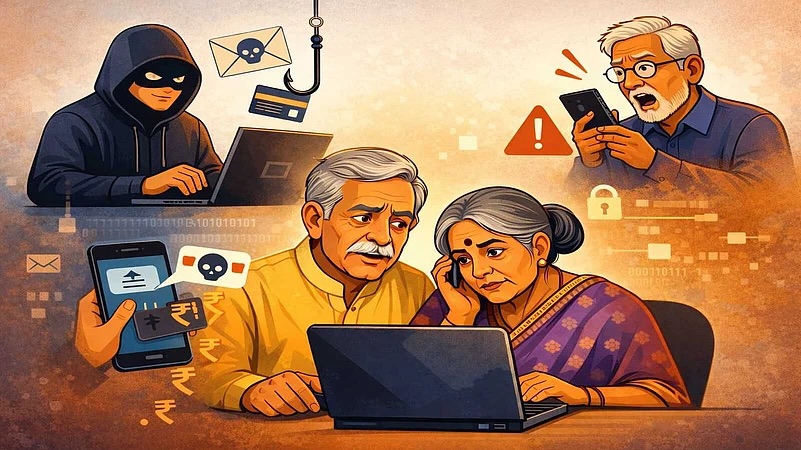
As per the times of modern era, cyber crimes emerged as new challenges towards the society and legal system and the cyber crime against the senior and old age people is also a biggest problem. The victimisation of senior citizens in cyber crime is increasing, it raises a serious issue and the reason behind it is the advancement of technology and low awareness of senior citizens about cyber offences. They often face certain types of cyber crimes includes digital arrest scams,OTP Fraud, Digital impersonation, fake Digital consent, financial exploitation and other common cyber crimes like hacking, phishing etc. And the major issue is we don’t have a strong cyber laws and protective system to tackle a cyber crime against them. To address these types of crime against senior ones is a very vital for our society and legal system.
Use of legal jargon
As per the legislation we have a following laws and code to address the cyber offences against senior citizens but these laws are not enough to deal with a new types of crimes and the more advanced and tech oriented system is must need to deal with this crime Information Technology Act 2000 is Indian foundational law for cyber crime. It has various provisions including section 43 unauthorised access & damages, section 66 computer related offences, section 66E violation of privacy, section 66C identity theft and cheating by personation etc.
Digital Personal Data Protection (DPDP) Act 2023 is also a another law. The DPDP Act is enacted for the protection and lawful processing of personal data. It also protect privacy of data and its misuse.
Besides of these laws, the another legal framework is helping Mo-1930 for the cyber crime is exist.
The Proof
The cyber evidence for against senior citizens in cyber cases digital crime records, investigation report and forensic report. The cyber crime report case about it, the cyber crime branch (police station of cyber branch) can help cyber crime reporting portal assist victims in case of cyber fraud and identify the offender and collecting various relevant evidence to case. The court is also an important entity in the evidence of cyber crimes through its case and its judgement that help as evidence for future crimes.
Abstract
Cyber crime against senior citizen in India new aspect of cyber crime. It emerged as a new challenge for our legal system. The increasing Of use of self phones and new Technologies by older ones is also Increase the crime against them Because of limited awareness about Cyber crimes. Hacking, phishing, Identity theft, digital arrest scams, Digital impersonations are common Type of issues facing by senior Citizens. And our legal system is Also not advance on that level In which where the cyber crime isAdvancing day by day. This Article examines the legal Context, types of crime and other Issues, challenges and remediesRegarding it and reforms (legal & technological) which we needFor the protection of cyber crime Specially about to senior citizens.
Case laws
• Naresh Malhotra vs Union of India (2026)
In this case a retired banker lost more than ₹4 crore in the digital arrest scam case where the digital arrest scam was presented a fake video call.
• Shreya Singhal vs Union of India (2015)
The landmark case of Shreya Singhal vs Union of India the provisions of IT Act 2000 section 66A criminalised for sending offensive messages through online communication devices. It was declared unconstitutional in its decision highlighting the importance of protection of fundamental rights in digital activities.
•K.S. Puttaswamy vs Union of India (2017)
K.S. Puttaswamy case was a landmark judgment, it recognised protection of personal data and individual’s liberty. In this case court held that privacy as a fundamental right.
• State of Tamil Nadu vs Suhas Katti (2004)
This case was a earliest case of cyber crime in which an accused convicted for the cyberstalking and harassment for their objectionable messages to women in the online communications.
Conclusion
As we know cyber crime is a new growing challenge for senior citizens and for legal system of India. The people are also Considered as vulnerable to tackle with these type of crime because of the limited literacy about digital field and online services. Due to Advancement of technologies our legal system is not able Address a cyber crime of present era. And its effect we will see more on Senior Citizens only. For the Protection of Senior Citizen we need to introduce a new legislations (laws & statutes) with a technical Advancement And Should focus towards its enforcement on ground level by Cyber Cells & Agencies. Along with these legal measures we also need to focus on Awareness Programmes and Cyber Security Practices. By these reform we also not protect only cyber citizens but also make a safe cyber environment for future generations.
FAQ’s
1. Why cyber crime effect more to Senior Citizens as compare to young generation ?– Theason behind it is low knowledge about digital life & process as compare to young generations.
2. Why we need to more effective laws for cyber Crimes ?
-because our current laws are not Advanced to deal with high technology crimes and our laws should be tech oriented.
3.What are the common types of Crimes Against Senior Citizens ?
-Digital Arrest Scam, OTP Fraud, identity theft, digital impersonation. Etc.


