Author: Bhavya Singla
University: Guru Gobind Singh Indraprastha University
To The Point
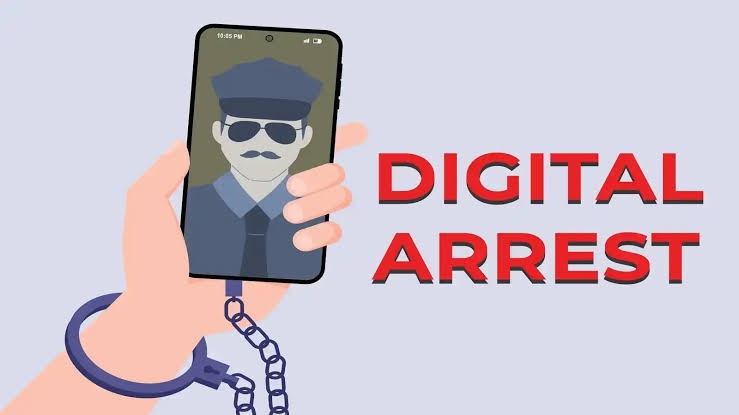
A Digital Arrest Scam is a cyber fraud in which criminals falsely represent themselves as police officers, CBI officials, customs authorities, RBI officers, or judges and threaten victims with immediate arrest, criminal prosecution, or asset seizure. The fraudsters create a sense of urgency and fear, compelling victims to transfer money into designated accounts for “verification,” “security clearance,” or “settlement.” Such conduct constitutes offences involving cheating, personation, criminal intimidation, forgery, identity theft, and cyber fraud under Indian criminal laws.
Use of Legal Jargon
Digital arrest scams involve several important legal concepts that help explain the nature of the offence and the legal consequences attached to it. Cyber fraud refers to any deceptive scheme carried out through digital technologies with the intention of unlawfully obtaining money, financial benefits, or sensitive personal information. A key element of such scams is cheating, whereby the offender dishonestly induces the victim to part with money or valuable assets by creating false beliefs or representations. Fraudsters often engage in personation, falsely presenting themselves as police officers, CBI officials, customs authorities, or other government representatives to gain the victim’s trust and obedience.
Another significant concept is criminal intimidation, which occurs when a person is threatened with arrest, prosecution, imprisonment, or reputational harm to coerce them into acting against their will. In many digital arrest scams, offenders also commit identity theft by misusing official logos, forged credentials, government documents, or impersonating real public officials. The investigation and prosecution of such offences heavily rely on electronic evidence, including call recordings, emails, text messages, screenshots, video conference records, IP logs, and banking transaction details generated through digital means.
From a criminal law perspective, the existence of mensrea, or a guilty mind, is crucial because it demonstrates that the accused intentionally devised and executed the fraudulent scheme. Investigating agencies frequently encounter jurisdictional challenges, as the victim, offender, bank account, and digital infrastructure involved in the crime may be located in different states or even different countries. Furthermore, the illicit funds obtained through these scams are often transferred through multiple accounts to conceal their origin, which may amount to money laundering under applicable laws. To establish the chain of events and identify the perpetrators, authorities employ digital forensics, a specialized process involving the collection, preservation, examination, and analysis of electronic data from computers, mobile devices, servers, and communication networks. Together, these legal concepts form the foundation for understanding and addressing digital arrest scams within the Indian legal framework.
The Proof
Understanding the Modus Operandi of Digital Arrest Scams
Digital arrest scams typically follow a structured pattern:
1. The victim receives a call claiming to be from a law enforcement agency.
2. The caller alleges involvement in serious crimes such as money laundering, drug trafficking, tax evasion, or illegal parcel transactions.
3. Fake arrest warrants, FIRs, court orders, or government documents are shown through video calls or messaging platforms.
4. Victims are instructed not to disclose the matter to family members and are placed under continuous surveillance through video conferencing.
5. Fraudsters demand transfer of funds into specific bank accounts for investigation or verification purposes.
6. Once payment is made, communication is terminated and the victim realizes the fraud.
The increasing use of artificial intelligence, spoofed phone numbers, and forged digital documents has made these scams more convincing and difficult to detect.
Abstract
The rapid expansion of digital communication technologies has transformed financial transactions, governance, and public services in India. However, this digital revolution has also created opportunities for cybercriminals to exploit unsuspecting individuals through sophisticated online frauds. One such emerging threat is the “Digital Arrest Scam,” wherein fraudsters impersonate law enforcement agencies, government officials, or regulatory authorities and falsely claim that the victim is involved in criminal activities. Through intimidation, fabricated legal notices, and video calls resembling official investigations, victims are coerced into transferring money under the guise of verification or settlement. These scams not only cause financial losses but also undermine public trust in legal institutions. This article examines the concept of digital arrest scams, analyzes the legal framework available in India, discusses judicial precedents relevant to cyber fraud, identifies enforcement challenges, and proposes measures for strengthening legal and institutional responses.
Legal Framework Governing Digital Arrest Scams in India
1. Bharatiya Nyaya Sanhita, 2023 (BNS)
Several provisions of the BNS may be invoked against perpetrators:
• Section 318 – Cheating.
• Section 319 – Cheating by personation.
• Section 336 – Forgery.
• Section 338 – Forgery of valuable security or electronic records.
• Section 351 – Criminal intimidation.
• Section 61 – Criminal conspiracy.
These provisions criminalize fraudulent representations and coercive conduct used in digital arrest scams.
2. Information Technology Act, 2000
The IT Act remains the principal legislation addressing cyber offences.
Relevant provisions include:
• Section 66C – Identity theft.
• Section 66D – Cheating by personation using computer resources.
• Section 72 – Breach of confidentiality and privacy.
Fraudsters frequently misuse digital identities and communication technologies, attracting liability under these provisions.
3. Prevention of Money Laundering Act, 2002 (PMLA)
Where illegally obtained funds are routed through multiple accounts or converted into other assets, authorities may invoke provisions of the PMLA.
4. Bharatiya Nagarik Suraksha Sanhita, 2023 (BNSS)
The BNSS provides procedural mechanisms for registration of FIRs, investigation, search, seizure, and prosecution of cybercrime offenders.
Impact of Digital Arrest Scams
Financial Harm
Victims often lose substantial life savings, retirement funds, and business capital.
Psychological Trauma
Fear of arrest, public humiliation, and criminal prosecution causes severe emotional distress.
Erosion of Public Confidence
Repeated misuse of official identities diminishes trust in genuine law enforcement agencies.
Cross-Border Criminal Networks
Many digital arrest scams originate from organized groups operating across jurisdictions, making detection and prosecution difficult.
Case Laws
Although digital arrest scams are relatively recent, Indian courts have decided several cybercrime and online fraud cases that establish important legal principles applicable to such offences.
1. Shreya Singhal v. Union of India (2015) 5 SCC 1
Facts
The constitutional validity of Section 66A of the Information Technology Act was challenged.
Held
The Supreme Court struck down Section 66A as unconstitutional for violating freedom of speech.
Relevance
The judgment clarified the limits of state regulation in cyberspace while emphasizing that genuine cyber offences such as fraud and identity theft remain punishable under other statutory provisions.
2. Anvar P.V. v. P.K. Basheer (2014) 10 SCC 473
Facts
The dispute concerned admissibility of electronic evidence.
Held
The Supreme Court recognized the importance of certification requirements for electronic records.
Relevance
Digital arrest scam prosecutions frequently depend on call recordings, emails, chats, and transaction records. This judgment established foundational principles regarding electronic evidence.
3. Arjun Panditrao Khotkar v. Kailash Kushanrao Gorantyal (2020) 7 SCC 1
Facts
The Court reconsidered the evidentiary requirements for electronic records.
Held
The Supreme Court reaffirmed the necessity of compliance with Section 65B of the Indian Evidence Act (now relevant under the Bharatiya Sakshya Adhiniyamframework).
Relevance
The decision strengthens evidentiary standards in cyber fraud prosecutions.
4. CBI v. Arif Azim (Sony Sambandh Case)
Facts
An online purchase was made using unauthorized credit card details.
Held
The case resulted in prosecution for cyber fraud and cheating.
Relevance
It is among India’s earliest cybercrime cases demonstrating judicial recognition of online deception and digital financial fraud.
5. State of Tamil Nadu v. Suhas Katti (2004)
Facts
The accused used online platforms to harass and impersonate another individual.
Held
The accused was convicted under provisions of the Information Technology Act.
Relevance
The case illustrates the effectiveness of cybercrime laws against online impersonation, a central element of digital arrest scams.
6. Avnish Bajaj v. State (NCT of Delhi) (Bazee.com Case)
Facts
Issues arose regarding liability for content transmitted through online platforms.
Held
The courts examined intermediary liability and responsibilities in cyberspace.
Relevance
The case contributed to the development of cyber law jurisprudence and highlighted regulatory challenges associated with digital platforms.
Legal Remedies Available to Victims
1. Immediate Reporting
Victims should immediately report incidents through:
• National Cyber Crime Helpline – 1930.
• National Cyber Crime Reporting Portal.
• Local cyber police stations.
Prompt reporting increases the likelihood of freezing fraudulent transactions.
2. Registration of FIR
An FIR may be registered under applicable provisions of the BNS and IT Act.
3. Bank Account Freezing
Law enforcement agencies may request banks to freeze beneficiary accounts before funds are withdrawn.
4. Recovery Proceedings
Victims may seek restitution through criminal proceedings and, where appropriate, civil remedies.
5. Digital Evidence Preservation
Victims should preserve:
• Call recordings.
• Screenshots.
• Chat histories.
• Bank transaction details.
• Email communications.
Such evidence is crucial for successful prosecution.
6. Judicial Remedies
High Courts may exercise writ jurisdiction in appropriate cases where investigative agencies fail to act effectively.
Challenges in Combating Digital Arrest Scams
1. Lack of Public Awareness
Many citizens remain unaware that legitimate authorities do not demand money through video calls or private accounts.
2. Cross-Border Operations
Cybercriminals often operate from foreign jurisdictions, complicating extradition and investigation efforts.
3. Technological Sophistication
Use of AI-generated voices, spoofed numbers, encrypted applications, and forged documents makes detection difficult.
4. Delay in Reporting
Victims frequently report incidents after funds have already been transferred through multiple accounts.
5. Jurisdictional Complexities
Different components of a scam may occur across several states or countries, creating procedural challenges.
6. Evidentiary Difficulties
Collection, preservation, and authentication of electronic evidence require specialized expertise and infrastructure.
Conclusion
Digital arrest scams represent a dangerous evolution of cybercrime in India. By exploiting fear, authority, and technological sophistication, fraudsters manipulate victims into surrendering substantial amounts of money. Existing legal mechanisms under the Bharatiya Nyaya Sanhita, the Information Technology Act, and related statutes provide a robust framework for prosecution. However, enforcement challenges such as jurisdictional barriers, technological complexity, and inadequate public awareness continue to hinder effective prevention. A coordinated approach involving law enforcement agencies, financial institutions, policymakers, and citizens is essential to combat this growing menace. As India advances toward a digitally empowered society, strengthening cyber resilience and public awareness will be critical to safeguarding individuals from digital arrest scams and preserving trust in legal and governmental institutions.