
Author: Zoya Alam , Alliance University Bengaluru
Abstract
The Electoral Bonds Scheme, 2018 has been introduced as a scheme to correct the ways of political funding by making people donate but in a formal way by using banks. But the anonymity of donors was very concerning as far as constitutional and democratic issues were concerned. This paper will discuss the legality of the scheme, its effects on the transparency of elections and equality in politics, and the role of the judiciary intervention by the Supreme Court of India. The article evaluates the scheme in terms of its conformity with democratic values and the right of citizens to make informed choices in elections through constitutional principles, statutory interpretation and the applicable case law.
To the Point
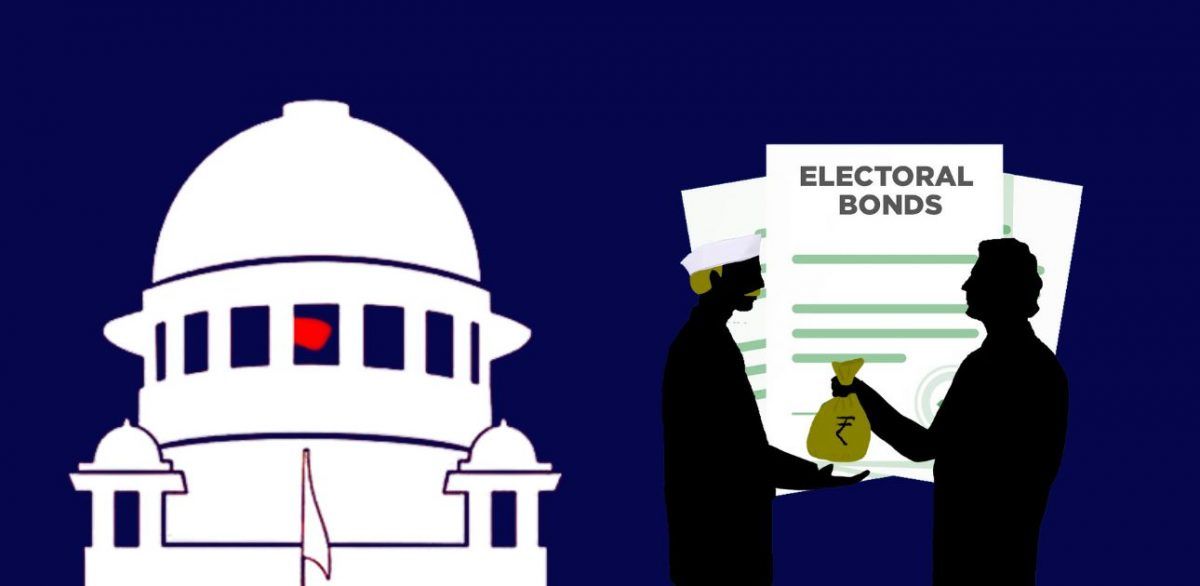
Political financing in India has been a debatable topic that has been subject to criticism due to the lack of transparency, corruption by the corporate sector, and undermined democracy. The Central Government has come up with the Electoral Bonds Scheme, 2018, which aimed to transform political donations with the help of the anonymity of contributions to the registered political parties using banking services.
Although the given goal was to reduce black money and encourage clean financing, the scheme caused a big debate in the legal and constitutional arena. Issues of voter awareness, unequal political contesting and undermining the right of information by the populace were raised.
All these led to judicial review by the Supreme Court, which made the electoral bonds one of the topics of major concern in terms of political and constitutional law.
Use of Legal Jargon
With the finance act of 2017, the electoral bonds scheme was brought in by amending the representation of the people act of 1951, the income tax act of 1961, the companies act of 2013. The State Bank of India issues electoral bonds which are bearer instruments, which enable the donors to make contributions to political parties without the knowledge of the public.
The plan brought about constitutional issues regarding the Article 14 (Right to Equality) and Article 19(1)(a) (Freedom of Speech and Expression) in respect of the right of the voter to his or her information. The anonymity given to donors was claimed to be arbitrary, disproportional, and against the democratic principles.
In terms of a public law, the scheme was reviewed through the doctrine of proportionality, manifest arbitrariness, and free and fair elections, which constitute the fundamental scheme of the Constitution.
The Proof
The legal and factual support against the Electoral Bonds Scheme is based on:
Statistical Data – Inequal distribution of proceeds of the bond to ruling parties which shows unequal political benefit.
Legislation amendments – the Companies Act abolished the provisions of the non-disclosure of the donors and permitted unlimited corporate financing without the scrutiny of shareholders.
Transparency in Political Financing- Voters were not allowed access to information about the financial support of political parties.
Expert Committee Reports – The Election Commission of India objected, on grounds of negative implications on electoral transparency.
Judicial Records – Affidavits and filings to the Supreme Court pointed to dangers of quid pro quo affairs and influence peddling.
All these reasons showed that the scheme weakened the transparency instead of strengthening it.
Case Laws
Democratic Reforms v. Association. Union of India (2024)
The Supreme Court ruled that the Electoral Bonds Scheme was unconstitutional and it was deemed to be violative of Article 19(1) (a). The Court upheld the fact that the right to information encompasses the right to know the sources of political funding, which is fundamental in free and fair election.
An Union of People against Civil Liberties. Union of India (2003) 4 SCC 39
The Court identified the right of the voter to know more about the political candidates as an aspect of the freedom of speech and expression, which formed the premise of the transparency in electoral processes.
Indira Nehru Gandhi v. Raj Narain (1975) Supp SCC 1
T he Supreme Court made the judgment that fair and free election is a constituent of the basic structure of the Constitution, which strengthened the concept of transparency and accountability of the electoral process.
Conclusion
The Electoral Bonds Scheme was a considerable endeavor to reform political finance however it failed to pass constitutional test of transparency and equality. The scheme watered down the accountability of democracy and distorted political competition by putting the interests of donors ahead of that of the voter.
The intervention of the Supreme Court proved that electoral transparency is not a policy anymore but a constitutional requirement. The political funding directly affects the governance, lawmaking, and the government policy, and thus, it cannot be run under a veil of secrecy.
The ruling is a significant move towards rebuilding integrity in electoral democracy and makes the informed voting core concept to the constitutional framework.
FAQS
Q1. What was the purpose of the Electoral Bonds Scheme?
The scheme aimed to regulate political donations, reduce cash-based funding, and promote transparency through banking channels.
Q2. Why was the scheme challenged before the Supreme Court?
It was challenged for violating the voter’s right to information, enabling anonymous political funding, and creating unequal political competition.
Q3. Which constitutional rights were affected by the scheme?
Primarily Article 19(1)(a) (freedom of speech and expression) and Article 14 (right to equality).
Q4. What was the Supreme Court’s final decision?
The Supreme Court struck down the Electoral Bonds Scheme as unconstitutional and directed disclosure of donor details.
Q5. Why is this issue important in political law?
Political funding directly impacts democratic governance, electoral fairness, and public trust in constitutional institutions.

