Author name-Sejal Suda, Bhartiyavidyapeth new law college
To the point
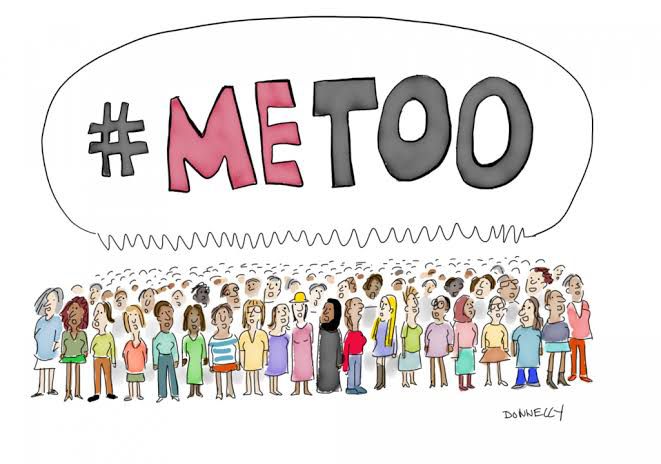
The MeToo movement provided a space for those who have been silently suffering to speak up at last. For some, coming out wasn’t only courageous—it was entering healing and being heard. It changed the nature of the way people were speaking in the public sphere and demanded accountability. It also brought to the forefront a very relevant issue: malicious rape accusations. Genuine complaints require robust legal and emotional support, while false ones can cause immense harm. They can destroy lives of many people leave mental trauma and disrupt lives. Draconian provisions like Section 376 IPC impose harsh punishment, where it is difficult to obtain bail and cases drag on.The abuse shatters the trust of the public and lower image of surviver In the age of media trials and long-term trauma, the system of justice must tread cautiously. It is necessary that no innocent individual be wrongly accused of a crime he or she did not commit .There must be a balanced, evidence-based approach to ensure the integrity of survivor justice and legal due process.
Abstract
MeToo was a revolution which voice-verified survivors of sexual abuse and allowed them to seek justice. MeToo broke the long-standing power dynamic and re-wrote what society had learned about consent. The rise of false rape case claims has been a problem, however. As much as actual survivors need robust legal and societal protection, false claims hurt the accused and clog the justice system. Under stringent procedures such as Section 376 IPC, where bail is not likely and trials are protracted, the stakes are extremely high. False claims destroy lives and erode trust in bona fide victims.Victim-supporting and affording the accused due process is the test of the times. A fair legal process based on evidence is needed to deliver justice and trust in a day and age when survivor voices and legal protection are needed.
Use of legal jagrons
Indian Penal Code Section 376 makes rape a grave criminal offense. It’s a non-bailable and cognizable offense with a lower limit of 10 years, which can be stretched up to life imprisonment. The instant an FIR is filed against an accused under this section, it normally results in immediate arrest and police custody. Even before reaching the court, the accused may suffer severe social challenges like being excluded and irreparable damage to their reputation. Such a process in most cases tends to circumvent the fundamental constitutional principle of ‘presumption of innocence’ under Article 21 of the Constitution that gives every individual a right to life and personal liberty.
The courts have recognized the “weaponization of criminal law.” Under Sections like 354 (assault or criminal force to outrage modesty), 509 (words or gestures with intent to insult modesty), and 498A IPC (cruelty by a husband or his relatives) are even misused in the interest of revenge, extortion, coercion, or bargaining in matrimonial disputes. In such situations, the doctrine of malicious prosecution, abuse of process as well as vexatious litigation are applicable.
Judges have emphasized the requirement of preliminary verification before arrest in rape cases to prevent false convictions for false complaints. In Lalita Kumari v. Government of Uttar Pradesh [(2014) 2 SCC 1], the Supreme Court emphasized that preliminary inquiry is necessary where there is a possibility of mi To counter false allegations, Section 250 of the Criminal Procedure Code (CrPC) is now being proposed to be invoked more and more. This provision enables victims of false allegations to be compensated. Proceedings for perjury can also be instituted under Section 193 IPC where it is established that falsehood was intentionally committed.
It is crucial that the rights of true survivors are maintained while true protection is also provided to the accused. The criminal justice system has to ensure that laws are not being utilized as instruments of oppression under the guise of empowerment.
The proof
Evidence and court findings validate the shameful trend of rape false reporting in India. The National Crime Records Bureau (NCRB) Report for the year 2021 reveals that around 8 to 10% of rape complaints registered were found to be false in police investigations. It is a huge figure and warrants prompt action against the misuse of rape laws at a large scale.
This was highlighted in a report given by the Delhi Commission for Women in the year 2014. Out of 2,753 rape cases examined, 525 were revealed to be false upon police investigation, roughly 19% of the sample. The majority of these had been initiated by personal issues such as broken relationships, broken marriage promises, property disputes, financial disputes, family coercion, or vendetta.
Judicial rulings have since ever recognized this trend. In Lalita Kumari v. In Lalita Kumari v. Government of Uttar Pradesh [(2014) 2 SCC 1], the Supreme Court held that where there are sensitive cases like rape, there would be a pre-inquiry to prevent premature registration of FIR .Courts have also encountered cases in which relations soured and rape charges were launched subsequently, mostly on the basis of extraneous pressure or vendetta. In Rajesh Sharma v. State of U.P., the Supreme Court had recommended setting up Family Welfare Committees to deal with the grievances of misuse of legal provisions like Section 498A IPC and imposing fines for false complaints. This principle is gaining popularity in false rape complaints The impact on the falsely accused is devastating. It can cause psychological trauma, loss of employment, irreparable social stigmatization, disruption of family, and, in the worst cases, suicide. Such occurrences not only ruin lives, but ruin public trust in actual survivors and add to the workload of an already overburdened judicial system.
These realities and court precedents create the need for protection for the sake of justice and to prevent abuse.
These rulings collectively encapsulate the judiciary’s growing role in the direction of safeguarding survivor rights and the notion of presumption of innocence.
Case laws
1. Deepak Gulati v. State of Haryana (2013)
The Supreme Court held that sexual intercourse between two consenting adults cannot be termed rape for the sole reason that the relationship did not result in marriage. The Court was adamant on serious consideration of the parties’ intention and act especially when false charges of rape are preferred on grounds of collapsed relationships or emotional breakdown.
2. Mahender Pal Singh v. State of Haryana (2004)
The High Court termed the rape charge leveled against the accused as frivolous and disposed of accordingly in the matter of perjury proceedings against the complainant. The case set the court’s stance against the abuse of rape laws and reaffirmed that criminal law can never be utilised for personal scores and harassment of innocents.
3. Kailas v. State of Maharashtra (2011)
In this case, the Bombay High Court denounced false rape accusations as the destruction of innocent men’s lives and reputations. The court demanded that severe punishment be given to false complainants who make false accusations in a bid to discourage abuse and gain the trust of the public in the judiciary.
4. Lalita Kumari v. Government of U.P. (2014)
The court ruled that registration of an FIR is compulsory in the case of serious offences but pre-investigation is permissible in the case of some cases like family cases or sensitive cases. The ruling is applicable in the case of rape too where there are probable chances of suspicion of false case so that facts are ascertained before pursuing legal.
5. State of Punjab v. Gurmit Singh (1996)
Even while once more emphasizing believing the victims, the Court also warned that accusation is not proof. It repeats the doctrine of the fair trial and judgment on the evidence, thus balancing sympathy to the victims and justice to the accused.
Conclusion
Rape legislation is in place to safeguard vulnerable victims and deliver justice for the victims to whom heinous crime was done .When misused, however, there is a legal and ethical dilemma. False accusations of rape are increasing, hurting innocent individuals and undermining public faith in the justice system while muffling the real victims. We require a justice system that is as robust against false allegations as it is sympathetic to genuine survivors.
Justice has to be equal for all, be it men or women. A fair judicial system cannot be based on assumptions or prejudices. The sanctity of laws such as Section 376 IPC has to be maintained, but we have to establish bulwarks in the form of compulsory pre-trial inquiries, speedier processes of courts, and their are severe punishment under Sections 182 and 211 IPC if it is proven that the charges are false. These bulwarks do not harm women; they ensure justice.
Furthermore, the courts and the press must be cautious in all of these matters. Public identification of a suspect before trial can cause irreparable harm to their business and social life. Press sensationalism must be avoided in delicate cases, and privacy and due process must be upheld.
False accusations has to be stopped—it’s not only immoral, it’s a life-destroying act that shouldn’t be taken lightly. Reforms to the law need to incorporate gender-neutral provisions, more effective investigation practices, and responsibility on all sides. Survivors need support, protection, and speedy justice.
Real justice is not simply about punishing the guilty—it also includes protecting the innocent. Helping real survivors should never turn into wrongly accusing innocent individuals. The MeToo movement must be kept as a vehicle for truth, not an instrument of personal vengeance.
A fair legal system that upholds the dignity of survivors and at the same time protects the rights of suspects is what is needed for a just society.
FAQ’s
Q1: Can one be punished for reporting rape falsely?
A: Yes. Providing a false report to a public official or false reporting of a serious offence such as rape is a criminal offense under Sections 182 and 211 of the IPC lead to punishments and finesCourts have also summoned for perjury in a number of cases where the falsity has been established.
Q2: Is rape law in India gender-neutral?
A: No. Section 376 IPC only identifies women as victims and men as offenders, and men and LGBTQ+ people are not given any protection against sexual assault. With increasing cases of abuse, there is an ever-stronger need for gender-neutral law to provide equal treatment to all genders in the criminal justice system.
Q3: What are the legal remedies for someone falsely accused of rape?
A: If one is wrongly accused of rape, the following must be done:
• consult an experienced criminal lawyer at once,
• Try applying anticipatory bail under Section 438 of the CrPC,
•• Gather all the evidence concerned—a text message, call records, or eyewitness statements.
• If it is found that the complaint is being abused, the accused may move the High Court to get the FIR quashed under Section 482 of the CrPC
Q4: Do false claims injure real survivors?
A: Yes. False rape allegations gradually destroy public trust, lower trust in genuine cases, and frustrate the courts. They also discourage genuine victims from coming forward because they don’t want to be disbelieved or victimized.
Q5: What legal reforms are being proposed to avoid abuse of rape laws?
A: Some of the reforms proposed to minimize the misuse of rape laws are:
• Gender-neutralising sexual offence law
• Demanding an initial investigation in instances that seem questionable or disputed,
• Enforcing severe punishment for the guilty on account of filing fake cases,
These suggested steps seek to strike an equitable balance between the support of true survivors and safeguarding innocent people against false prosecution.