Author: Rupendra Singh Sankhla, 4th year Institute of Law Nirma University
Co- Author: Vedansh Gautam, 4th year Institute of Law Nirma University
Abstract
Mergers and acquisitions (M&A) are key tools for corporate development. But the opacity, complexity and paperwork surrounding M&A activity make it a particularly ripe area for white-collar crime. The article analyzes the corporate restructuring as a systematic mechanism used to carry out fraudulent acquisitions, insider trading and asset stripping in India and takes a close look at the big cases of corporate restructuring like the ones of Satyam, Air India and Viper. the Satyam Computer Services scandal and the collapse of the IL&FS. It also reviews the legal structure put in place to stop such malfeasances and highlights existing systemic shortcomings that allow corporate malfeasance.
I. Introduction
Other factors that make financial crime a breeding ground include capital markets, corporate restructuring and regulatory complexity. The process of M&A, as valid tools of business consolidation, have become tools in the hands of company insiders to defraud shareholders and manipulate markets and siphon off assets in the name of legal restructuring. Frauds by the bigger companies in India have revealed the utter inadequacy of the regulatory framework in the country, and as a result, the government has introduced laws to address the situation in the Companies Act, 2013, and Securities and Exchange Board of India (SEBI) regulations.
Criminologist Edwin Sutherland’s definition of white-collar crime is crime committed by a person of respectability and high social status in the course of his occupation. In the M&A context, that type of crime generally takes one of three forms: (i) acquisition structures that are designed to channel funds; (ii) insider trading based on undisclosed information regarding the deal; and (iii) asset stripping through post-acquisition restructuring. The comprehension of these mechanisms is essential not only for lawyers but also for regulators and investors in the evolving landscape of corporate governance in India.
II. Fraudulent Acquisitions: The Satyam Paradigm
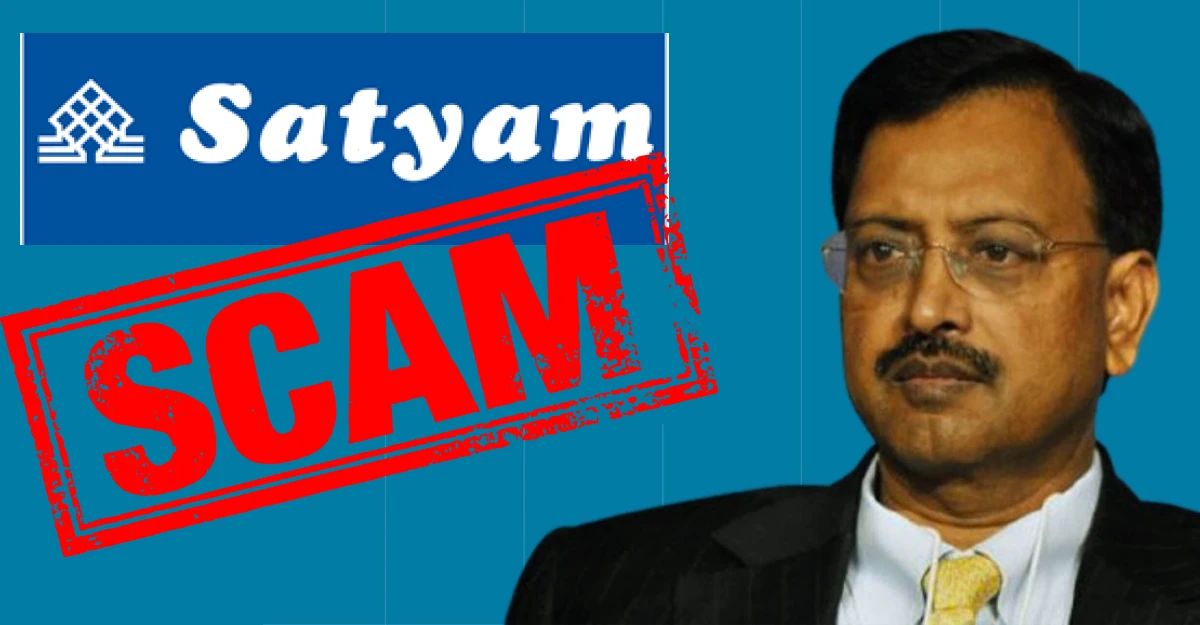
The Satyam Computer Services scandal of 2009 is the greatest teaching moment with regard to the use of M&A transactions as a means of institutionalised fraud in India. Over the years, the Chairman Ramalinga Raju had inflated the cash and bank balances of Satyam by over ₹7,800 crore, creating bogus profits to make the share price appear high. This shortfall in reported income and expenditure became unmanageable and Raju tried to remedy it by acquiring a 51% stake in Maytas Infrastructure Limited and 100% of Maytas Properties at cost of $1.6 billion, both from members of his own family.
The way it was done was classy in its own way. The deal was meant to take the “fictitious” cash resources of Satyam and transfer them into the real estate portfolio of the Raju family; this was to be “Maytas” and was an acquisition that would allow to launder fraudulent book entries through a transaction. This acquisition has been done without the shareholders’ approval and is in clear breach of the fiduciary duties of the Satyam board. However, this was reversed only after a huge backlash from the investors and the corresponding drop in the stock prices, leading to a confession by Raju within 12 hours only..
This case triggered Raju’s prosecution under Section 447 of the Companies Act, 2013 (punishment for fraud, carrying imprisonment of not less than six months and extendable to ten years, with a fine up to three times the fraud amount), and charges under Section 120B of the Indian Penal Code (criminal conspiracy). It also led directly to SEBI ordering the disclosure of pledged promoter shares and to the World Bank banning Satyam from global procurement for eight years. The case eventually culminated in the acquisition of Satyam by Tech Mahindra — itself overseen by a SEBI-appointed retired Supreme Court Justice — demonstrating how fraudulent M&A ultimately required legitimate M&A to contain the damage.
III. Insider Trading in M&A: Information as Instrument of Crime
Every M&A transaction generates confidential, price-sensitive information — target valuations, deal terms, boardroom deliberations — long before public disclosure. Persons with access to such Unpublished Price Sensitive Information (UPSI) are uniquely positioned to trade securities for illegal profit, constituting the offence of insider trading.
SEBI’s Prohibition of Insider Trading (PIT) Regulations, 2015 define an “insider” broadly as any person connected with a company or deemed to be in possession of UPSI. Regulation 3 prohibits any insider from communicating, providing, or allowing access to UPSI, while Regulation 4 prohibits trading on such information. During M&A negotiations, promoters, investment bankers, legal advisors, and even auditors become privy to UPSI, making the regulatory perimeter exceptionally difficult to patrol.
In the Satyam context, the promoters’ progressive reduction of their shareholding — from 25.6% in March 2001 to just 2.18% in December 2008 — occurring in the period following the aborted Maytas acquisition attempt, raised grave suspicions of insider trading. Promoters were allegedly aware of the impending collapse and systematically offloaded shares while retail investors remained uninformed. Section 15G of the SEBI Act, 1992 prescribes penalties for insider trading, including disgorgement of profits and fines up to ₹25 crore or three times the profit made, whichever is higher.
Landmark judicial treatment of insider trading in M&A contexts has also emerged through the SEBI adjudication orders in cases such as Rakesh Agarwal v. SEBI (SAT, 2004), where the Securities Appellate Tribunal recognised the conflict between an individual acting as a corporate insider during acquisition negotiations and his personal trading activity. The decision established critical precedents on the scope of “connection” in insider trading law.
More recently, SEBI’s examination of M&A-related market rumours under the PIT Regulations has intensified, with disclosure obligations under Regulation 30 of SEBI (LODR) Regulations, 2015 being invoked to compel companies to confirm or deny rumours that materially affect share prices — directly addressing the gap between deal inception and public announcement.
IV. Asset Stripping Through Corporate Restructuring: The IL&FS Crisis
If Satyam represents fraudulent acquisition, the IL&FS collapse of 2018 represents asset stripping through structural opacity — a more sophisticated and systemic form of M&A-facilitated white-collar crime.
Infrastructure Leasing & Financial Services Limited (IL&FS) accumulated debt exceeding ₹91,000 crore, concealing its financial distress through a labyrinthine corporate structure comprising over 340 subsidiaries, special purpose vehicles (SPVs), joint ventures, and holding companies. Loans were circular-routed between group entities; related-party transactions were deliberately obscured; and executive compensation was escalated despite mounting losses — all hallmarks of asset stripping through restructuring mechanisms.
The Serious Fraud Investigation Office (SFIO) discovered wrongful use of government project funds, the setting up of sham companies backed by the government, and the use of unethical practices at both ends of financial transactions to manipulate credit ratings at IL&FS. The board, including independent directors, did nothing to fulfill its role as an overseer, thus confirming organizational deviance theory: the notion that internal conditions of corporations allow and even obscure fraud..
The law came back in a timely manner, but in a way that was informative. The government had invoked Section 241 of the Companies Act, 2013 (in cases of oppression and mismanagement), to petition National Company Law Tribunal (NCLT) to replace its board which was later replaced by the Central Government with Chairman Uday Kotak as Chairman. Other sections such as 213 (Central Government investigation via SFIO) and 447 (Punishment for fraud) were also applied to the key functionaries. The IL&FS incident highlighted how M&A-based group companies with opacity can turn into a means of systematic asset stripping and not a viable commercial enterprise. The legal response was swift but instructive.
V. The Legislative Architecture and Its Gaps
India’s legal response to M&A-facilitated white-collar crime rests on several statutory pillars:
- Companies Act, 2013 — Section 447 (fraud), Section 448 (false statements) and Section 213 (SFIO investigation) and Section 241-242 (oppression and mismanagement) are the main elements of the corporate fraud enforcement framework.
- SEBI Act, 1992 — SEBI gets investigating and punitive powers under Section 11 (market regulation), Section 15G (insider trading) and Section 15HA (fraudulent and unfair trade practices).
- SEBI (PIT) Regulations, 2015 — Set up and enforce digital databases of UPSI (structured digital databases) and trading window restrictions during M&A compulsory.
- Prevention of Money Laundering Act, 2002 (PMLA) — Attaches and prosecutes in the context of laundering of proceeds of scheduled offences through M&A transactions ($300 million) (Enforcement Directorate).
- Bharatiya Nyaya Sanhita, 2023 (BNS) — The directors and promoters who orchestrate fraudulent M&A will be subject to sections on criminal breach of trust, cheating and criminal conspiracy (as opposed to Sections 405, 415 and 120B of the IPC).
Even though this is the framework, there are cases of non-compliance. The SFIO is authorized but under-resourced in the face of complicated frauds by corporations. Accountability of the auditor, as evidenced in both Satyam and IL&FS, which was unable to detect fabrications for a long time, remains poor. The Companies Act 2013, section 143(12) provides for the report of an auditor to the Central Government in cases of suspected fraud, however, there is little to no action taken by the regulators in such cases. Moreover, the competition aspects of CCI’s merger review process under the Competition Act, 2002 fail to consider the aspects related to governance, which means that there is a blind spot for the fraud driven merger practice.
VI. Conclusion
The act of merging and acquiring naturally is the wheeling of information, the convergence of funds, and the consolidation of power at the top of a few corporate elites, all of which are conducive to white-collar crime, historically and empirically. The Satyam and IL&FS cases are not exceptions but reflect some fundamental flaws in the corporate regulatory framework in India. Effective deterrence requires more than just a punitive law, it requires proactive regulatory design — mandatory independent valuations in related party deals, real time monitoring by SEBI of trading volumes in the days surrounding deal announcements, increased auditor liability and increased capacity of SFIO. The volume and complexity of the M&A market in India is growing and so should be the law, with the instruments of corporate growth not being the instruments of corporate crime.