
Author: Bhavya Singla, Guru Gobind Singh Indraprastha University
To the point
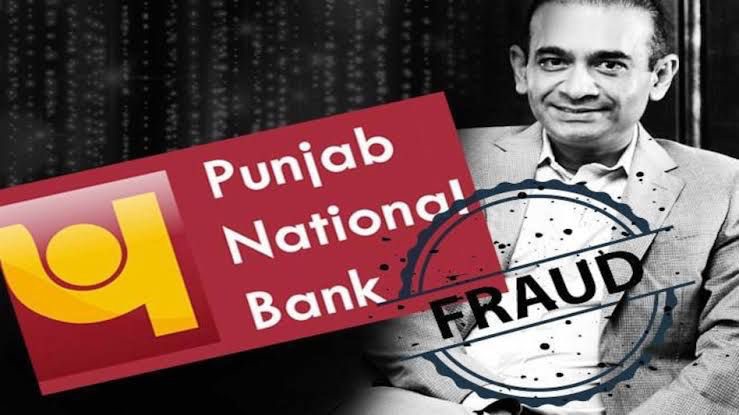
The Punjab National Bank (PNB) Scam, uncovered in 2018, is one of India’s largest banking frauds. The fraud revolved around the unauthorized issuance of Letters of Undertaking (LoUs) by officials of PNB’s Brady House Branch in Mumbai, enabling businessman Nirav Modi and his associates to obtain overseas credit without adequate security. The scam exposed serious weaknesses in banking supervision, internal controls, auditing mechanisms, and regulatory oversight. It also highlighted the growing threat of economic offences and financial crimes in India’s banking sector.
Use of Legal Jargon
The Punjab National Bank Scam involves several important legal and financial concepts that are commonly associated with economic crimes. It is regarded as an economic offence because it allegedly involved large-scale financial deception resulting in substantial losses to the banking sector. Investigators invoked charges relating to criminal conspiracy, alleging that multiple individuals acted together to execute the fraud. The case also involved allegations of cheating, forgery, and money laundering, as fraudulent banking instruments were allegedly used to obtain credit and conceal the proceeds of unlawful activities. The accused persons were further examined under the framework of the Fugitive Economic Offenders Act, which applies to individuals accused of significant financial crimes who evade legal proceedings by remaining outside India. Central to the fraud were Letters of Undertaking (LoUs), which are banking guarantees used in international trade finance. The scandal highlighted failures in due diligence, deficiencies in regulatory compliance, and serious operational risks arising from weak internal controls, inadequate supervision, and technological loopholes within the banking system.
The Proof: Facts, Issues and Regulatory Failures
Background of the Scam
In February 2018, Punjab National Bank disclosed that fraudulent transactions worth over ₹11,000 crore had been detected at its Brady House Branch in Mumbai. Investigations revealed that diamond merchants Nirav Modi and Mehul Choksi, along with associated firms, had obtained overseas credit facilities through fraudulent Letters of Undertaking issued by certain PNB officials.
The fraud allegedly continued for several years without detection. The LoUs were transmitted through the SWIFT messaging system but were not recorded in PNB’s Core Banking System (CBS), allowing liabilities to remain hidden from the bank’s official records.
Modus Operandi of the Fraud
The fraud operated through the following mechanism:
1. PNB officials issued unauthorized LoUs in favour of companies linked to Nirav Modi and Mehul Choksi.
2. Overseas branches of Indian banks relied upon these guarantees and extended buyer’s credit.
3. The transactions were communicated through SWIFT messages.
4. The liabilities were deliberately kept outside the Core Banking System.
5. Existing loans were repeatedly rolled over using fresh LoUs.
6. The fraudulent cycle continued until new bank officials demanded collateral and discovered irregularities.
Major Regulatory Failures
1. Failure of Internal Controls
The Reserve Bank of India observed that the fraud resulted from operational failures and weaknesses in internal control mechanisms. Proper reconciliation between SWIFT and CBS systems was absent.
2. Inadequate Supervision
The scam remained undetected for several years despite periodic audits and inspections. This indicated deficiencies in supervisory oversight and compliance monitoring.
3. Audit Failures
Both internal and external auditing processes failed to identify unauthorized transactions. The prolonged continuation of the fraud reflected serious shortcomings in risk assessment procedures.
4. Technological Vulnerabilities
The absence of integration between SWIFT and CBS enabled fraudulent transactions to bypass normal banking scrutiny. This loophole became the primary instrument for executing the scam.
5. Weak Accountability Framework
Investigations suggested that multiple levels of banking personnel failed to detect or report suspicious activities, raising concerns regarding institutional accountability.
Legal Issues Involved
The scam raised several legal questions:
• Whether bank officials were criminally liable for conspiracy and cheating.
• Whether regulatory authorities exercised adequate supervision.
• Whether proceeds of crime were laundered through domestic and international channels.
• Whether the Fugitive Economic Offenders Act could effectively address economic offenders escaping Indian jurisdiction.
• Whether existing banking regulations were sufficient to prevent sophisticated financial frauds.
Abstract
The Punjab National Bank Scam represents a significant chapter in India’s financial and banking history. The fraud, involving thousands of crores of rupees, demonstrated how collusion between bank officials and private entities can undermine the integrity of financial institutions. The case triggered investigations by the Central Bureau of Investigation (CBI), Enforcement Directorate (ED), Reserve Bank of India (RBI), and various international agencies. Beyond the monetary loss, the scandal raised concerns regarding corporate governance, banking compliance, technological vulnerabilities, and regulatory accountability. This article analyzes the modus operandi of the fraud, legal issues involved, regulatory failures, judicial developments, and the broader implications for economic offences in India.
Case Laws
1. State Bank of India v. Rajesh Agarwal (2023)
The Supreme Court emphasized adherence to principles of natural justice before classifying borrowers as fraudulent. The decision highlighted procedural safeguards in banking fraud investigations.
Significance
The judgment strengthened borrower rights while maintaining the need for accountability in banking transactions.
2. Vijay Madanlal Choudhary v. Union of India (2022)
The Supreme Court upheld major provisions of the Prevention of Money Laundering Act, 2002 (PMLA).
Significance
The ruling strengthened the legal framework used by the Enforcement Directorate to investigate financial crimes and laundering of proceeds generated from fraud.
3. Nikesh Tarachand Shah v. Union of India (2017)
The Supreme Court struck down certain restrictive bail provisions under PMLA as unconstitutional.
Significance
The case reinforced constitutional protections while balancing the state’s interest in combating economic offences.
4. P. Chidambaram v. Directorate of Enforcement (2019)
The Supreme Court discussed the seriousness of economic offences and their impact on national financial stability.
Significance
The Court recognized economic offences as crimes affecting public confidence and economic governance.
5. Nirav Deepak Modi v. Enforcement Directorate and Connected Proceedings
Various proceedings before Indian courts and UK courts have dealt with extradition, asset attachment, money laundering allegations, and fugitive offender status concerning Nirav Modi. Indian authorities have pursued confiscation of assets under the Fugitive Economic Offenders framework.
Significance
The proceedings demonstrate India’s efforts to recover assets and prosecute cross-border financial offenders.
6. Rotomac Global Pvt. Ltd. Banking Fraud Cases
Investigations involving Rotomac Group examined allegations of large-scale loan defaults, diversion of funds, and cheating of public sector banks.
Significance
The case highlighted systemic vulnerabilities in credit appraisal and monitoring processes within the banking sector.
Conclusion
The Punjab National Bank Scam remains one of the most significant examples of banking fraud in India. The fraud exposed weaknesses in internal controls, auditing mechanisms, technological infrastructure, and regulatory supervision. It demonstrated how sophisticated economic offences can exploit institutional loopholes and create massive financial losses.
The case also became a turning point in India’s approach toward economic crime. Regulatory reforms, stricter compliance requirements, stronger anti-money laundering measures, and the enactment of the Fugitive Economic Offenders framework reflect the lessons learned from the scandal. While the legal proceedings continue in various forms, the PNB Scam serves as a reminder that transparency, accountability, and robust governance are indispensable for maintaining trust in the banking system.
FAQs
Q1. What was the Punjab National Bank Scam?
The PNB Scam was a large-scale banking fraud uncovered in 2018 involving fraudulent Letters of Undertaking issued to firms associated with Nirav Modi and Mehul Choksi.
Q2. Who were the main accused?
The principal accused were Nirav Modi, Mehul Choksi, certain associated companies, and bank officials allegedly involved in issuing unauthorized guarantees.
Q3. What is a Letter of Undertaking (LoU)?
A Letter of Undertaking is a bank guarantee used to obtain short-term overseas credit for import-related transactions.
Q4. How was the fraud committed?
The accused allegedly used fraudulent LoUs issued through the SWIFT system without recording them in PNB’s Core Banking System, thereby concealing liabilities.
Q5. What role did the RBI play after the scam?
The RBI assessed control failures, initiated supervisory action, and later prohibited LoUs for trade credit transactions.
Q6. Why is the PNB Scam important for legal studies?
The case illustrates the intersection of banking regulation, corporate governance, money laundering laws, criminal conspiracy, extradition proceedings, and economic offences, making it a landmark study in financial crime jurisprudence.
Q7. What lessons does the scam provide?
The scam demonstrates the need for effective internal controls, technological integration, regulatory vigilance, accountability mechanisms, and strong enforcement against financial crimes.
