
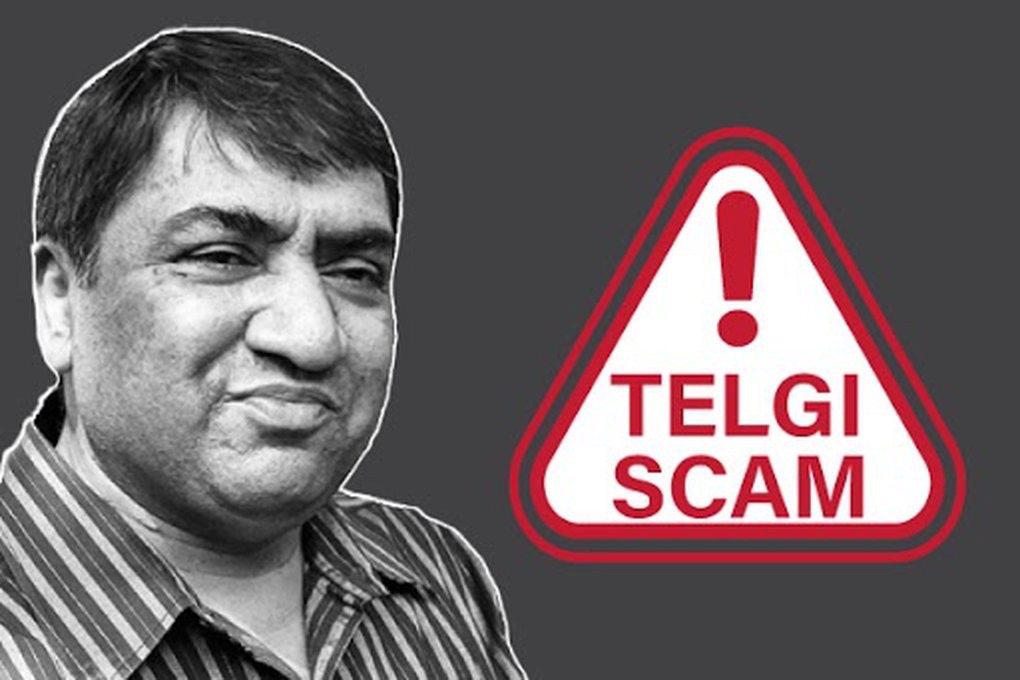
Author: Vedashree B. Rajput, Government Law College, Mumbai
To the Point
Some scams unfold fast. This one didn’t. The Abdul Karim Telgi Stamp Paper Scam quietly ran for over a decade before anyone caught on, stretching from the early 1990s right up to 2003, when it finally blew open. At the centre of it was a fairly ordinary-sounding document; the stamp paper, the kind you need for sale deeds, rent agreements, affidavits, basically anything that needs legal weight behind it. Telgi figured out how to fake these at scale and sell them to banks, insurance firms, stockbrokers, even law offices. Nobody really knows the exact number, but approximately ₹30,000 crore is the figure most commonly cited. What’s striking isn’t just the size of it, it’s a man who once sold fruit at a railway platform in Karnataka somehow built a counterfeiting empire that needed cops, bureaucrats, and politicians to look after or actively help. This piece walks through the legal side of it all: what laws were used, what evidence held up, and how the courts eventually dealt with it.
Use of Legal Jargon
A few legal terms come up again and again in this case. Worth getting familiar with them before going further:
• Forgery (Sections 463 and 465, IPC, 1860): In plain terms, making a fake document meant to deceive or harm someone. Telgi’s whole operation was built on producing stamp papers that looked real but weren’t. In Section 465 punishment goes up to two years of imprisonment, a fine, or both.
• Forgery of Valuable Security (Section 467, IPC): Stamp papers fall under ‘valuable security’ because they carry real legal and financial weight. This is a heavier offence; life imprisonment or up to ten years, plus fine.
• Using a Forged Document as Genuine (Section 471, IPC): It’s not enough to just make forged documents, Telgi’s network actively sold and circulated them as if they were real. This is honestly the part that did the most damage in practice.
• Forgery for the Purpose of Cheating (Section 468, IPC): Applies when forgery is done specifically to cheat someone. Punishment goes up to seven years of imprisonment plus fine.
• Criminal Conspiracy (Section 120B, IPC): With press officials, cops, and agents all caught up in this, conspiracy charges were bound to follow. The law doesn’t ask for much here, just two or more people agreeing to do something illegal and in this case, there was no shortage of people in it.
• Cheating (Section 420, IPC): Banks and insurance companies bought fake stamp papers thinking they were genuine. That’s a case of cheating under the law.
• Maharashtra Control of Organised Crime Act, 1999 (MCOCA): Given how organised and widespread the operation was; agents, bribed officials, inter-state networks, this stricter law came into play. MCOCA exists for exactly this kind of syndicated crime, and it hits harder than ordinary IPC provisions.
• Prevention of Corruption Act, 1988 (PCA): Several officials took bribes to keep Telgi’s operation running smoothly. The PCA exists for exactly this; public servants accepting money they shouldn’t.
• Prevention of Money Laundering Act, 2002 (PMLA): The money from the scam didn’t just sit in a bank account, it moved through several channels before investigators could trace and freeze it. That’s where PMLA came in.
The Proof
So how did investigators actually piece this together?
A mix of sources, really:
• Raids and Seizures: It all started cracking open in 2001, when police picked up a few of Telgi’s agents in Bangalore. The raids that followed turned up fake stamp papers worth crores. STAMPIT, the team set up to investigate the case, calculated that the seized stock alone was worth almost ₹3,000 crore; money Telgi stood to make if it had been sold instead of confiscated.
• Access to the Indian Security Press: Here’s the part that’s almost impressive; Telgi started out with a legitimate licence to sell genuine stamp papers. He used that foothold to eventually bribe his way into the Security Press in Nashik, the actual government facility that prints these things. So this wasn’t crude counterfeiting from a back room. He was tapping into the real machinery.
• Narco-Analysis Test: In December 2003, the Special Investigation Team subjected Telgi to a narco-analysis test, whether such statements can actually hold up as evidence is a separate legal question altogether; the Supreme Court later addressed this directly in Selvi v. State of Karnataka, ruling on whether narco-analysis and similar tests can be relied on in court. But regardless of its legal weight, the test itself produced some explosive claims. Telgi reportedly named several senior politicians and police officers, alleging he had paid them bribes totalingaround ₹200 billion.
• Financial Trail: Tax records from 1996-97 pegged his annual income at ₹4.54 crore, nearly half of it unaccounted for. By 2005, the tax department slapped a ₹120 crore demand on him, one of the biggest individual tax demands seen at the time.
• Network of Agents: Around 300 agents were selling these fake papers in bulk to banks, insurers, and brokerages. When they started talking, the prosecution’s case got a lot stronger.
• Police Complicity: One Assistant Police Inspector turned out to have a net worth north of ₹1 billion, on a salary of about ₹9,000 a month. That gap doesn’t explain itself, and it became one of the strongest pieces of circumstantial evidence against the police network.
• Continued Criminal Activity from Prison: Even behind bars, Telgi apparently kept things running, coordinating sales through mobile phones and meetings with associates inside Bengaluru Central Prison. This later had its own set of charges, separate from the original conspiracy.
Abstract
The Telgi Stamp Paper Scam came to light in 2003, but by then it had already been running for years; quietly, almost invisible, until it wasn’t. Abdul Karim Telgi, a commerce graduate from Karnataka who’d once sold vegetables at a railway station, built a counterfeiting network that stretched across states and pulled in government officials, police personnel, and politicians along the way. Stamp papers are about as fundamental as legal documents in India, which is exactly why faking them at this scale did so much damage. Banks, insurance companies, and regular citizens collectively lost an estimated ₹30,000 crore over more than ten years. But the scam wasn’t just about one man’s greed. It exposed how weak the oversight really was; licensed vendors barely monitored, government printing presses with weak internal controls, and a level of corruption in law enforcement that made the whole thing possible. Legal proceedings dragged on for years and spanned over 60 registered cases nationwide. Eventually, Telgi was convicted under the IPC, MCOCA, PMLA, and the Prevention of Corruption Act, drawing a 30-year sentence and a ₹202 crore fine. He died in October 2017 at Bengaluru’s Victoria Hospital, his health having deteriorated badly by then. One lasting outcome of the whole saga: India moved to e-stamping, finally replacing a paper-based system that had clearly outlived its usefulness.
Case Laws
A handful of judgments help make sense of where this case sits legally:
1. Abdul Karim Telgi v. State of Maharashtra (2007)
This is the main case, where Telgi and his associates were finally convicted under Sections 120B, 420, 465, 467, and 468 IPC, along with MCOCA. The Special Court treated this as organised crime, not just isolated fraud, and handed down 30 years of rigorous imprisonment with a ₹202 crore fine. It’s one of the earlier instances of MCOCA being stretched to cover white-collar, organised financial crime rather than the violent gang activity it was originally meant for.
2. Selvi v. State of Karnataka (2010) (Supreme Court)
Decided a few years after Telgi’s narco-analysis test, but relevant. The Supreme Court ruled that forcing someone through narco-analysis, brain mapping, or polygraph tests without consent breaches Article 20(3); protection against self-incrimination, and Article 21; the right to personal liberty. Which raises an obvious question: how much weight should Telgi’s narco-analysis confessions even carry?
3.State of Maharashtra v. Mohd. Sajid Husain (2008) (Supreme Court)
This judgment dug into what actually counts as an ‘organised crime syndicate’ under MCOCA, and what kind of evidence is needed to convict under it. Those clarifications matter directly to how Telgi’s sprawling network was framed and prosecuted in court.
4.Vineet Narain v. Union of India (1998) (Supreme Court)
This case pushed the idea that investigative agencies like the CBI, who need to work independently, free from political interference, and that no one; however powerful, is beyond the law’s reach. It came up a lot in conversations around why the politicians Telgi named were never seriously prosecuted.
5. Sri Abdul Kareem Telgi v. State of Karnataka (2017) ( Karnataka High Court)
This one dealt with Telgi’s continued illegal activity from inside prison — coordinating the circulation of fake stamps across states using mobile phones and in-person visits from associates. It’s a good reminder that arresting the kingpin doesn’t automatically shut down the network.
Conclusion
At its heart, the Telgi scam is a story about systems failing and about people inside those systems choosing not to fix them. Telgi was the architect, no question. But there’s no way he runs this for over a decade without printing press officials, police officers, and possibly political figures actively helping him along, or at least staying quiet. That’s the part of this case that still feels unresolved: most of the people who made it possible were never really held to account.
Legally, this case mattered for a couple of reasons. It was among the first big tests of MCOCA being applied to a financial crime rather than the gang violence it was designed for, a recognition that organised economic offences deserve to be taken just as seriously. The use of PMLA alongside the IPC also set a kind of template for how money laundering law could be paired with criminal provisions to chase down the actual proceeds of fraud, not just to punish the act itself.
If there’s a silver lining, it’s e-stamping. Most states have now shifted to electronic stamp duty payments, which makes Telgi’s exact playbook nearly impossible to repeat. So even though justice here felt incomplete, the scam did force a long-overdue update to a system that had been running on outdated trust for decades.
Telgi died in October 2017; sick, aging, still in the same city his empire once thrived in. The ₹202 crore fine was never really paid. Later, his wife approached the court asking that his benami properties be handed over to the government, which is an oddly quiet ending for a case this loud. What stays with you, though, is the bigger point: legal systems are only as strong as the people running them, and Telgi found every gap left open by people who were supposed to be guarding it.
FAQs
1. What exactly is a stamp paper, and why does it matter legally?
It’s a government-issued paper used to pay stamp duty on legal transactions like, property sales, rent agreements, affidavits, etc. Without a valid one, a lot of legal documents simply don’t hold up in court. Which is exactly the problem with fake stamp papers: the transactions made on them were, technically, legally hollow.
2. How did Telgi get access to actual government printing equipment?
He started with a genuine licence to sell stamp papers, which gave him a working knowledge of how the system functioned. From there, he bribed his way into the Indian Security Press in Nashik; the facility that actually prints stamp papers and got hold of the real machinery and paper stock. That’s what made his fakes so convincing in the first place.
3. Were any politicians actually convicted in this case?
No. Telgi’s narco-analysis test allegedly named several senior politicians, but none of them were convicted. Part of the problem was evidentiary; narco-analysis disclosures carry questionable legal weight, especially after the Selvi judgment. So the political side of this case mostly stayed unresolved.
4. What happened to people who unknowingly bought fake stamp papers?
This is probably the most painful part of the whole scam. Banks, insurers, ordinary people, anyone who’d executed documents on fake stamp papers suddenly found those documents had zero legal standing. Courts ended up with a massive backlog as thousands of these transactions came under question, and plenty of people lost money or property through no fault of their own.
5. What reforms actually came out of this?
E-stamping, mainly. Stamp duty is now paid electronically in most states, with a unique computer-generated certificate replacing the old paper system. That alone has made Telgi-style counterfeiting nearly obsolete. The scam also pushed for tighter oversight of licensed vendors and better internal controls at government printing facilities.
6. What was Telgi’s final sentence?
Thirty years of rigorous imprisonment, along with a ₹202 crore fine. A separate ₹120 crore tax demand was raised against him too. He spent his remaining years in prison battling diabetes, hypertension, and eventually kidney failure, before passing away on October 23, 2017, in Bengaluru.


