Author: Riddhi Patel, Dr. D.Y. Patil College of Law
To the Point
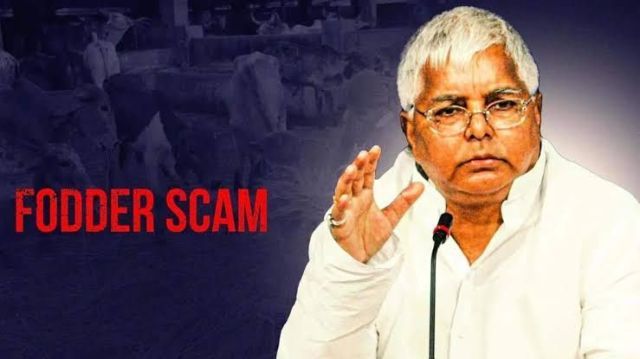
The fodder scam, or “Chara Ghotala,” is probably one of the most well-known example of how corrupt practices become so ingrained in an organization’s operating system that they can continue to operate for years before being discovered. The Fodder Scam was not limited to mishandling of funds, but also involved the falsification of governmental documents, manipulation of treasury procedures, violations of fiduciary responsibilities by public officials, and the establishment of a complex system of phony suppliers created specifically to loot the public funds. In this article, we will review the Fodder Scam through a legal lens, while incorporating a humanizing perspective and examining the systemic nature of the scam.
Abstract
The Fodder Scam is a case in which a large amount of government money was taken unlawfully which was intended for buying cattle fodder and veterinary products in Bihar. This theft continued for about 20 years, and the total amount of money withdrawn was nearly ₹950 crore. Most of these withdrawals were masked with fake receipts and invoices, fake supply records, inflated bills, and repeated breach of the Bihar Treasury Code.
This scam was a team effort involving senior officials in the government, vendors supplying products to the state of Bihar, various ministers, along with many other public officials. The Comptroller and Auditor General (CAG) initially began an investigation into the scam, after which the CBI conducted an investigation, and it was determined that many of the participants had participated in corrupt activities in the concert together. As a result of the investigations and the evidence obtained subsequently, there were multiple significant rulings in the courts holding many public officials and heads of organizations accountable under the Indian Penal Code (IPC) and the Prevention of Corruption Act (PCA).
This article will explain how the scam worked and lasted for so long, the types of laws that were used against the corrupt participants, what types of court rulings shaped the investigations and prosecution of this case, and how the case influenced India’s legal framework for laws regarding corruption.
Use of Legal Jargon
To strengthen the academic quality of the article, following key legal terms are included –
Mens rea, Actus reus, Forgery, Criminal Breach of Trust, Public Accountability, Malfeasance, Misappropriation of Government Funds, Criminal Conspiracy under Section 120B of IPC, Cheating under Section 420 of IPC, Forgery and Falsification of Accounts under Sections 467 to 471 of IPC, Abuse of Official Position, Dereliction of Duty, Illicit enrichment, and offences under the Prevention of Corruption Act, 1988.
The Proof: How the Scam Operated
The Fodder Scam did not occur overnight. It unfolded through a layered pattern of financial deception, administrative silence, followed by political protection. Here’s how it worked –
1. Fabrication of Bills and Vouchers
The essential element of the scam was the creation of fictitious and inflated bills. Government officials along with the suppliers created –
• Vouchers showing procurement of fodder that never existed,
• Bills indicating supply of medicines and minerals that were not delivered.
• Payment receipts showing transportation of cattle feed that was never transported.
These vouchers were passed with blatant disregard for verification procedures. These suppliers were often shell entities with no credible market presence.
2. Systematic Violation of the Bihar Treasury Code
Each payment from a treasury must be made in compliance with standard audit practices; however, as seen in the Fodder Scam –
• There was a lack of stock verification on all sanctioned bills.
• The expenditure limit was constantly exceeded.
• Withdrawals had exceeded the budgeted amounts.
• The same treasury account was used multiple times to make fraudulent payments.
There were gross financial irregularities, as a result of such payments contravening Chapters IV and VI of the Treasury Code as it relates to the pre-audit checks, verification of vouchers and budget ceilings.
3. Unholy Alliance Between the Bureaucracy and the Suppliers
The success of the Fodder Scam was due to the presence of an established and well-functioning nexus created among various key players:
• Veterinary officers prepared exaggerated demand files.
• Treasury officials authorized payment on bills without checking for proof of stock.
• Suppliers were paid for items that were never supplied.
• Political leaders provided the administrative cover to allow for the ongoing operation of the scam.
Due to this collusion, officers within the system were discouraged from raising internal complaints regarding the actions of their superiors and hence could easily be overwhelmed by or silenced if they did.
4. Political Protection and Influence
The most startling aspect of the Fodder Scam is the extent to which the political influence and support were used to perpetrate this crime. Many administrative officers were acting, either under direct or implied instructions from their political superiors. The continued and steady leadership of Bihar, politically, during the time of the scam provided for the continuity in the method, allowing the individuals engaged in the scam to remain confident that they would continue to receive political protection of the ruling government.
5. Trigger Point: Media Reports and CAG Audit
In 1996, an investigative report series unearthed the irregular withdrawals, and at the same time, a CAG audit showed that amounts were being withdrawn repeatedly over and above the approval limit. A significant portion of the scam was uncovered when government offices located in Chaibasa and Ranchi were searched, and found numerous stacks of forged documents, duplicate bills, informally written notes, receipts with no signature, and bills made in the name of the companies that are not in existence. After this was discovered, the government of Bihar requested that a CBI inquiry be conducted.
6. CBI Investigation
The CBI began investigating the Fodder Scam in 1996 after the Patna High Court found that the scale of fraud was far beyond the scope of what the State officials could handle.
Once the investigation began CBI uncovered a strong network among the politicians, suppliers and the officials. Raids were conducted in animal husbandry offices and district treasuries, and the Treasury Officers, District Officials, Ministers, as well as lower level employees were interviewed to gather all the statements and financial trails to form a clear understanding of how this scam worked.
In the end, the CBI filed more than 50 charge sheets, categorizing the scam into different treasury-based cases such as:
• Chaibasa Treasury
• Deoghar Treasury
• Doranda Treasury
• Ranchi Treasury
Each case involved different accused individuals, different charges and different amounts of money withdrawn.
Case Laws
1. CBI vs. Lalu Prasad Yadav & Others (2013–2018)
The following rulings are pivotal in the case law of the Fodder Scam –
• The court found that a person holding a public office cannot defend against prosecution by claiming that he is holding a public office.
• The charges against the defendants in the case included, as defined in the Indian Penal Code, Sections 120B (criminal conspiracy), 420 (cheating), 467 (forgery of valuable security or will), 468 (forgery for the purpose of cheating) and 471 (using forged document) and Sections 2 and 3(2) of the Prevention of Corruption Act (PCA).
• The court also discovered that there was a “deep rooted conspiracy” between government officials and suppliers in the case.
2. Lalu Prasad Yadav vs. The State of Bihar (2017)
The High Court rejected the arguments related to Double Jeopardy as defined by Article 20(2) of the Constitution of India, the “One Continuous Conspiracy” argument, and the allegations of political bias against the defendants.
The High Court also pointed out that every treasury fraud is a distinct offence, therefore permitting the prosecution of each offence separately.
3. The State of Bihar vs. Ranchi Veterinary Department Officials
The case adressed the low-level government officials and established:
• The concept of a chain of command for the prosecution of low-level officials.
• The application of vicarious liability for administrative corruption committed by lower level public servants.
• The standard of mens rea in regard to public servants committing administrative corruption.
4. The Apex Court’s observations
In relation to the Administrative Corruption, the Supreme Court stated that –
• Corruption threatens the Rule of Law.
• A public servant is a custodian of public funds and has a fiduciary responsibility to protect the public interest.
• The abuse of an official position in the form of corruption will be interpreted strictly under the PCA.
The Fodder Scam cases have made substantial contributions to India’s Anti-Corruption Jurisprudence.
Conclusion
The Fodder Scam stands as one of India’s most revealing example which epitomizes the extent to which the corruption can grow if systems remain unchecked and accountability remains absent. What originally began as a financial scam involving only one department, the Fodder Scam ballooned into a large-scale conspiracy draining the public funds for nearly 2 decades. It revealed how poorly Bihar’s bureaucratic apparatus was functioning in 1990, and it demonstrated that judicial scrutiny and independent investigations are essential to protect the public interest.
The CBI took action and after lengthy judicial prosecutions ensured that powerful public figures and civil servants were held accountable, thereby signalling that it is impossible to keep misappropriation of public funds from being discovered. More importantly, the Fodder Scam changed national discussions regarding financial reporting, audit, and stronger institutional oversight.
The Fodder Scam is remembered as much for its staggering financial loss as it is remembered for the precedent it set, that even the highest national offices can be brought within the rule of law, and that the infrastructure of systemic corruption can be dismantled through acts of institutional integrity and courage.
FAQs
1. What was the total amount involved in the Fodder Scam?
- Different treasuries reflected different figures, but collectively, the amount involved in the scam was approximately ₹950 crore, making it India’s biggest corruption scandals of that time.
2. Why did the scam remain undetected for so many years?
- The scam lasted for over 2 decades because of a deeply entrenched network of corrupt officials and political patronage, combined with weak financial oversight.
3. How many charge sheets did the CBI file?
- They filed more than 50 charge sheets, each detailing a separate set of fraudulent withdrawals.
4. Who were the key individuals implicated in the case?
- Several senior officials from the Animal Husbandry Department, treasury officers, suppliers, and political leaders including former Chief Minister Lalu Prasad Yadav were named in the charge sheets and later convicted in various cases arising from the scam.
5. Are cases related to the Fodder Scam still ongoing?
- Over the years, multiple cases were tried separately based on different treasuries. While many judgements have been delivered, some proceedings and appeals continue, as is common in large, multi-case corruption matters.