Author: Mohini More, PES’s Modern Law College
To the Point
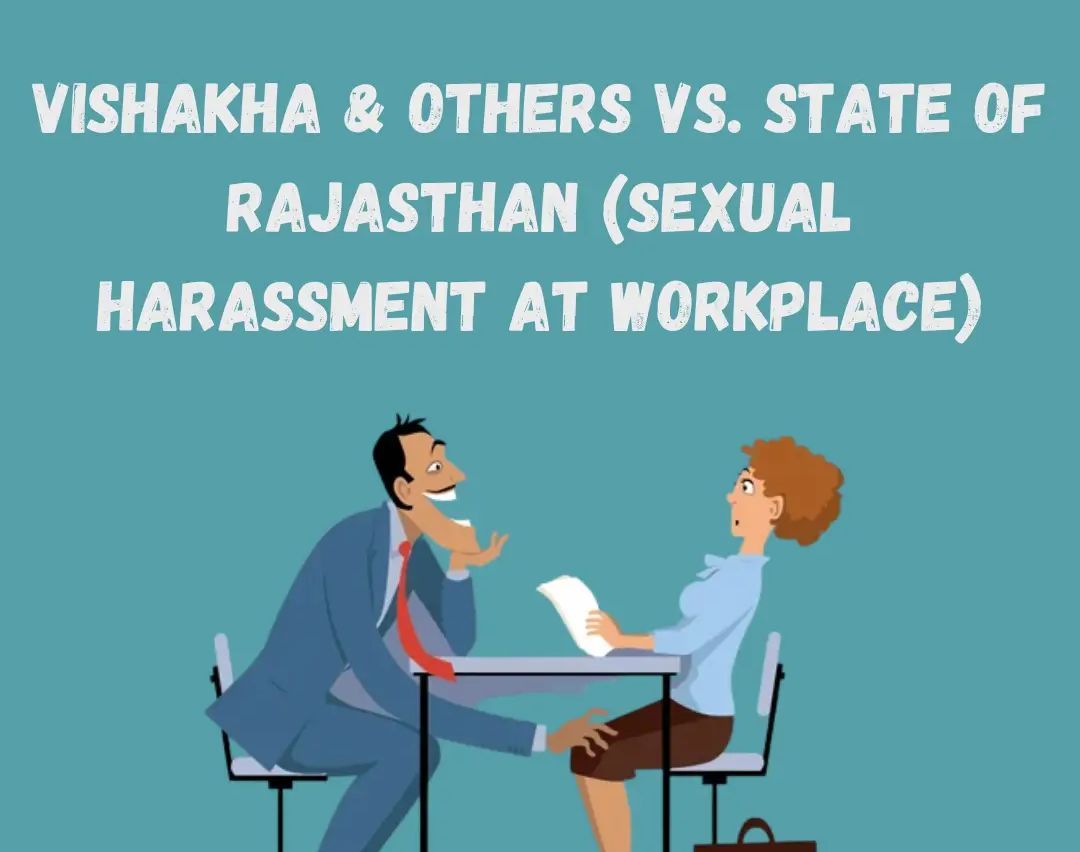
The case of Vishaka v. State of Rajasthan is a major judgment that laid the foundation for guarding women from sexual importunity at the factory. The Supreme Court passed detailed guidelines in 1997 to fill the legislative gap in India, as there was no specific law at the time to address analogous offences. This case marked the morning of legal recognition that a safe working terrain isn’t just a matter of policy but an indigenous right under Articles 14, 15, 19( 1)( g), and 21.
Use of Legal Jargon
Sexual importunity – unwelcome sexual advances, demand for sexual favours, or other verbal/non-verbal conduct of a sexual nature. Abecedarian Rights – introductory rights guaranteed by the Constitution, including quality, equality, and freedom to exercise any profession. Judicial Activism – When courts step in to frame laws in absence of legislative vittles’.
international Convention – Agreements like CEDAW( Convention on the Elimination of All Forms of discrimination Against Women), used by the Court to frame domestic guidelines.
Guidelines –Non-statutory directions issued by the bar to be followed until formal law is passed.
The Proof:
The case began when Bhanwari Devi, a government worker in Rajasthan, was gang- ravished by five men for stopping a child marriage in a pastoral village. Despite her sanctioned part, the justice system failed to cover her. This led to outrage and action by women’s rights groups, including Vishaka and other NGOs, who filed a Public Interest Action in the Supreme Court under Article 32. Since there was no specific law to deal with factory sexual importunity at the time, the suppliants urged the Court to apply gender equality and protection of quality as a part of the right to life under Composition 21. The Court responded with corner guidelines that all employers were demanded to follow.
Abstract
The Vishaka judgment is a pivotal illustration of the Indian bar stepping in to fill legislative silence and ensure introductory rights for working women. The Court treated sexual importunity as a violation of indigenous and mortal rights and took relief from international law, particularly CEDAW. The guidelines issued by the Court acted as the first legal frame in India against sexual importunity until Parliament enacted a formal enactment in 2013. This case continues to be cited as a foundation of gender justice in the factory.
Case Laws:
1. Vishaka & Ors. v. State of Rajasthan & Ors., AIR 1997 SC 3011 The Supreme Court recognized that gender- predicated violence at factory violates women’s fundamental rights under Articles 14, 15, 19, and 21. Appertained to international scores under CEDAW, which India ratified in 1993. Issued binding guidelines to all employers, public and private, to help and requital sexual importunity until proper legislation is enacted.
2. Apparel Export Promotion Council v. A.K. Chopra,( 1999) 1 SCC 759 Reinforced the Vishaka principles and held that indeed unintentional acts or behaviour that creates a hostile work terrain amounts to sexual importunity.
3. Medha Kotwal Lele v. Union of India,( 2013) 1 SCC 297 The Supreme Court observed that Vishaka guidelines were not being executed effectively, and directed all state authorities to strictly apply them until the new law was passed.
Conclusion
The Vishaka judgment came a turning point in icing safety for women in India’s workspaces. It conceded that without freedom from sexual importunity, women ca not enjoy their right to equivalency or work with quality. Until the Sexual importunity of Women at Workplace( Prevention, Prohibition and Redressal) Act, 2013 was passed, these guidelines stood as the only legal protection. Indeed moment, the Vishaka case remains a symbol of judicial perceptivity and visionary protection of fundamental rights, especially in matters where the council has been slow to act.
FAQS
Q1 Who was Bhanwari Devi and how is she connected to this case?
Bhanwari Devi was a social worker who was gang- ravished for stopping child marriage. Her case led to public outrage and came the base of the PIL filed by Vishaka and others.
Q2 Why was the Vishaka case filed in the Supreme Court?
Because at the time, India had no law to deal with factory sexual importunity, and the suppliants sought protection under fundamental rights.
Q3 What are the Vishaka Guidelines?
They are a set of rules issued by the Supreme Court in 1997 for all employers to help and deal with sexual importunity at the factory.
Q4 Is the Vishaka judgment still applicable after 2013?
Yes, though the 2013 Act replaced the guidelines, the Vishaka case still serves as a foundation for legal understanding of gender safety at work.
Q5 What law now governs this issue?
The Sexual importunity of Women at Workplace Act, 2013 is the present enactment that codifies and expands upon the Vishaka principles.